
Series: How to Play Poker (Beginner) • Part 3 of 6
Fold, Call, or Raise
Whose Turn Is It?
Now that you've seen your cards, it's time to figure out whose turn it is. Some players wait until the action reaches them before looking at their cards. That's perfectly fine, but you're new here, so we're not worried about that yet.
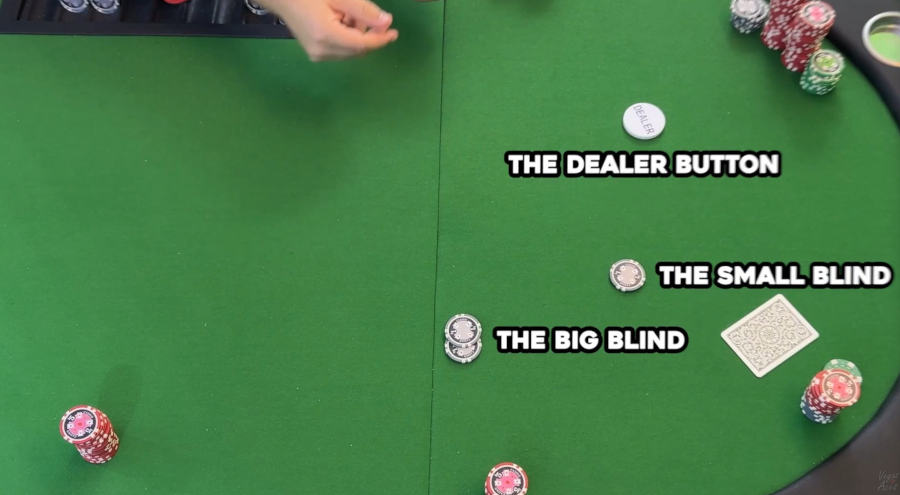
Let's assume the table is full. There are nine players, including us, and a dealer. Before each hand begins, there are three important positions to understand:
- The Dealer Button
- The Small Blind
- The Big Blind
The dealer button is a round disc that moves clockwise around the table after every hand. The player immediately to the left of the button must post the small blind. In our game, that's $1. The player immediately to the left of the small blind must post the big blind. In our game, that's $2.
Each player has their own betting area directly in front of them. When you put chips into a pot, you don't throw them into the center of the table. Instead, you place them in your betting area, and the dealer will gather them into the pot when appropriate.
The small blind and big blind are placed into those betting areas before any cards are dealt. They help ensure there is always something to play for. Remember, every chip on the table represents real money. If you leave the poker room with chips, you can cash them in and receive the amount they represent.
When the dealer begins dealing, the first card goes to the player who posted the small blind. The second card goes to the player who posted the big blind. The dealer then continues clockwise around the table until every player has two cards.
After the last card is dealt, the first betting round begins. The player seated immediately to the left of the big blind acts first. Let's say that's you. Your buddy leans over and says: "It's on you." For the first time, it's your turn to act in a real poker game. So what do you do?
Your Options
At this moment in the hand, you have three options available to you:
- Fold
- Call
- Raise
As we move through the hand, you'll encounter other situations where different options are available. We'll cover those when we get there. At any point during a hand, you are allowed to ask the dealer what your options are. The dealer must always give you the correct answer. Let's look at each one.
Option 1: Fold
If you don't want to continue playing the hand, you can fold. To fold, simply push or gently toss your cards face down toward the dealer. Most players fold because they don't believe their cards give them a good chance to win. Once you fold, your hand is over. You cannot win any more chips, but you also cannot lose any more chips.
When folding, be careful not to expose your cards. The players still involved in the hand should not gain information from cards that are no longer in play. You also want to fold respectfully. Don't throw your cards high into the air. Don't throw them hard. Don't throw them into another player's cards.
Most poker rooms are very understanding when a new player makes a mistake, but players have been warned, penalized, and even removed from poker rooms for repeatedly handling cards carelessly.
Option 2: Call
If you want to continue playing the hand for the minimum amount possible, you can call. Calling simply means matching the current bet. If you're ever unsure what the current bet is, a good rule of thumb is to look at the player to your right who is still in the hand. The amount of chips in their betting area will usually tell you how much you need to call. For example, the big blind is $2, so calling costs $2.
There are several ways to call. You can say: "Call." This is known as a verbal action. In poker, clearly stating your decision out loud is binding. Make sure you speak clearly and loudly enough for the dealer and nearby players to hear you. Poker rooms can be noisy, and unclear statements can create confusion about what action you intended to take. Once you say the word, your decision is locked in. You now owe the amount required to call.
You can also say nothing and physically place two $1 chips into the betting area. If a player's words and chip movement happen at the same time but conflict with each other, the verbal declaration takes priority. You can even place a single larger denomination chip into the pot without saying anything. The dealer will understand that as a call and provide any necessary change before the betting round is complete.
Option 3: Raise
If you would like to increase the amount everyone must put into the pot, you can raise. Generally speaking, players raise when they believe they have a strong hand or when they believe raising gives them the best chance to win the pot. A raise increases the amount every remaining player must call if they want to continue.
In a $1-$2 No Limit game, the minimum raise allowed is $4 total. The maximum raise is all of the chips you have in play on the table. This is why the game is called No Limit Texas Hold'em. A player can commit their entire stack at any time. A common raise in a $1-$2 game might be $8, $10, or $15, but poker players come up with all sorts of sizes. We don't judge.
How Do You Know Which Option To Choose?
Before deciding whether to fold, call, or raise, you need to understand one thing: How strong are your cards? Right now, you've only been dealt two cards. Those two cards are called your hole cards. They belong only to you.
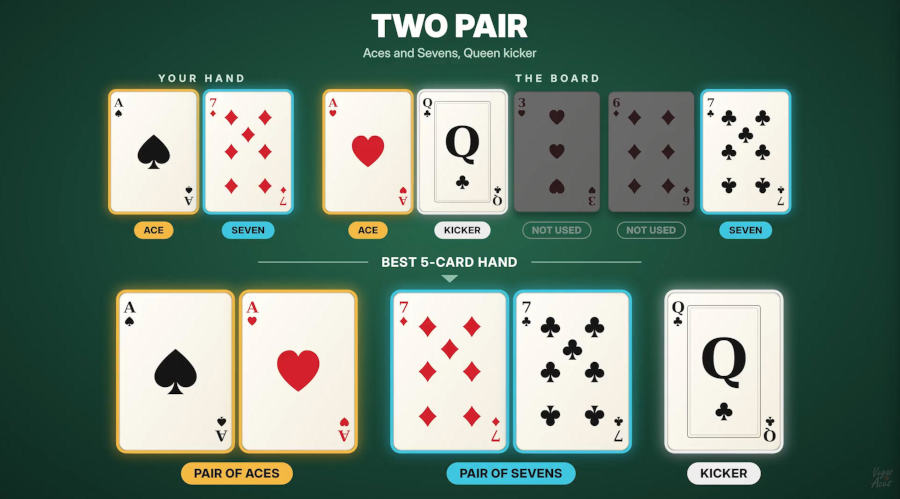
As the hand progresses, the dealer will place five community cards face up in the center of the table. Every player still in the hand can use those cards. If you make it all the way to the end of the hand, you'll have access to seven total cards:
- Your two hole cards
- The five community cards
However, your final poker hand is not seven cards. Instead, it is the best five card poker hand you can make using those seven cards. The best five cards count, and the other two don't matter.
Poker is built around ranking five card hands from strongest to weakest. Every hand of poker will eventually produce a winner. Sometimes one player wins the entire pot. Sometimes two or more players tie and split it. But the cards always determine the winner. So before we decide whether our hand is worth folding, calling, or raising, we need to understand how poker hands are ranked.
Enjoyed this lesson?
Join our newsletter to get the latest casino industry courses delivered straight to your inbox.
Series
How to Play Poker (Beginner)
Part 3 of 6
Related Free Learning Hubs: Poker, All Hubs
Related Terms & Definitions: Center of the Table, Community Cards, Betting Round, Dealer Button, Small Blind, Limit Game, Big Blind, Face Down, Locked In, No Limit, Face Up, Maximum, Full Dictionary
Related Courses

How to Play Poker (Beginner)
Nov 28, 2026 Marc Shumsker and Mike Laake
Step inside a real casino poker room and discover what to expect before sitting down for your first hand.

How to Become a World Series of Poker Dealer
Feb 21, 2019 Heather Ferris
Learn the steps you need to take, the minimum requirements and qualifications needed and what games you need to know in order to be hired as a WSOP dealer.

Partnerships that keep the cards on the felt
Jan 6, 2026 Heather Ferris
Here is an overview of the sponsored products and advertising options available through Vegas-Aces.
Buy Bets vs Place Bets
Jul 17, 2026 Massimo Morana
Learn the difference between buy bets and place bets in craps. Compare payouts, house edge, commission fees, and discover when buy bets are better than place bets.

How to Get a Job as a Casino Dealer in Italy
Sep 14, 2026 Alessandro Cinà
Discover what it takes to become a casino dealer in Italy, from essential skills and requirements to career opportunities.

How to be a Floor Supervisor
Sep 7, 2026 Andrew Uyal
Master the skills casino floor supervisors need to protect the games, lead their teams, and keep the action running smoothly.
Table of Contents
Series Navigation
Part 3 of 6