
Gambling Addiction in 2026: Why It’s Hard to Stop & How to Gamble Responsibly
Maybe today is one of those days for you as a player where you are questioning your life choices. You no longer know what a normal gaming experience feels like. You find yourself saying just one more, even when you know you should stop. You then go on Reddit, like many other users, asking, "Why can’t I just walk away?" Well, it isn't that you are weak or lack discipline. It’s biology.
This article will help you see why it’s hard to stop gambling addiction and how to overcome it through responsible gambling tips.
What Is Gambling Addiction?
Gambling addiction is best understood as a behavioral and neurological response, not simply a lack of self-control. Medically, it’s a disorder in which a person struggles to control their gambling despite clear negative consequences. In fact, nearly eight in ten US adults (79%) see gambling addiction as serious as, or more serious than other addictions such as alcohol or drugs, according to an NCPG survey.
How Common Is Gambling Addiction?
The 2024 Lancet Public Health Commission on gambling estimates that about 1.4% of adults worldwide experience problematic gambling, with roughly 80 million people living with gambling disorder. In the US, the NCPG estimates about 2.5 million adults (1%) meet the criteria for a severe gambling problem, with another 5–8 million experiencing mild or moderate problems — and only about 8% of that are people who struggle seek help.
Harry Levant, Director of Gambling Policy at the Public Health Advocacy Institute (PHAI) at Northeastern University, has warned that the spread of online casinos, sports betting, and prediction markets “demands a public health response.”
It’s worth remembering that many people gamble casually without ever reaching addiction, just as most people who drink don’t develop alcohol dependence (roughly 10% do). Two-thirds (65%) of US adults, though, report gambling before age 21, as reported by the NCPG survey conducted through the Harris Poll. So early exposure is common.
Why It’s So Hard to Walk Away
Gambling triggers the brain’s reward system, causing a high release of dopamine, which makes it difficult to stop, especially during winning streaks.
Dopamine and the Gambling “High”
The reason for gambling addiction is deeply rooted in a biological concept known as the Dopamine reward system.
When you wager on casino games or on sports and win, your brain releases dopamine, a feel-good chemical. During these moments, you feel elated, which is good, but with repeated engagements, the brain starts chasing this feeling, wanting more. To satisfy this craving, you relapse into gambling again, which is made stronger by its unpredictable (win/loss) nature.
The Dopamine reward system is the reason for many other addictive behaviors, including social media and video games.
Winning Feels Different Than Losing
It is harder to leave gambling when you have tasted what winning feels like. Moments of winning in gambling trigger unforgettable emotions. Many players hope to reach this height again and again, forgetting the role of chance. When losing, many ask, “Why is everything not going my way?” But when they win, they feel in control, hoping that subsequent outcomes will also favor them.
The “Just One More” Effect
The cycle of gambling addiction begins with chasing a win and then to another win. During the process, losses are incurred, and the goal then shifts to chasing losses, i.e., recovering money spent. And to be honest, many modern games do not help.
Casino game developers keep players engaged using various psychological tactics such as “near misses” and visual feedback like “you are very close” and “almost there.” You feel encouraged and then tell yourself, “just one more,” but it never stops there.
Be Kinder to Yourself
You’re not alone in this, and it isn’t your fault that the brain has a built-in reward system. In a dopamine-high state, stopping is genuinely hard, and that doesn’t make you weak. Your brain is doing what it’s wired to do. Gambling environments are engineered to keep you engaged, much like social media is built for endless scrolling. The fact that you recognize the problem is the first step to regaining control and that deserves credit.
Signs You Might Be Struggling to Stop
These are seven signs that you are struggling with gambling addiction:
Playing longer than you planned.
Chasing losses.
Feeling frustrated when trying to stop.
Thinking about gambling while at work or in school.
Spending all that you have on gambling, while neglecting important responsibilities.
Gambling to escape problems, guilt, anxiety, or depression.
Lying to family, friends, or guardians to hide how much you gamble.
Five Practical Ways to Gamble More Responsibly
Below are some of the ways you can practice responsible gambling:
Set a Hard Stop Before You Start
Before you pick up your smart device to wager on sports or casino games, set a time and spending limit. “I’m leaving after 1 hour” or “I’m done if I lose $100.” Please decide on a hard stop before you begin playing, not during play. Some platforms offer options in the settings that will kick you out of the app, after the amount of time you pick comes to an end.
Use Time-Based Exit Triggers
If sticking to a set time is hard, schedule play right before something you can’t skip. Want to play for an hour and have a 2 p.m. meeting? Start at 1 p.m. and you’ll have to stop. An external event, a dinner reservation, an appointment, all of these forces you out rather than relying on willpower.
Manage Your Bankroll
The most practical way to gamble responsibly is to manage your bankroll. You can do this effectively by following these three principles:
Ensure you only gamble using an amount you can afford to lose
Never chase losses
Separate gambling money from essential expenses
Again, some platforms offer an option in the settings that allow you to set your budget, forcing you to stick to it, rather than relying on willpower alone.
Slow Down Your Play
It is important to pace yourself when gambling to avoid exposing yourself to losses. Try to slow down when you notice you are playing too fast. Doing this will help reduce emotional escalation, which can lead to wrong decision-making.
Take Breaks
Step away regularly, whether you’re winning or losing, to cool off. Winning is when it’s hardest to leave, which is exactly when a break matters most.
Tools That Can Help You Step Away
Responsible gambling tools are resources designed to help you stay in control of your gambling activity.
Bankroll Control Tools
Deposit limits: cap your deposits daily, weekly, or monthly.
Loss limits: once you hit the cap, you can’t bet more.
Wager limits: cap how much you can stake, win or lose.
Time Management Tools
Session limits: auto-logout after a set time online.
Time-outs: short account breaks from 24 hours to 30 days
Access Blocking Tools
Self-exclusion: a formal block from a site for six months to five years, or permanently.
Software blocking: apps that block gambling sites on your devices.
Bank blocking: ask your bank to block transfers to gambling accounts.
Support Tools
Seek help: free, confidential support is available 24/7 in the US, call or text 1-800-GAMBLER, or reach the National Council on Problem Gambling at 1-800-MY-RESET (chat at ncpgambling.org/chat); Gamblers Anonymous runs free meetings**.**
Social Support: Find someone who understands what you are going through and will support you during this difficult time.
The Reality of Gambling
You cannot beat the house in the long term. “The house always wins” is a mathematically supported statement. Every game has a built-in house edge that compounds over time. Treat all gambling as a form of entertainment, which is what it was designed for, and not as a path to financial or emotional freedom.
Quick Responsible Gambling Tips
Have a budget and set limits before playing.
Stick to time and wager limits.
Do whatever it takes not to chase losses.
Pace your gameplay and take breaks.
Avoid making any decisions based on emotions.
Know when to walk away, even when winning.
Treat gambling as an entertainment expense only.
Final Thoughts
Gambling addiction is a widespread burden, and you are not alone in the struggle. The pull of gambling and the brain’s response to it are powerful, so don’t be too hard on yourself. Now that you see the problem, use the tips above to stay in control. If you need help right now, please reach the National Problem Gambling Helpline call or text 1-800-GAMBLER (or 1-800-MY-RESET) or Gamblers Anonymous.
Enjoyed this article?
Join our newsletter to get the latest casino industry articles delivered straight to your inbox.
Related Article Archives: Players, All Articles
Related Terms & Definitions: Commission, House Edge, Bankroll, Casino, Credit, Limits, Option, Player, System, Break, Games, House, Full Dictionary
Related Posts
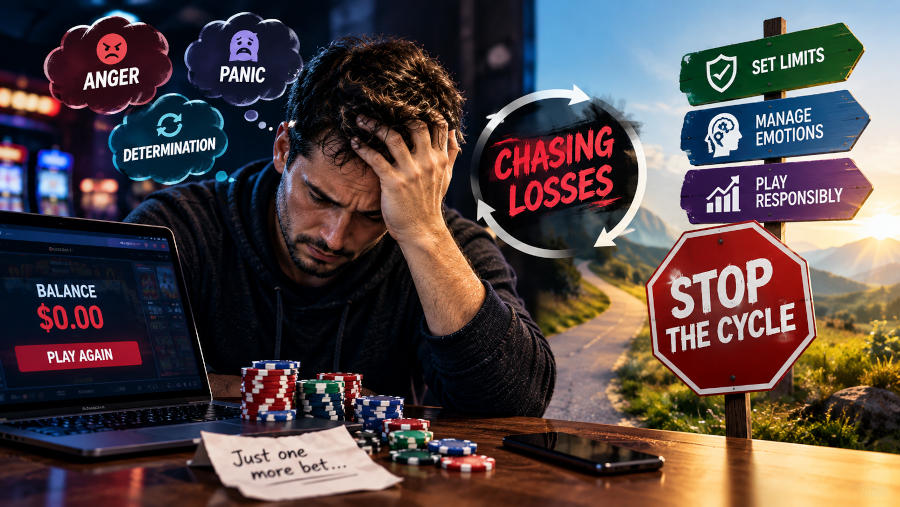
Why Players Chase Gambling Losses and How to Stop
Oct 13, 2026 Shahzad Digil
Learn why players chase gambling losses, how emotions and the gambler’s fallacy affect decisions, and practical ways to set limits and know when to stop.

How to Take Your Skills to the Next Level
Oct 11, 2026 Heather Ferris
Think professional gambling is all glamour and big wins? Discover the skills, discipline, and risks behind success!
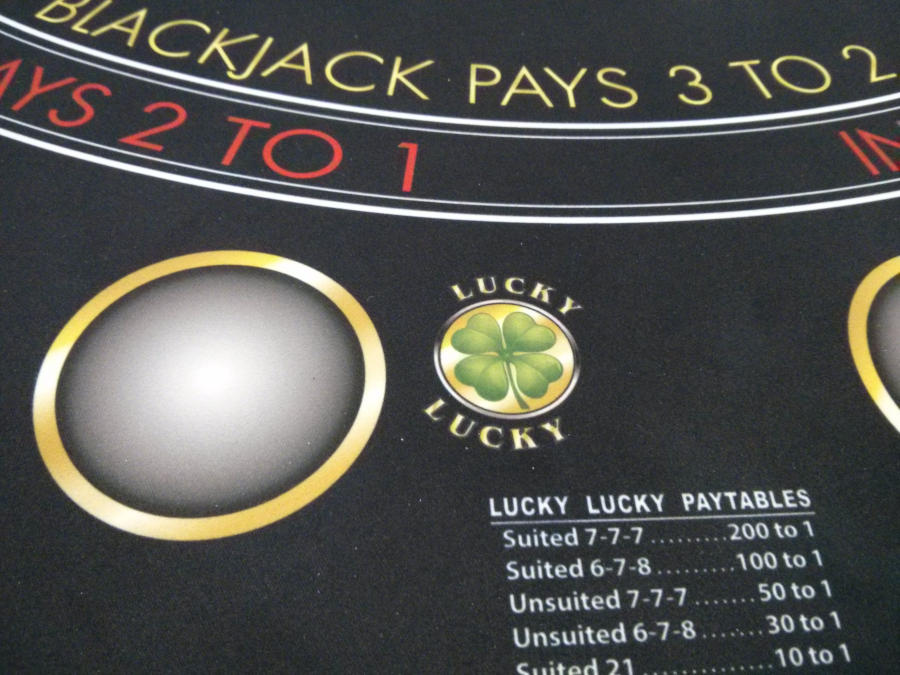
Why Do Casinos Love Side Bets?
Sep 22, 2026 Daniel Odeyemi and Heather Ferris
Learn why casinos push side bets and why players are drawn to high-risk, high-payout wagers in games like blackjack, craps, and roulette.

Are Casino Games Rigged?
Sep 20, 2026 Heather Ferris
From rigged games and mob-run casinos to modern regulation, discover why today’s biggest casino advantage isn’t cheating, it’s math.

9 Common Pet Peeves of Casino Dealers
Sep 13, 2026 Heather Ferris
Discover the nine casino habits that drive dealers crazy and learn how to avoid becoming their biggest pet peeve.

How to Go from Amateur to Pro
Aug 30, 2026 Heather Ferris
Discover what separates casual casino players from the pros, from smarter game selection to bankroll discipline and advantage play.
Table of Contents
- # Back to Top
- What Is Gambling Addiction?
- How Common Is Gambling Addiction?
- Why It’s So Hard to Walk Away
- Be Kinder to Yourself
- Signs You Might Be Struggling to Stop
- Five Practical Ways to Gamble More Responsibly
- Tools That Can Help You Step Away
- The Reality of Gambling
- Quick Responsible Gambling Tips
- Final Thoughts