
The Difference Between Bettors, Dealers, Player, and Banker in Baccarat
Player and Banker in punto banco baccarat name the two hands dealt each round. They do not identify the people seated at the table, the person who placed a bet, or the dealer. A bettor may back either hand, several bettors may support opposing hands, and the dealer administers both under fixed drawing rules. Tie names a possible result when the totals match. The same person can wager on Banker in one round and Player in the next round without changing seats or taking control of either hand.
It’s important for newcomers to spend some time figuring out what each of these labels means. A label can be recognized while the relationship beneath it is missed. In a 2025 study of chart comprehension, 50 participants produced 400 chart descriptions. The basic subject appeared in 94.25 percent of them, while only 31.75 percent recorded patterns. A baccarat newcomer can locate the Player and Banker boxes immediately, yet still assign them to a gambler and a house representative. Every wager, card, total, drawing rule, and result instead attaches to Player or Banker as a side of the round.
Four Roles at the Table
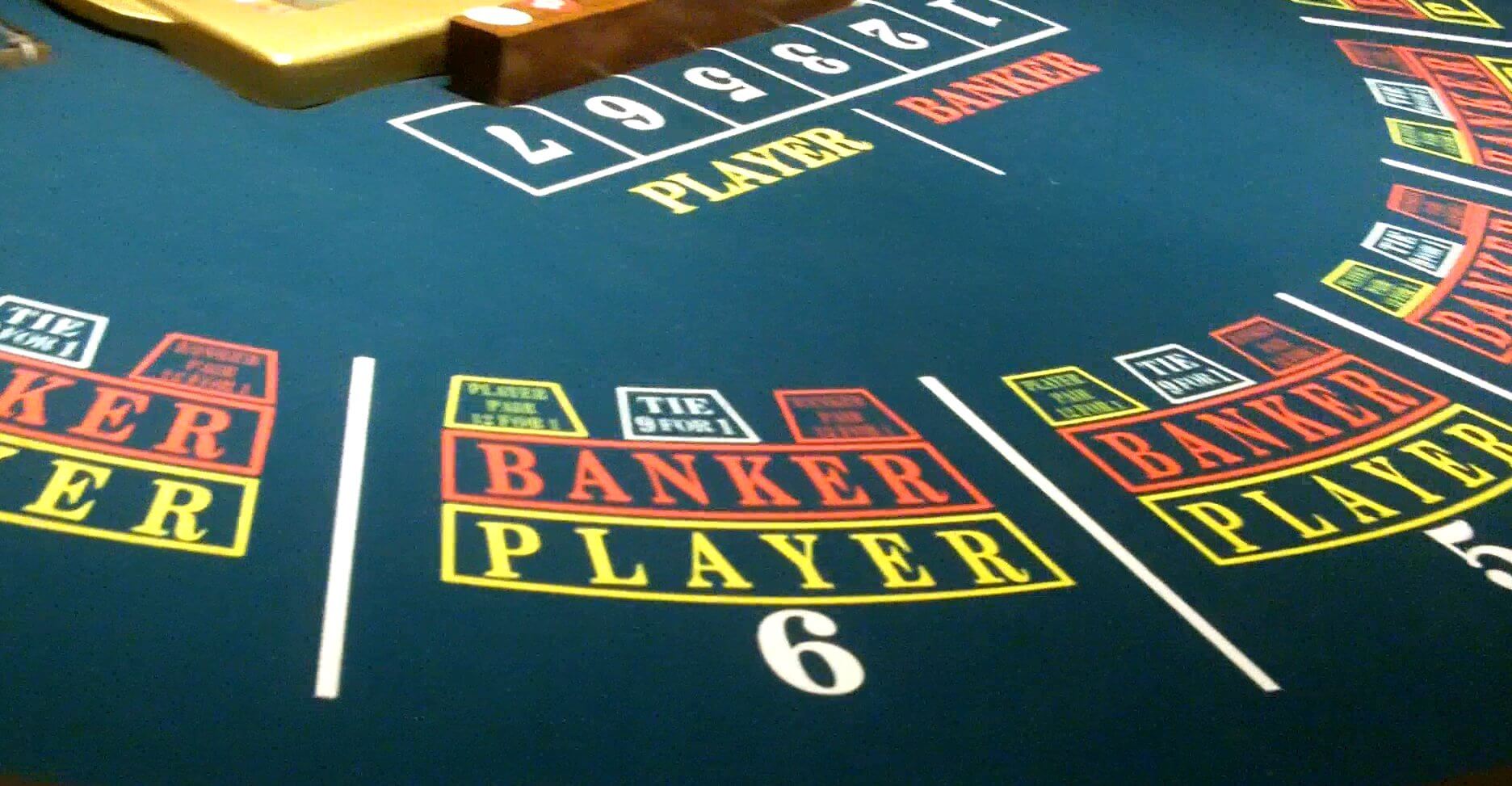
In punto banco, the words shown around the layout refer to different parts of the round. Seat numbers locate bettors, betting areas record their selections, and the Player and Banker spaces hold the two hands. Tie is different again: it names the result produced when those hands finish on the same total. The dealer remains responsible for the dealing procedure rather than either side’s result. Those labels stay fixed from round to round, even as a bettor changes selections, changes seats, or plays through an online interface.
Before any cards appear, a bettor chooses a result to back: Player, Banker, or Tie. The selection creates no ownership of a hand and grants no decision over the cards. One Player hand and one Banker hand are dealt for the entire table, even when many people have chosen opposite sides. Online play keeps the same separation. In a Cafe Casino baccarat table game, selecting Player backs the hand carrying that label; it does not give the bettor a private set of cards. Selecting Banker backs the other labeled hand.
After betting closes, the dealing sequence exposes both initial totals and applies any required third-card rule. The Player hand acts first. The Banker hand then follows a rule based on its own total and, in several cases, the Player hand’s third card. Neither the user nor the dealer chooses whether a hand should draw. If the final totals match, Tie becomes the result. Player and Banker remain the two card positions from the first deal through settlement, while every person at the screen remains a bettor.
The bettor chooses where to place their wager. The Player hand and Banker hand receive cards, acquire totals, and may draw. A live dealer reveals cards and carries out the prescribed procedure; an automated game handles that procedural role with software. A person who backed Player can watch Banker draw a third card and win without anyone changing identity. After settlement, both hand areas clear for the next deal.
Follow One Round
It might help to visualize a hypothetical round. Suppose Maya backs Banker and Luis backs Player. Player receives a 7 and an 8. Baccarat drops the tens digit, so 15 becomes 5. Banker receives a 6 and a queen; the queen counts as zero, leaving 6. The Player total of 5 requires a third card, which is a 4, producing a final Player total of 9. Banker started at 6 and, under the standard rule, draws only when Player’s third card was a 6 or 7. It stands at 6. Player wins 9 to 6. Luis’s wager is on the winning hand, and Maya’s is on the losing hand; neither participant ever became Player or Banker.
If the opening cards had instead produced an 8 or 9 on either hand, a natural would end the drawing phase for both hands. If both hands finished with the same total, Tie would become the result. Choosing Tie does not change the dealing sequence. All three selections refer to one shared round, and all are settled from the same two final totals.
The Player hand’s third-card rule begins simply: draw on 0 through 5, stand on 6 or 7, and stop on a natural 8 or 9. The Banker hand needs a larger rule chart because its action may depend on the Player hand’s third card. Those conditional rules belong to the hand label. They do not describe the dealer making a strategic choice, or actions by the bettor.
Read the Layout in Order
A table layout supplies several spatial cues at once. Numbered positions identify seats, betting boxes identify selections, marked card areas identify hands, and the dealer’s space supports the deal. Nielsen Norman Group’s 2025 guidance on interface structure notes that nearby elements are perceived as related and that visual boundaries clarify which parts belong together. On a baccarat layout, the word Player may sit close to a bettor’s chips without naming that person; the box groups a wager with a selection. Cards dealt to the Player area remain one communal hand for every Player wager.
An online animation compresses all roles onto one screen, but the order remains stable. First, a user places a selection. Second, two hands receive their opening cards. Third, totals are reduced to their final digit. Fourth, any required third card is dealt by rule. Last, the higher total wins unless both match. At no point does a bettor direct a hand or does the dealer become Banker. After settlement, the same bettor can select another side, while the labels continue to follow the two card positions.
Disclosure: This article contains sponsored content.
Enjoyed this article?
Join our newsletter to get the latest casino industry articles delivered straight to your inbox.
Related Free Learning Hubs: Punto Banco, All Hubs
Related Terms & Definitions: Punto Banco, Baccarat, Natural, Action, Banker, Casino, Change, Dealer, Layout, Player, Banco, House, Full Dictionary
Related Posts

Why The Speed Of A Poker Game Transforms The Dynamic
Sep 8, 2026 Alice Oziran
Discover how poker’s pace can reshape strategy, pressure, player psychology, and the entire dynamic of the game.
Which Betting Number Are You Actually Talking About?
Jul 24, 2026 Alice Oziran
Is it a bankroll, session, or unit? Discover why mixing them up changes everything.

How to Work as a Casino Affiliate
Jun 29, 2026 Alice Oziran
Want to earn from casino affiliates? Discover the insider strategies that separate profitable sites from costly failures.

Why Casino Bonuses are Important and How to Read Them
Jun 29, 2026 Alice Oziran
That “free money” casino bonus could hide costly traps, and knowing these secrets might save your winnings.

How Casinos Protect You: Responsible Design in Modern Gaming Venues
Aug 14, 2025 Alice Oziran
Today’s gaming environments are designed with a different goal in mind: protecting the player. Through architecture and user-focused tools, modern gaming spaces quietly prioritize comfort and responsible play.