
Should You Actually Play for a Charlie in Blackjack?
The Charlie rule is an interesting feature found in some games of online blackjack. It’s rare enough that most players have never encountered it, and most probably have no idea what it even is.
Yet, the rule can be called somewhat of a game-changer. Used correctly, it can actually lower the house edge significantly. Let’s take a closer look at what the Charlie rule actually is, and whether chasing it is ever the smart play.
What is the Charlie Rule in Blackjack
In standard blackjack, you win by outscoring the dealer or outsmarting them by letting them go bust. The Charlie rule adds a third option: draw a set number of cards without exceeding 21, and you win automatically. The dealer's hand is irrelevant in this case, as it will never be played.
The number of cards in a Charlie can vary and typically ranges from five to seven. Five-card Charlie requires five cards under 21. Six-card Charlie raises that to six, while Seven-card Charlie needs seven consecutive draws that somehow stay in bounds.
Each version shifts the probability calculus, so it’s worth paying attention to.
The Numbers Behind Each Variant
A Five-card Charlie occurs roughly once in every 19 hands in a single-deck game, which gives it a 5.4% probability. For context, a natural blackjack appears around once every 21 hands, so the two events are in similar territory in terms of frequency. As a result, you have a good chance of getting several Charlies over a session.
Six-card Charlie, however, drops to around 0.85%, or roughly 1 in 117 hands. It can happen from time to time, but you cannot rely on it frequently.
Seven-card Charlie is by far the worst option, as it falls to approximately 0.09%. It equals roughly one Charlie win in over a thousand hands. At that point, you're essentially waiting for a statistical anomaly, and a Charlie isn’t much to play for unless you already got six cards drawn.
As you can see, a Five-card Charlie is by far the best option. It significantly reduces the house edge. The house edge is lowered 0.01% under the seven-card Charlie rule, 0.16% under a six-card Charlie rule, and 1.46% under a five-card Charlie rule.
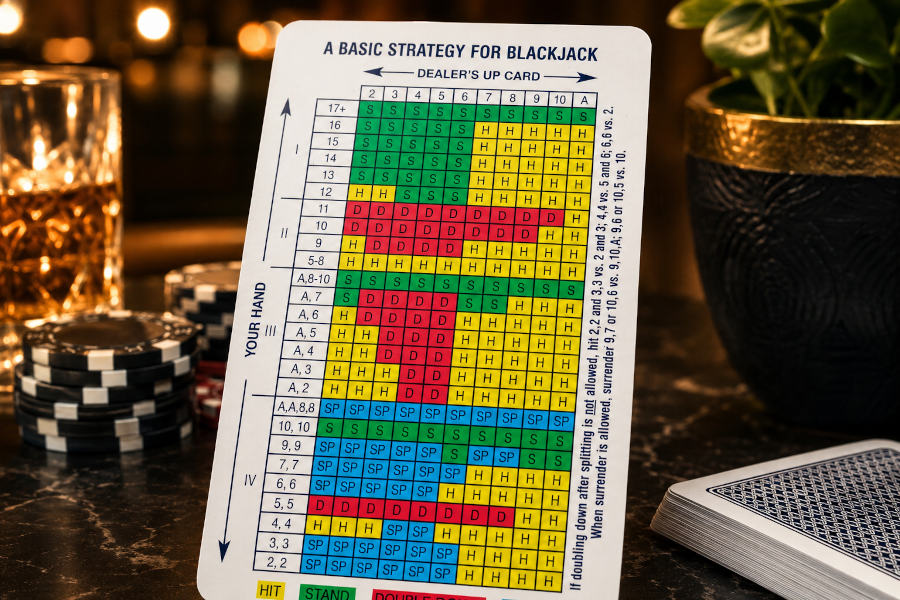
And the basic blackjack strategy should be slightly altered for optimal play with the Charlie rule. For six and seven-card Charlie, the strategy differences are minimal at best. You may win an extra hand once in a blue moon, but it shouldn’t be something to aim for unless you're one card away.
However, it’s worth noting that multiple-deck games, which dilute high cards and increase the proportion of low ones, actually make Charlie's marginally easier to hit. This can make a minor shift in probability calculations, although the effect is minimal.
Why are there so Few Charlie Tables?
The Charlie rule benefits the player. Plain and simple. That alone explains its scarcity.
A five-card Charlie particularly causes trouble because it's frequent enough to significantly shift the house edge. As a result, online casinos with Five-card Charlie blackjack tables are difficult to find. You can compare options by using the CasiMonka website Ireland, as you might get lucky and find online casinos with Five-card Charlie options available.
A Six-card Charlie, on the other hand, strikes a better balance for casinos and is therefore more common to find. It's rare enough to limit the players' advantage, but it’s still an attractive feature for true blackjack aficionados. Still, there are rarely heaps of blackjack tables with this rule available, but you might find one or two good options.
When you do encounter it, it's more commonly in live dealer online tables than other options.
Strategic Differences Playing with a Charlie
The Charlie rule doesn't just add a new win condition, but changes the basic strategy to some degree. Of course, it depends on which Charlie rule you play with. For Seven-card Charlie, the strategy doesn’t change much, but for a Five-card Charlie, it can make a big difference. It ultimately changes when you should hit and stand.
Take a hand where you're sitting on 12 with three cards already drawn. Basic strategy usually calls for a stand if a dealer shows a low card. But if you're playing Five-card Charlie, you only need two more cards before a win is automatic. In that case, it may be worth going for it as you’re more likely to win the hand.
If you're four cards deep with a total of 13, drawing again is riskier but potentially more valuable than standing. If you're two cards in with a 16, nothing about the Charlie rule changes your optimal play: you're still far from 21, and busting is likely.
When the Charlie Condition Is and Isn't Relevant
The key variables are:
- How many cards are remaining for a Charlie.
- Your current total.
- The dealer's upcard.
The Charlie rule should be considered whenever all the above variables align. Otherwise, you play based on basic blackjack strategy like normal.
What the rule should never do is make you play recklessly early in a hand. Drawing to a Charlie from a two-card starting hand is a long-game strategy that will lose you far more hands than it wins. The five-card Charlie might appear once every 19 hands statistically, but a regular blackjack win still happens far more often.
The goal should never be to win with a Charlie, but simply to win the hand by outsmarting the dealer. Most times it will happen the standard way by simply getting closer to 21 than the dealer, but sometimes the conditions are right, and the Charlie rule brings home the win.
Disclosure: This article contains sponsored content.
Enjoyed this article?
Join our newsletter to get the latest casino industry articles delivered straight to your inbox.
Related Free Learning Hubs: Blackjack, All Hubs
Related Terms & Definitions: Basic Strategy, House Edge, Blackjack, Natural, Change, Dealer, Option, Player, Games, House, Limit, Point, Full Dictionary
Related Posts

The Strange World of Hand Strategy Decisions in Blackjack
Oct 23, 2026 Bill Zender
Discover 10 surprising blackjack decisions where seemingly smart moves lose money and outrageous plays can actually beat the odds!
Blackjack Strategy Chart: Basic Strategy for Every Hand
Use our free blackjack strategy chart to learn when to hit, stand, split, or double down. Printable charts for single, double, and shoe games.
The New Player at Third Base Didn’t Ruin Your Blackjack Hand
Sep 22, 2026 Monika Dragojlovikj
Third-base players can change who receives the next card, but they cannot predict it. This is why the blackjack myth survives at live tables.
Blackjack Payout Calculator & 3:2 Payout Chart
Download the official 3:2 Guide instantly. Use this printable PDF and our FREE strategy course to master basic strategy and guarantee you maximize your odds.

12 Things You Should Never Do at a Blackjack Table
Aug 30, 2026 Heather Ferris
Discover the 12 blackjack mistakes that can expose a rookie, annoy the table, and even get you kicked out.
How to Use a Blackjack Payout Calculator
Learn how to use a blackjack payout calculator with simple step-by-step examples. Calculate 3:2, 6:5, insurance, and blackjack payouts accurately every time.