
Blackjack Hand Signals Every Player Should Know in 2026
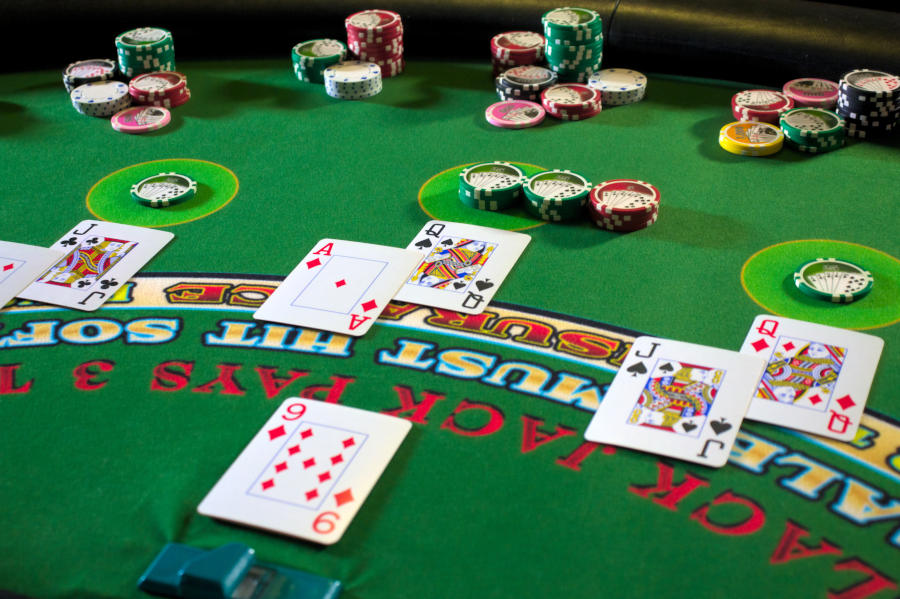
Blackjack hand signals can feel like a secret language when you first approach a live casino table. One player taps the felt, another waves a hand above the layout, and someone else raises two fingers before adding chips. Each movement communicates a specific decision to the dealer.
The gestures are simple, but their purpose is important. As the updated Vegas Aces dealer training guide explains, casino procedures are built around readability. The dealer, player, floor supervisor and surveillance team should all be able to understand what happened during a hand.
Preparation also includes deciding what you can afford to spend before you sit down. Players comparing recurring promotional value can review the Shuffle monthly bonus calculator available through Fair Gambling. Its results are estimates rather than guaranteed rewards, so current casino terms, eligibility conditions and personal spending limits still need to guide every decision.
What Blackjack Hand Signals Mean
Blackjack hand signals are non-verbal gestures players use to tell the dealer whether they want to hit, stand, double down, split or surrender.
At a face-up table, you might tap the felt when you want another card or wave your hand horizontally when you want to stand. When doubling or splitting, you combine a hand gesture with the correct placement of an additional bet.
The signal creates a visible record of your decision. That matters because a casino floor can be noisy, and spoken instructions may be misunderstood. A deliberate gesture is easier for the dealer and surveillance staff to review if a dispute occurs.
The correct movement can depend on how the cards are dealt. Face-up shoe games and face-down handheld games use different hit and stand procedures, while doubling and splitting are communicated in broadly similar ways.
Blackjack Hand Signals at a Glance
The following movements are commonly used in face-up blackjack games.
| Decision | Common Hand Signal | Chip Action |
|---|---|---|
| Hit | Tap or lightly scratch the felt towards yourself | None |
| Stand | Wave your hand horizontally with the palm down | None |
| Double down | Raise one finger after placing the extra wager | Place the permitted amount beside the original bet |
| Split | Raise two fingers after placing the extra wager | Place a matching wager beside the original bet |
| Surrender | Draw a short line behind the bet with one finger | Leave the original wager in place |
These are standard conventions rather than a promise that every casino follows an identical procedure. Watch the table and ask the dealer whenever the house uses an unfamiliar layout or rule.
Why Hand Signals Are Important in Live Blackjack
Blackjack decisions affect the hand immediately. Once a dealer delivers another card, the action may not be reversible simply because the player says that something else was intended.
A clear hand signal reduces that risk.
Visible gestures also help protect everyone at the table. The player has a record of the requested action, the dealer can follow established procedure, and the casino can review what happened when a question arises.
Signals also improve the pace of play. A dealer may be responsible for several active positions during each round. Recognisable gestures allow the dealer to move from one player to the next without repeatedly asking for clarification.
Using blackjack hand signals therefore serves four practical purposes:
- It makes the player’s decision clear.
- It reduces misunderstandings.
- It supports casino game security.
- It keeps the game moving at a comfortable pace.
The movements do not need to be dramatic. A small but deliberate gesture made beside or behind the betting area is generally clearer than an exaggerated wave over the cards or chips.
Common Blackjack Hand Signals for Face-Up Games
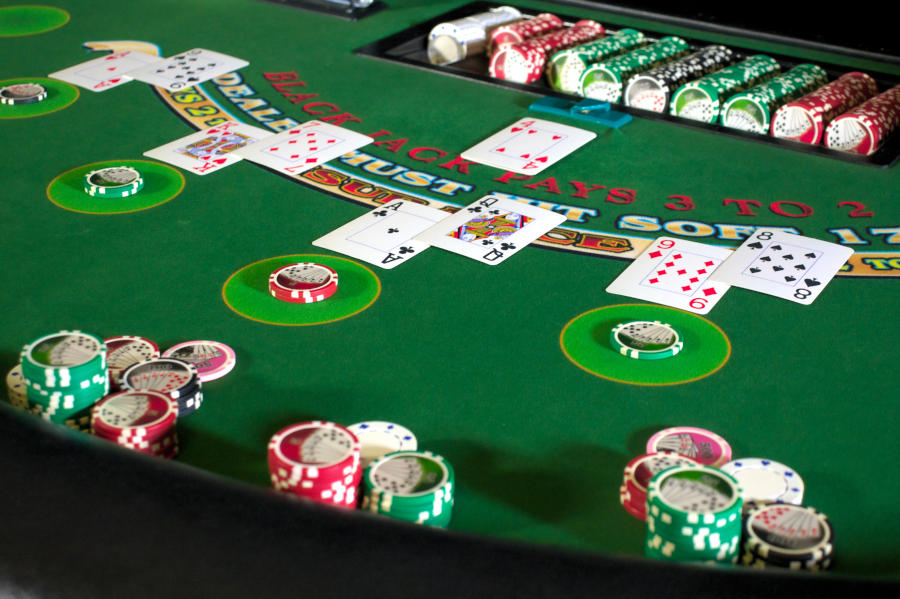
In a face-up shoe game, the dealer places the player’s cards on the table with their values visible. Players are generally not permitted to touch those cards.
The player communicates each action through a gesture and, where necessary, the placement of additional chips.
How to Signal Hit
A hit means you want another card from the dealer.
To hit in a face-up blackjack game, tap the felt near your cards with one or two fingers. You can also make a small scratching movement towards yourself.
Keep the gesture away from your wager. Tapping directly on the chips could make the action less readable or appear as though you are attempting to adjust the bet after the cards have been dealt.
Once the dealer recognises the hand signal, another card is added to your hand. You may then hit again, stand or make another available decision based on the new total.
Make the movement once and wait for the dealer to respond. Repeated tapping is unnecessary and may create confusion if the dealer is already delivering the requested card.
How to Signal Stand
Standing means you do not want another card.
Extend your hand with the palm facing down and wave it horizontally above or beside your cards. The motion resembles a gentle side-to-side brush through the air.
Some casinos and dealers use the word “stay” instead of “stand”. Both expressions describe the same decision, but the visible movement remains important.
A head shake or verbal “no” may not be enough. The dealer may pause and ask for the standard hand signal before moving to the next player.
Keep your hand clear of the chips. Once you have made the stand gesture, your hand is complete unless a special rule or dealer correction applies.
How to Signal Double Down
Doubling down increases your original bet in exchange for receiving exactly one additional card.
First, place the extra chips beside your original wager rather than on top of it. Keeping the two amounts separate makes the action readable to the dealer and cameras.
Next, raise one finger or point with one finger towards the betting area. This indicates that you want to double rather than split.
Many tables allow a player to double with an amount equal to the original bet. Some permit doubling for less, while others apply restrictions based on the player’s first two cards. Check the table rules rather than assuming that every casino offers the same options.
After the dealer confirms the decision, one additional card is dealt. The hand then stands automatically.
Do not add chips after the double-down card has been delivered. Decide how much you are wagering before placing the additional bet and making the hand gesture.
How to Signal Split
Splitting turns a qualifying pair into two separate hands. Each hand requires its own wager.
Place a second bet equal to the original bet beside the first wager. Then raise two fingers, normally the index and middle fingers, in a V-shaped gesture.
The two-finger signal distinguishes a split from a double down. Both actions involve adding chips, so the gesture tells the dealer exactly how those chips should be treated.
The dealer will separate the cards and add another card to each new hand. You then play each hand individually according to the casino’s procedure.
Do not attempt to separate face-up cards yourself. The dealer controls the cards and arranges the two hands.
The rules for resplitting, splitting aces and doubling after a split can vary. A split ace that receives a ten-value card is also usually treated as 21 rather than a natural blackjack because it was not formed from the original two-card hand.
How to Signal Surrender
Surrender allows a player to give up the hand and forfeit part of the original bet. It is not available at every table.
A common surrender signal is to draw a short horizontal line on the felt behind the wager using one finger. Because this procedure varies more than hitting or standing, say “surrender” at the same time and wait for the dealer to confirm the action.
Late surrender is generally available only as the first decision on the original two cards and after the dealer has checked for blackjack where required. Other variants may use different rules.
Never assume that surrender is offered. Ask before the game begins if the option affects your strategy.
Blackjack Hand Signals for Face-Down Games
Some single-deck and double-deck blackjack games are dealt face down, allowing players to hold their cards. These are often called handheld or pitch games.
The hit and stand movements differ because the cards themselves form part of the signal.
To hit, lightly scrape the edges of the cards against the felt towards yourself. Do not bend, mark or lift them away from the table.
To stand, slide the face-down cards partly beneath the original wager. Avoid pushing them into the chip stack or moving the bet.
When doubling down or splitting, place the cards face up on the table and add the required chips beside the original wager. Use one finger for a double and two fingers for a split unless the dealer gives different instructions.
| Decision | Face-Up Game | Face-Down Game |
|---|---|---|
| Hit | Tap or scratch the felt | Lightly scrape the card edges towards yourself |
| Stand | Wave your hand horizontally | Slide the cards partly beneath the wager |
| Double down | Add chips and show one finger | Turn the cards face up, add chips and show one finger |
| Split | Add chips and show two fingers | Turn the cards face up, add chips and show two fingers |
Card-handling rules are strict. Keep the cards above the table, avoid passing them to another person and use only the permitted number of hands when holding them.
When uncertain, place the cards down without making a decision gesture and ask the dealer what the house requires.
Do Signals Change Between Single-Deck and Multi-Deck Games
Yes, the number of decks does determine the hand signal.
The biggest distinction is whether the cards are dealt face up or face down. Multi-deck shoe games are commonly dealt face up, while some single-deck and double-deck games use a handheld procedure.
That is not universal. A casino may deal a double-deck game face up, so players still tap for a hit and wave for a stand.
Watch the first round before joining an unfamiliar table. The dealing format and house procedure are more reliable guides than the number of decks listed on the sign.
Are Hand Signals the Same at Every Casino
The main signals are widely recognised, but procedures can differ between casinos.
Tapping for a hit, waving for a stand, showing one finger for a double and two fingers for a split are common. Differences are more likely to arise in surrender procedures, handheld games and additional-bet placement.
House rules may determine:
- Whether players can touch the cards
- Where an additional wager must be placed
- Whether doubling for less is permitted
- Whether doubling after splitting is allowed
- How many times a hand may be split
- Whether surrender is available
- Whether a double-down card can be dealt face down
- Whether verbal confirmation is also required
The dealer’s instructions take priority over what you have seen at another property. A professional dealer would rather answer a brief procedural question than resolve an unclear action after another card has been dealt.
What Happens When a Signal Is Unclear
Forgetting a hand signal is not normally a serious problem. First-time players often need a reminder.
When a gesture is unclear, the dealer may pause, ask what you intend to do and request that you repeat the movement. The dealer might also demonstrate the correct signal.
The greater risk occurs when a player says one thing but signals another. For example, someone might say “stand” while tapping the table. The visible gesture could be interpreted as a request for another card.
Make sure your words and movement agree. When you realise you have made an ambiguous gesture, clarify it before the dealer acts.
| Common Mistake | Why it Causes Trouble | Better Response |
|---|---|---|
| Pointing without a clear signal | It may resemble a hit, double or general question | Use the complete standard gesture |
| Moving chips during the hand | It may look like an attempt to change the wager | Keep your hands away from settled bets |
| Touching face-up cards | Players generally do not control those cards | Signal beside or behind the betting area |
| Speaking one action while signaling another | The visible movement may govern the decision | Stop and clarify before a card is dealt |
| Hiding the gesture behind chips or drinks | The dealer and cameras may not see it | Make one deliberate movement in open view |
If an incorrect card has already been dealt, do not touch the cards, chips or dealer’s hand. Calmly explain what happened. The dealer may call a floor supervisor to apply the casino’s irregularity procedure.
Can Verbal Instructions Replace Hand Signals
Verbal instructions can support a decision, but they should not replace the appropriate gesture at a live casino table.
Casino floors can be loud, and similar words may be difficult to distinguish. A visible movement gives the dealer a clearer and more reviewable instruction.
Beginners can say “hit”, “stand”, “double” or “split” while using the corresponding gesture. That combination often makes the learning process easier.
Spoken communication is especially valuable when asking about rules. Before betting, ask whether the dealer hits soft 17, whether surrender is available, whether doubling after a split is permitted and how players should handle cards in a pitch game.
Do Live Dealer Online Games Use Hand Signals
Live dealer online blackjack features a human dealer, but players normally make decisions through on-screen controls.
Buttons allow you to hit, stand, double, split or surrender when the option is available. Your selection is transmitted electronically to the table.
A physical wave or tap will not normally register as the official decision. The software interface replaces the gestures used in a land-based casino.
Pay attention to the decision timer. When time expires, the game proceeds according to the platform’s timeout rules, which may not match the action you would have chosen.
Learning the gestures is still useful for anyone planning to move from online blackjack to a physical live casino.
Blackjack Strategy Decisions Are Not Hand Signals
A hand signal communicates a choice. It does not determine whether that choice is strategically sound.
A player can execute the correct hit gesture while making a poor playing decision. Basic strategy, table procedure and bankroll management are related parts of the experience, but they are not interchangeable.
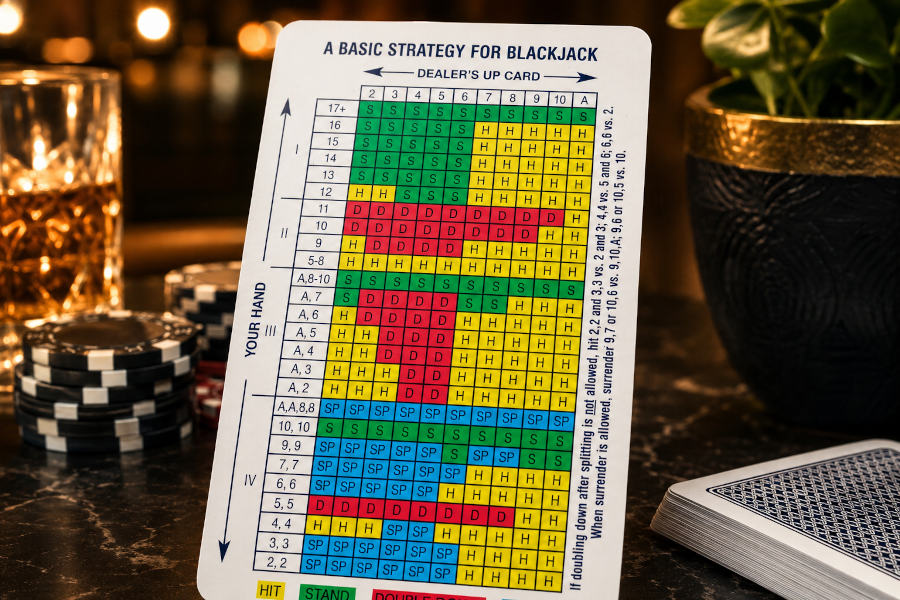
Should You Hit 16 Against a Dealer 7?
With a hard total of 16 against a dealer 7, common basic strategy calls for a hit.
A hard 16 has no ace being counted as 11. Standing leaves the player with a weak total against a dealer upcard that often develops into a stronger made hand.
A pair of eights should be considered separately because basic strategy commonly treats it as a splitting decision rather than an ordinary hard 16.
The exact strategy can depend on the table rules and the cards making up the total. Once you have chosen to hit, tap the felt in a face-up game or use the appropriate card movement in a handheld game.
Why Is 22 a Push in Some Blackjack Games?
A dealer total of 22 is not a push in standard blackjack. Under ordinary rules, any dealer total above 21 is a bust.
Certain variants change that outcome. The official Nevada Gaming Control Board rules for Free Bet Blackjack include a dealer-pushes-on-22 provision.
That rule is part of the variant’s trade-off. Players may receive special free-double or free-split features, while a dealer 22 does not produce the usual result on qualifying hands.
Read the table signage before playing. A rule used in Free Bet Blackjack should not be assumed to apply to a standard game or another blackjack variant.
What Is the 777 Rule in Blackjack?
There is no universal 777 rule in standard blackjack.
The phrase commonly refers to a side bet, promotional feature or variant involving sevens. A paytable might award different amounts for one seven, two sevens or three matching sevens, but the exact requirements differ between games.
Check whether suits, card order or dealer cards affect the payout. Also confirm whether the feature is a separate side wager or part of the main game.
A 777 side bet has its own probabilities and does not change the standard hand signals for hitting, standing, doubling or splitting.
Blackjack Hand Signals FAQs
What are the standard hand signals for blackjack?
In a face-up game, tap the felt to hit and wave your hand horizontally to stand. Add the permitted wager and show one finger to double down. Add a matching wager and show two fingers to split. Surrender commonly uses a short line drawn behind the bet, although house procedures vary.
Are blackjack hand signals required in a casino?
Live casinos generally expect players to use visible gestures because they provide a clear record for the dealer and surveillance staff. A dealer may ask you to repeat the physical signal even after you have spoken your decision.
Can I use verbal cues instead of hand signals?
Verbal cues can accompany a signal but may not replace it. Use both when learning and follow the dealer’s instructions.
Do blackjack hand signals differ between casinos?
The basic movements are broadly consistent, but surrender, handheld-card procedures, chip placement and verbal confirmation can vary.
What happens if I forget or misuse a signal?
The dealer will usually pause and ask you to repeat or clarify the action. Correct the misunderstanding before another card is delivered. A floor supervisor may become involved when the action has already affected the hand.
Are blackjack hand signals used online?
Automated and live dealer online games normally use screen buttons rather than physical gestures. The terminology remains the same, but the interface communicates the decision electronically.
Is there a signal for receiving a double-down card face down?
There is no universal separate gesture. Make the normal double-down signal, then verbally request that the card be dealt face down before the dealer delivers it. Whether the request is permitted depends on the casino.
Are signals different in single-deck blackjack?
They can be different when a single-deck game is dealt face down and the player holds the cards. The difference comes from the dealing procedure, not the deck count alone.
What Players Should Remember at the Table
Blackjack hand signals become intuitive once you connect each movement to its purpose. Tap for another card, wave to stand, show one finger when doubling and two fingers when splitting. In a handheld game, use the cards only as the dealer instructs.
Clarity matters more than confidence. Make one deliberate gesture, keep your hands away from settled wagers and ask the dealer whenever you are uncertain. No reasonable dealer expects a first-time player to know every house variation.
Good table etiquette should also be paired with responsible bankroll decisions. Set a spending limit and time limit before playing, and do not increase either limit to recover a loss or qualify for a promotion.
Before depositing, readers can use Fairgambling to compare current bonus tools, review available code drops and assess offers against limits they have already chosen. Availability, eligibility and terms can change, so verify every promotion directly and never treat a potential reward as guaranteed value.
Blackjack should remain entertainment. Step away when the session stops being enjoyable, avoid chasing losses and remember that even perfect hand signals cannot alter the mathematical risk of the game.
Disclosure: This article contains sponsored content.
Enjoyed this article?
Join our newsletter to get the latest casino industry articles delivered straight to your inbox.
Related Free Learning Hubs: Blackjack, All Hubs
Related Terms & Definitions: Basic Strategy, Double Down, Hand Signal, Blackjack, Down Card, Face Down, Bankroll, Face Up, Natural, Readers, Scratch, Shuffle, Full Dictionary
Related Posts
Blackjack Strategy Chart: Basic Strategy for Every Hand
Use our free blackjack strategy chart to learn when to hit, stand, split, or double down. Printable charts for single, double, and shoe games.
The New Player at Third Base Didn’t Ruin Your Blackjack Hand
Sep 22, 2026 Monika Dragojlovikj
Third-base players can change who receives the next card, but they cannot predict it. This is why the blackjack myth survives at live tables.
Blackjack Payout Calculator & 3:2 Payout Chart
Download the official 3:2 Guide instantly. Use this printable PDF and our FREE strategy course to master basic strategy and guarantee you maximize your odds.

12 Things You Should Never Do at a Blackjack Table
Aug 30, 2026 Heather Ferris
Discover the 12 blackjack mistakes that can expose a rookie, annoy the table, and even get you kicked out.
How to Use a Blackjack Payout Calculator
Learn how to use a blackjack payout calculator with simple step-by-step examples. Calculate 3:2, 6:5, insurance, and blackjack payouts accurately every time.
6:5 Blackjack Explained: Is It Worth Playing?
Aug 2, 2026 Daniel Odeyemi
Learn what 6:5 blackjack means, how it compares to 3:2 payouts, and why many experienced players avoid 6:5 blackjack tables.
Table of Contents
- # Back to Top
- What Blackjack Hand Signals Mean
- Blackjack Hand Signals at a Glance
- Why Hand Signals Are Important in Live Blackjack
- Common Blackjack Hand Signals for Face-Up Games
- Blackjack Hand Signals for Face-Down Games
- Do Signals Change Between Single-Deck and Multi-Deck Games
- Are Hand Signals the Same at Every Casino
- What Happens When a Signal Is Unclear
- Can Verbal Instructions Replace Hand Signals
- Do Live Dealer Online Games Use Hand Signals
- Blackjack Strategy Decisions Are Not Hand Signals
- Blackjack Hand Signals FAQs
- What Players Should Remember at the Table