
Series: How to be a Floor Supervisor • Part 5 of 10
Game Security and Table Protection
Game Protection
Game protection is another term that gets thrown around often, usually to explain the reason behind a procedure or protocol. The term is used a lot, sometimes by people who don’t even really know what it means. But that won’t be you guys!
When we say you need to know game protection, we mean you need to be aware of threats to the integrity of the game. Threats can be things like cheating, advantage play, collusion, and players taking shots at you due to mistakes or procedural errors. We need to not only be aware of these threats, but know how to protect the games from them.
Today, we’ll give you the fundamentals of game protection so you can be prepared for these vulnerabilities on the casino floor.
Cheating
First, we’ll talk about cheating. Cheating is defined as manipulating the outcome of the hand, whether it’s the decision itself, or the amount that is paid out. It’s the least common, so we can cover it quick and get onto the stuff you’re more likely to encounter.
The most common forms of cheating can be deterred by simply paying attention and being in control of the game. If procedures are followed directly, it makes it much harder for cheaters to find an opportunity to cheat.
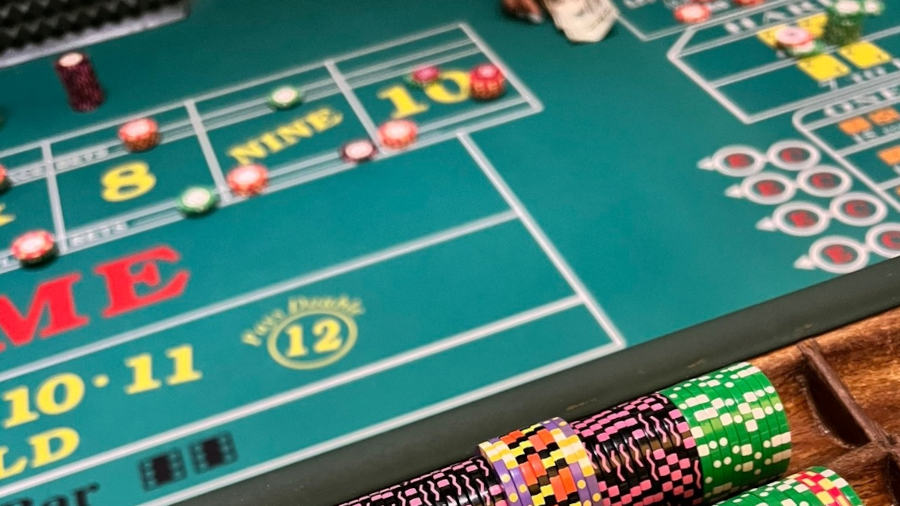
The form of cheating that occurs most commonly is past posting. If you’re not sure what past posting is, it’s when a player puts a bet on a winning outcome after the decision is made. For example, on craps, if the shooter rolls the dice, and everyone is looking towards the other end of the table to see the what number comes, and its a 3, a player (usually the one right next to the dealer) will quickly place a bet on the field or on the Don’t Come, either of which would be winners.
If the dealer is dealing correctly, this won’t work. They’ll know the bets on the table, and which players they belong to. They’ll also not be looking towards the other side of the table to see the dice. We call that hawking the dice.
Another example would be on roulette, when a number hits and then someone quickly places money on a winning bet while the dealer isn’t looking. Sometimes there is even someone else in on it to distract the dealer so the other person can put a winning bet down after the number is already established.
Another similar cheating technique is called pinching/capping. This is when a player (usually in the first or last spot on the table) caps money on top of a winning bet, or pinches money off of a losing bet after the outcome is determined.
Again, if the dealer is dealing correctly, these moves will be nearly impossible to pull off. If you add in that you, as the supervisor, now know these moves and know how they happen and how to watch for them, it’s nearly impossible to pull off.
A little tip that will help you with watching for tactics like these is to always be in control of where you’re looking. Don’t allow yourself to be distracted or told directly or indirectly to, “look over here.” Distraction is the easiest and most common tactic in order to pull off something like cheating.
Some of the most common distraction tactics are yelling, drink spills, or dropping something on the floor. I’m certainly not saying that you shouldn’t help someone if there is a drink spill or if they drop something, but be in control of where you’re looking, and when you take your attention away to pick something up or clean up a spill, especially if it requires taking your eyes off the game, away from the money.
Something that happens a lot is a dealer dropping cards or chips on the floor. To maintain game protection, we recommend having the dealer pick it up while you watch the rack. There will be exceptions to that, like if the dealer is older, or pregnant, or doesn’t move well. We’re just saying that whenever it’s reasonable, the dealer should pick up what they drop on the floor so you can maintain visual on the rack and the table.
Advantage Play
Now, let’s talk about advantage play. It’s much more common, much easier to pull off, and much harder to detect and prevent. Advantage play by definition is taking advantage of the rules or procedures of the game in a way that the houses advantage is flipped so that the player has an advantage. It’s different from cheating as it doesn’t require manipulation of the game or the bets. The distinction between advantage play and cheating is important because cheating is illegal, and advantage play is not.
There are two types of advantage play that you’ll see more than any: hole carding, and card counting.
You might think that hole carding only happens on blackjack, but it’s quite a common tactic on poker derivative games as well. On those games, it’s fairly easy to prevent hole carding by using security cards in the shuffle machine that cover the dealer’s cards and/or the community cards as they are pulled out of the machine.
Not all casinos are utilizing that tech and that option though, so it’s our job to ensure that the dealers are protecting those cards from being seen as they’re taken out of the machine. The dealers of course should be properly trained, but sometimes they get lax on procedures or don’t understand the importance of making sure the cards aren’t shown.
Hole carding does happen on blackjack too. It can most easily be done when the dealer has a ten-value card or an ace showing, and checks for blackjack. Of course, the cards should stay flat to the table and be slid into the peeker. Some dealers, though, tend to lift them up a bit, or peel back the corners when they slide the cards across the table and into the peeker. There are many ways to perform this motion without lifting the cards or peeling the corners, but lots of dealers do it. That’s why we’re here after all, to catch errors like these.
Players are also able to see the hole card on many handheld blackjack tables, if the dealer isn’t following correct procedures. Handheld blackjack games are more few and far between than ever, so we won’t spend a ton of time on it, but in a nutshell, if the dealer isn’t careful about how they put their second card, the hole card, on the table, players may be able to see it.
Whether on blackjack or any of the other games, sometimes a player will give away that that’s what they’re trying to do by sitting real low in their seat, or ducking down to pick something up or tie their shoe, or whatever really, when the dealer is bringing out the card or cards they’re trying to see.
Another big giveaway of hole carding is when the player plays in a way that differs greatly from typical playing strategies. It’s a good habit to get into to question things. Why are they playing differently and winning more? Maybe they’re getting a glimpse of a hole card. That goes for blackjack and any of the derivative games as well. That’s where the investigation usually starts, with erratic, nonsensical playing strategies.
Always keep in mind the possibility of hole carding as you watch games being dealt, and guests playing them. Keep in mind that they might be sitting low or ducking down often for a reason, and/or they might be playing nonsensically for a reason.
Card Counting
Card counting might be the most famous and well-known threat to casinos. There have been movies made about it, books written about it, and YouTube channels all about it. Everyone knows about card counting, but very few people actually know how to detect card counters.
Now, we could fill a whole training video on card counting. It’s very intricate and involved, but also very hard to absorb. So, rather than give you a ton of information about how to count cards, we’ll just tell you a few things that will certainly give you a leg up on your peers when it comes to card counting.
First off, a very basic description of a card counter is someone who observes the cards and is able to keep track of how many high cards (tens and aces) are remaining in the deck compared to how many low cards (2s through 6s) are remaining. The more high cards remaining, the better the situation is for the player, and the more they’ll bet.
There are quite a few misconceptions about card counting that we’re going to bust for you that will help you know what to expect when it comes to card counters.
The biggest misconception is that they go from betting small to betting huge right away. For example, if a player is betting $25 for a while, then jumps to $1,500, there are a lot of people in the business who would immediately suspect that player of being a card counter, especially if they win that big hand. Let me tell you, though, that player is absolutely not counting cards.
A card counter would not have that big of a bet spread, and the count would not change enough to warrant that big of a bet spread from one hand to the next.
As far as the bet spread that you should look for, on a double deck game, look for something like a 1-6 spread. That means if their minimum bet is $25, their max may be something like $150. On a six or eight-deck game, the bet spread will be bigger. Look for something like 1-20. That means if their minimum bet is $25, they may bet $250 on two hands at their max. Those numbers could fluctuate a little from player to player, as there are a lot of variables that help counters know how much they can/should bet, but we won’t get into that today.
The other big misconception about card counters is that they play perfect basic strategy. They don’t. As the count goes up and down, the correct play for each hand could change too. There are more than 100 hands that a card counter may play differently from basic strategy, depending on the count.
We’re not going to teach you all of those, or how to calculate them, because again, that would be a whole course on its own. We can tell you, though, that when counters are betting their higher amounts, they will generally play more conservatively when it comes to busting, staying on hands they might normally hit on like 15s and 16s against 9s and 10s, things like that. This is because the count is higher and they’re more likely to bust.
Conversely, when they’re betting their minimum bet, they’ll likely play more aggressively when it comes to busting, hitting 12s and 13s against 4s and 5s, and other hands like that. This is because the count is lower, so the likelihood that they will bust is lower, so they’re more likely to make a good hand without busting.
Since this is a course on casino supervision, we won’t go into more depth into advantage play, but armed with this information that we’ve given you, you’ll already be ahead of many of the people around you.
With card counting, as with hole carding, or anything really, it’s a good idea to question. Why are they playing like this? Why are they betting like this? Is there a pattern? Is there a progressive betting system they seem to be trying to use?
The best floor supervisors can explain a player to the managers. Meaning being able to tell not just if they’re an advantage player or not, but if they’re using a positive or negative progressive betting system, and how good their basic strategy is. This kind of in-depth knowledge will set you apart for sure!
Enjoyed this lesson?
Join our newsletter to get the latest casino industry courses delivered straight to your inbox.
Series
How to be a Floor Supervisor
Part 5 of 10
Related Free Learning Hubs: Casino Management, All Hubs
Related Terms & Definitions: Hawking the Dice, Community Cards, Basic Strategy, Blackjack, Hole Card, Dropping, Capping, Counter, Minimum, Shooter, Shuffle, Casino, Full Dictionary
Related Courses

How to be a Floor Supervisor
Sep 7, 2026 Andrew Uyal
Master the skills casino floor supervisors need to protect the games, lead their teams, and keep the action running smoothly.
Buy Bets vs Place Bets
Jul 17, 2026 Massimo Morana
Learn the difference between buy bets and place bets in craps. Compare payouts, house edge, commission fees, and discover when buy bets are better than place bets.

Partnerships that keep the cards on the felt
Jan 6, 2026 Heather Ferris
Here is an overview of the sponsored products and advertising options available through Vegas-Aces.

How to Get a Job as a Casino Dealer in Italy
Sep 14, 2026 Alessandro Cina
Discover what it takes to become a casino dealer in Italy, from essential skills and requirements to career opportunities.

How to Deal Caribbean Stud Poker
Aug 16, 2026 Alessandro Cinà and Heather Ferris
A dealer’s guide to running Caribbean Stud Poker: the table layout, hand rankings, the Ante and raise, dealer qualification, payouts, and a step-by-step deal.

Crap Stick Calls
Mar 25, 2026 Daniel Odeyemi and Heather Ferris
We interviewed a veteran dealer with 30+ years of experience to bring you the most authentic craps stick calls. Learn the rhymes and calls used in casinos today.
Table of Contents
Series Navigation
Part 5 of 10
- Part 3: How Casino Supervisors Keep the Games Moving
- Part 4: Monetary Transactions: Protecting the Money
Part 5: Game Security and Table Protection
Current article
- Part 6: Dealer Mistakes Every Floor Supervisor Must Catch
- Part 7: Player Ratings: Getting the Numbers Right