
Who Invented Three-Card Poker?
Three Card Poker is one of the top three popular poker-style table games in Las Vegas, the world's entertainment capital. It trails only behind Pai Gow Poker and Ultimate Texas Hold'em, and it only took a decade.
Derek Webb invented Three Card Poker in 1994. He aimed to give players a table game option with three distinct characteristics: speed, simplicity, and high payouts. The result? Three-card poker is now available in about 58 Las Vegas casinos with over 110 active tables across the Strip, local markets, and Downtown.
Three Card Poker’s success gave wings to other proprietary table games. But let's dial back to see how it all began.
Who Is Derek Webb?
Derek Webb is renowned as the Three Card Poker inventor, but there is more to him.
From Bluffing to Inventing
Derek Webb is a British former professional poker player who became a casino game inventor. His playing career spanned from the early 1980s to the mid-1990s, beginning in UK card rooms.
Later, he traveled to the US to compete in tournaments, including the classic World Series of Poker (WSOP).
From his Hendon Mob profile, it can be deduced that Derek Webb had a few significant wins. His total cash earnings are $102,888, which is impressive, especially given it was many years ago. However, a losing streak in the mid-1990s led him to entrepreneurship, where he invented Three Card Poker.
Why He Wanted to Create a Faster Poker Game
Derek Webb, having known the ins and outs of poker, observed what most players need from the classic game: they don't want to get bored, they want to win more money, and they want to play without many complex rules. His answer to this plight was to develop Three Card Poker, combining the speed of Blackjack with the mechanics of Poker. Derek adapted an old card game called 3 Card Brag, where the rules are slightly different, and created Three Card Poker. 3 Card Brag is still played in English pubs to this day.
The Goals Behind Three Card Poker
Derek Webb didn't create a faster poker game for personal reasons alone. In an interview with The Guardian, he said: “The point of three-card poker was that it was easier to play … I had designed it to be fairer for the players.”
Speed, Simple rules, and attractive payouts are the three goals behind Three Card Poker.
When Was Three Card Poker Invented?
Three Card Poker was Invented in 1994. Its acceptance journey, however, wasn't smooth.
Creation in 1994
Derek Webb created Three Card Poker, giving it speed, simplicity, and the potential for high payouts. However, for casinos to agree to have it on their floors, he had to calibrate the house edge to make it attractive to casinos (the standard Ante bet today carries a 3.37% house edge per the Wizard of Odds analysis). Still, he went from one casino to another in Las Vegas, pitching his game, but was constantly rejected. This went on for two years until he got a break at the Grand Casino in Gulfport, Mississippi, in 1996. He reportedly had to stand by the tables to train dealers and talk to players about the game. Alas, a breakthrough, but there were legal issues that will be discussed soon.
Patent Approval in 1997
Derek Webb filed his Three Card Poker patent applications in the United States on July 19, 1995. It was officially granted in 1997 (U.S. Patent No. 5,685,774, issued November 11, 1997), giving the legal protection he needed to market the game.
Why UK Gambling Laws Slowed the Launch
While being based in the UK, Derek Webb could not get the British casinos to accept Three Card Poker until 2002. The major hassle was that there was no legal basis to accept the game as a "proprietary" game. Also, UK gambling regulations were strict regarding games with high-payout side bets. And Three Card Poker has Pair Plus or 6-Card Bonus as side bets. Additionally, the British Casino Association (now the National Casino Industry Forum) wanted to see some statistics on the game’s performance.
With all of these issues, Webb headed for the United States. However, in 2002, the UK government finally amended the regulations, leading to the acceptance of Three Card Poker in the British market.
Legal Battles Over Three-Card Poker
In 1999, Mikohn Gaming, owners of Caribbean Stud Poker, sued Webb for patent infringement. They claimed Three Card Poker violated their patents. Succumbing to pressure from the lawsuit, Webb sold the US rights to the game to Shuffle Master, now called Light & Wonder.
However, in 2007, Derek Webb discovered that Mikohn Gaming's Caribbean Stud Poker lawsuit against his game was fraudulent. He sued the company, claiming they only wanted to damage his invention. In a federal antitrust trial in Mississippi, WebbWebb won the case. A jury awarded him $13 million in lost profits, which was trebled under federal antitrust law, and he ultimately settled with Mikohn Gaming, which had been renamed to Progressive Gaming International Corp (PGIC), for $24.7 million ($20 million plus $4.7 million in legal fees, per the November 2007 SEC filing).
In 2008, Derek Webb went further and sued Shuffle Master. He alleged that they knew that Mikohn’s patent claims were untrue even before they bought the game from him. He won this lawsuit as well and settled for over 5.5 million in aggregate (per Shuffle Master's December 2010 SEC 8-K filing, comprised of approximately $4 million to settle the litigation and $1.5 million for licenses to Three Card Poker internet rights in the British Isles).
Winning the proprietary casino game lawsuits and the wide acceptance of his game in the US made Derek Webb very rich. In 2011, Webb sold Prime Table Games to Galaxy Gaming for approximately $23 million, marking the end of his active involvement in the table games business.
How Three Card Poker Works
It is easy to learn how to play Three Card Poker. The objective is to have a three-card hand that beats the dealer’s. You can also choose to bet on the value of your own hand by placing a side bet, Pair Plus.
Three Card Poker winning hands are similar to the standard poker hand ranking. However, your hand must be composed of three cards only, not five.
Also, in Three Card Poker, a Straight RANKS HIGHER than a Flush, the opposite of Standard Poker. This is because straights are mathematically rarer with only 3 cards.
Basic Rules
- A standard deck of 52 cards is used for gameplay
- An Ante bet must be placed before the playing cards can be dealt
- At the start of the game, three cards are dealt face down to players
- Players can only take two actions: raise or fold
- The dealer's and the player's hands are evaluated using the three-card poker hand rankings
- To determine the winner, the dealer must first qualify by having a Queen-high or better hand
Ante and Pair Plus Bets
To begin gameplay, you must place your bets in the betting area on the table:
- Ante: A wager that your hand will beat the dealer’s hand.
- Pair Plus (Optional): An independent side bet that the three cards you are dealt will contain a Pair or better.
When you are done placing bets, you and the dealer each receive three cards. Your cards are dealt face down, but you are allowed to peek. You then have to decide whether to fold or raise (play).
If you fold, you lose, i.e., forfeit your Ante bet and Pair Plus bet (if you placed one). If you raise, you must place a second bet called a play bet, which must be equal in size to your original Ante wager.
If the dealer does not qualify (does not have at least Queen-high), you get a 1:1 payout on your Ante bet and your Play bet is returned as a "Push" (no win, no loss). If the dealer does qualify and your hand beats the dealer's, you get paid 1:1 on both your Ante and Play bets. You only lose both wagers if the dealer qualifies AND has a better hand than yours.
The Pair Plus bet, if placed, is settled separately as it is independent. If you have a Pair or better, you get paid according to the table's paytable, whether the dealer wins or doesn't qualify.
Pair Plus Odds vary from one casino to another, depending on the paytable in use.
Why the Game Is Faster Than Traditional Poker
There are not many gameplay actions involved. You either raise or fold. Hence, Three Card Poker is faster-paced than traditional casino poker games.
Why Casinos Loved Three Card Poker
Aside from being one of the best proprietary casino games, there are three primary reasons why casinos love Three Card Poker:
- Faster Decisions Per Hour
As mentioned, there are only two actions you need to choose from: either to raise or to fold. You only need to know the value of your hand to make a decision. As a result, gameplay is fast. Up to 60 to 70 hands per hour can be played at a Three Card Poker table. And more bets per action is good for the house.
- Easy for New Players to Learn
Three Card Poker is one of the best poker casino games for new players. It's easy to learn as the rules are simple.
- Side Bets and Casino Profitability
Alongside the Pair Plus, three-card poker also offers a 6-Card Bonus side bet. It is popular in Las Vegas casinos, particularly at Caesars Entertainment properties.
6-Card Bonus involves combining the three cards you and the dealer each received to form the best five-card poker hand. If you do form a winning hand, you can receive a 1000:1 payout fpr a 5 card royal flush. Some casinos offer the "Millionaire Maker" side bet (typically at Caesars properties) which pays a top prize of $1,000,000 on a $5 bet for a 6-card Super Royal in Diamonds. The probability of hitting that top prize is 1 in 20,358,520.
However, while the side bets are attractive, they have a high house edge, benefiting casinos. The Three Card Poker house edge varies depending on the wager placed.
Per the Wizard of Odds analysis, the figures are:
- Ante bet: 3.37% under the most common pay table (Pay Table 1: 5/4/1).
- Pair Plus: ranges from 2.32% to 7.28% without a Mini Royal, and up to 7.73% with the Mini Royal line item. The current Las Vegas norm is Pay Table 7 at a 6.75% house edge.
- 6 Card Bonus: ranges from 8.56% to 15.28% across the four known pay tables.
- Millionaire Maker side bet: 18.10% on a $5 bet (and rises further if the player bets more, since the top prizes are capped at $1M / $100K).
The First Casino to Install Three Card Poker
The first casino to install Three Card Poker on its floor was Grand Casino Gulfport in Mississippi, United States, in 1996. The deal was championed by the property's Vice President, Barry Morris. They gave Derek Webb a chance to showcase his game to dealers and players. He had to personally train the property’s dealers, since three-card poker is a player-versus-house game.
Dealer Training and Challenges
Derek Webb had to train dealers at Grand Casino Gulfport in Mississippi on three-card poker because it introduced a new gameplay style. The challenge he faced was getting the dealers to understand how the game’s payout works.
Dealer Error Problems
Payout mistakes were the most common issue Webb had with dealers. Some dealers struggled with the Pair Plus bet being independent of the Ante bet. They sometimes forgot to pay players who won the bet but didn’t win the main Ante wager.
Teaching Casinos How to Run the Game
In the early stages, there was no rulebook for Three Card Poker because it was proprietary. Webb had to write the gameplay procedures himself. He drafted a manual explaining how the cards should be dealt, how wagers should be collected, and how the dealer’s qualifying hand (Queen-high) should be announced. Also, he had to get the dealers to adapt to the game's fast-paced gameplay.
Scaling the Game Across Casinos
Many casinos lacked space for Three Card Poker’s table on their floors, hindering its acceptance. Also, Webb had to pay licensing and other regulatory fees out of pocket, which were not small at the time. The lawsuits he faced were also a major hurdle to the scaling of three-card poker.
Webb eventually scaled the game by selling the U.S. and international rights (outside the British Isles) to Shuffle Master in 1999, reportedly for around $3 million, a price he later said was depressed by the ongoing Mikohn lawsuit. He retained the British Isles rights through Prime Table Games until selling that company to Galaxy Gaming in 2011 for approximately $23 million.
How Successful Did Three Card Poker Become?
Three Card Poker now ranks as the third-most-played poker game in Las Vegas. You will find it in 58 different casinos: 28 on the Strip, 11 in the Downtown, and 19 in the Locals markets. The game has also expanded into North American markets, with over 1,000 tables in operation.
Additionally, Three Card Poker has benefited from the expansion of online casinos, making it available in many countries worldwide.
Revenue Generated by the Game
In 2007, Three Card Poker generated $175M from 249 Nevada-installed tables, Let It Ride made $63.8M from 117 tables, and Caribbean Stud made $14.1M from 22 tables.
Three Card Poker is one of the most played casino table games and contributes significantly to annual table-games revenue. In Q1 2026, Lights and Wonder's earnings report disclosed that its Table Products segment, which includes Three Card Poker alongside its other proprietary table games, generated $63 million in revenue, a 24% year-over-year increase.
Did Derek Webb Invent 21+3?
Who invented 21+3? Derek Webb invented the 21+3 table game. Webb's 21+3 patent (US 6,481,719) traces its priority date to a UK application from 1995 and was formally filed in the U.S. in 2001. The 21+3 concept is a blackjack side bet, not a standalone game.
Difference Between Three Card Poker and 21+3
The 21+3 is one of the blackjack side bets. It is a 3-card Poker wager. Players must form a three-card hand using their initial two cards and the dealer's up card. The hand is judged using the three-card poker hand ranking. The 21+3 introduced a way to play Three Card Poker right inside blackjack, without the need for a separate table.
Why Side Bets Became Popular
Side bets became a popular concept with the success of Three Card Poker. They attract players by offering higher payouts. However, they have a higher house edge and offer some of the worst odds in casinos.
One of the common Three Card Poker myths is that Pair Plus is a good wager because of its high payouts. Like other side bets, its house edge is higher than the Ante/Play bet, and the odds of winning are low.
How Three Card Poker Changed Casino Gaming
Three Card Poker changed the approach to casino table games in the following ways:
Rise of Proprietary Table Games
Three Card Poker paved the path for many other proprietary table games. These are games owned and trademarked by an individual or company. They are not public domain games like Blackjack, Baccarat, or Craps, which casinos can offer without paying a fee. But a casino has to pay royalties or licensing fees to the creator of a proprietary game. Shuffle Master, now called Light & Wonder, receives the proprietary fee for Three Card Poker.
Simpler Poker Variants
Three Card Poker’s simple gameplay style shaped various poker variations. Examples include Four Card Poker, Crazy 4 Poker, and Mississippi Stud or Ultimate Texas Hold,em.
Influence on Modern Casino Side Bets
Since side bets are one of the features that earned Three Card Poker a place in players' hearts, many modern table games now offer them.
Final Thoughts
Derek Webb’s Three Card Poker is a masterpiece table game. It moved from a game that was rejected multiple times to one that casinos now pay licensing fees to have on their floor. And this success isn't by chance. It is a result of the game’s features meeting players' needs while still allowing casinos to maintain an edge. Three-Card Poker influenced the creation of many modern proprietary table games.
FAQ
Who invented Three Card Poker?
Three Card Poker was invented by Derek Webb, a British former pro poker player, in 1994.
When was Three Card Poker patented?
The game was patented in 1997. (U.S. Patent No. 5,685,774, granted November 11, 1997).
Why is Three Card Poker so popular?
The game is fast, simple, beginner-friendly, and offers exciting side bets and payouts.
Where was Three Card Poker first played?
The first casino installation was at Grand Casino Gulfport in Mississippi in 1996.
Enjoyed this article?
Join our newsletter to get the latest casino industry articles delivered straight to your inbox.
Related Free Learning Hubs: Three Card Poker, All Hubs
Related Article Archives: Table Game Inventors, All Articles
Related Terms & Definitions: Let It Ride, Royal Flush, House Edge, Blackjack, Face Down, Baccarat, Straight, Outside, Shuffle, Up Card, Action, Capped, Full Dictionary
Related Posts
How to Play & Deal 3 Card Poker
Jul 25, 2019 Heather Ferris
How do you play 3 Card Poker? Learn how to play and deal roulette online free for beginners.

Casino Hands-per-Hour: How to Calculate Game and Dealer Speed
Sep 20, 2026 Daniel Odeyemi and Heather Ferris
Learn how to calculate hands-per-hour in casino games, why game speed matters, and how blackjack, craps, roulette, and carnival games compare.
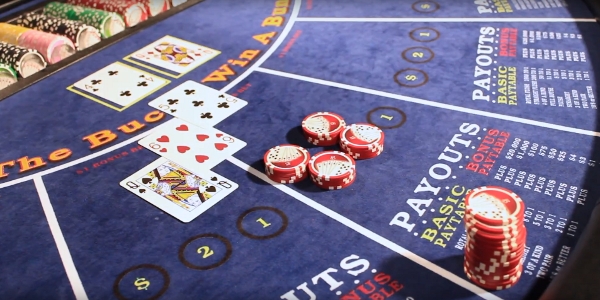
Who Invented Let-It-Ride Poker?
Aug 2, 2026 Daniel Odeyemi
Learn about Mr John Breeding, a former truck driver and founder of Shuffle Master, who created Let-It-Ride Poker as a marketing tool for his shuffling machine.

Five Poker Gambling Formats with Unusual Mechanics
Jul 22, 2026 Daniel Bech
Compare cards, boards, hand construction, pot splits and rotation across five poker gambling formats
How Mobile Blackjack Is Being Redesigned Around Speed and Player Control
Jul 10, 2026 David Fox
Mobile blackjack is evolving through larger controls, faster navigation and thumb-friendly design as developers adapt the game for smartphones

How Casino Games Get Approved
May 24, 2026 Daniel Odeyemi
Learn how gambling game inventors move casino games from ideas to casino floors through math reviews, lab testing, gaming commission approvals, and field trials.
Table of Contents
- # Back to Top
- Who Is Derek Webb?
- When Was Three Card Poker Invented?
- Legal Battles Over Three-Card Poker
- How Three Card Poker Works
- Why Casinos Loved Three Card Poker
- The First Casino to Install Three Card Poker
- Dealer Training and Challenges
- How Successful Did Three Card Poker Become?
- How Three Card Poker Changed Casino Gaming
- Final Thoughts
- FAQ