
How Mobile Blackjack Is Being Redesigned Around Speed and Player Control
A blackjack table used to demand a chair, a screen and a little patience. Today, the biggest battles happen between your thumb and a touchscreen. The cards have stayed the same; the technology around them has become a testing ground for mobile design, usability and player behaviour.
A blackjack player standing in a queue has no patience for tiny buttons, buried menus or a cashier that takes longer to load than the game itself. Mobile blackjack has forced developers to confront a simple reality: the game now lives on a screen that fits in a pocket. The cards have not changed, the rules have not changed, yet almost everything surrounding the experience has been rebuilt around speed, thumb-friendly controls and quicker access to a seat at the table.
The Race to Remove Every Extra Tap
Convenience has become one of the most valuable currencies in online gaming. Every additional screen, loading page or navigation step creates another opportunity for a player to lose interest before a hand has even begun. Blackjack operators understand that reality, which explains the growing focus on faster game discovery and cleaner mobile interfaces.
This is where the design philosophy behind VoltRush casino's UI and UX becomes relevant. The platform combines a catalogue of more than 7,000 games with extensive filtering tools that allow players to sort titles by provider, volatility and game type, while its live dealer offering and fast-withdrawal focus reduce the distance between opening an account and joining a table.
That approach reflects broader changes across mobile entertainment. Players already use smartphones to manage banking, shopping and streaming services; casino products increasingly follow the same expectations. Nobody wants to dig through multiple menus before reaching a blackjack table.
The result is a steady push toward fewer clicks, simpler navigation and quicker access to gameplay. Blackjack has become part of that movement because the game rewards momentum. A player who decides to sit down for a short session wants to reach the first hand quickly, make decisions easily and move through the experience without unnecessary obstacles getting in the way.
Blackjack Tables Are Being Redesigned for Thumbs
Mobile blackjack no longer assumes a player is sitting comfortably behind a desktop monitor. The modern user is more likely to be holding a phone in one hand while waiting for transport, standing in a queue or relaxing on a sofa.
Research highlighted by UX designer Dan O'Leary in 2025 found that 49% of smartphone users operate their devices with one hand, while another 36% cradle the phone and interact with a single thumb. Together, those figures suggest that roughly 85% of users primarily navigate through thumb-based interaction.
That behavioural change influences almost every aspect of mobile blackjack design. Controls need to sit within comfortable reach, and critical actions need to be visible immediately. Decision buttons cannot be hidden behind extra menus.
A traditional desktop blackjack layout often placed controls across a wide screen because a mouse could reach any corner instantly. Mobile interfaces work differently. Reachability becomes a design consideration. Hit and Stand buttons increasingly sit closer to the lower portion of the screen, while secondary functions are pushed out of the way until they are needed.
The blackjack table itself remains unchanged; the way players interact with it has changed dramatically.
Bigger Buttons, Faster Decisions
Blackjack revolves around a handful of decisions. Hit. Stand. Split. Double Down. Those actions sound simple, yet poor interface design can make them surprisingly frustrating on a small screen.
Writing for Nielsen Norman Group in 2019, UX researcher Aurora Harley observed that "fat fingers are not the real culprit; the blame should lie on the tiny targets," referring to the way poorly designed touch controls create usability problems.
Harley's research recommends touch targets of roughly one centimetre by one centimetre, giving users enough room to interact comfortably without accidental presses. That principle has obvious implications for blackjack.
Nobody wants to hit the wrong button during a hand because two controls were squeezed together to save screen space. Larger controls reduce mistakes and allow decisions to be made more confidently. They also help maintain the pace of the game because players spend less time correcting errors or searching for the right action.
The influence extends beyond blackjack. Mobile products across multiple industries have adopted larger touch targets and cleaner interfaces. Blackjack developers simply face the challenge more directly because every hand requires repeated interaction from the player.
Mobile-First Design Puts Gameplay at the Centre
Designing for mobile no longer means shrinking a desktop product and hoping for the best. Mobile-first development begins with the smallest screen and builds outward from there.
The Interaction Design Foundation notes that mobile-first design focuses on essential functions first, forcing developers to prioritise the features users actually need.
Blackjack benefits from that philosophy because the game itself is remarkably straightforward. Players need clear cards, visible betting information and immediate access to decision controls. Everything else is secondary.
That thinking appears across the wider casino industry. VoltRush, for example, displays RTP information alongside its game catalogue and allows players to filter games by volatility, category and provider, helping users reach relevant content without excessive navigation.
The broader lesson is that mobile design rewards simplicity. Interfaces become cleaner. Navigation becomes shorter. Attention stays focused on the game itself rather than the route required to reach it.
For blackjack, that creates an experience that feels faster even when the underlying rules remain exactly the same.
Speed Brings Benefits Alongside New Challenges
Faster access improves convenience, though speed introduces new considerations as well.
A player can join a table in seconds, make decisions quickly and move through multiple hands without interruption. That creates a smoother experience, especially during shorter sessions. It also places greater importance on personal discipline because fewer pauses exist between decisions.
Several design features help preserve player control:
- Clear display of betting information before a hand begins
- Easy access to account and transaction tools
- Session-management features that support responsible play
These tools become increasingly important as interfaces become more efficient. Good design is not simply about removing friction; it is also about ensuring that important information remains visible when players need it.
Casino operators have spent years improving the speed of their products. The next challenge involves balancing convenience with transparency, giving players the information required to make informed decisions without slowing the experience unnecessarily.
Mobile Blackjack Is Becoming a Different Product
The rules of blackjack remain familiar, yet the surrounding experience has evolved into something quite different from its desktop predecessor.
| Traditional Online Blackjack | Modern Mobile Blackjack |
|---|---|
| Desktop-focused design | Smartphone-first design |
| Mouse navigation | Thumb navigation |
| Multiple menu layers | Streamlined access |
| Smaller controls | Larger touch targets |
| Longer sessions | Shorter on-demand sessions |
The most successful products recognise that players now interact with games differently. VoltRush reflects that direction through mobile-focused navigation, extensive game filtering and rapid withdrawal processing, all of which support a quicker journey between account access and gameplay.
Blackjack remains one of the most recognisable casino games in the world. The cards are familiar. The objective is unchanged. The transformation has happened around the edges, where interface design, ergonomics and mobile behaviour now influence the experience as much as the game itself.
The next generation of blackjack products will probably continue moving in that direction because smartphone habits continue to influence the way people interact with digital entertainment.
The biggest story in blackjack is no longer taking place on the table. It is happening in the space between the player and the screen.
Gambling should be treated as entertainment, not a way to make money. Set limits, play within your means and take regular breaks.
Author Bio
David Fox is an experienced iGaming writer with a strong understanding of online casinos, sports betting and gambling regulation. He specialises in exploring the trends shaping modern wagering markets, helping readers understand the technology, culture and industry developments behind today's betting landscape.
Disclosure: This article contains sponsored content.
Enjoyed this article?
Join our newsletter to get the latest casino industry articles delivered straight to your inbox.
Related Article Archives: Table Game Inventors, All Articles
Related Terms & Definitions: Double Down, Blackjack, Readers, Seconds, Action, Button, Casino, Change, Corner, Dealer, Layout, Limits, Full Dictionary
Related Posts

Casino Hands-per-Hour: How to Calculate Game and Dealer Speed
Sep 20, 2026 Daniel Odeyemi and Heather Ferris
Learn how to calculate hands-per-hour in casino games, why game speed matters, and how blackjack, craps, roulette, and carnival games compare.

Who Invented Let-It-Ride Poker?
Aug 2, 2026 Daniel Odeyemi
Learn about Mr John Breeding, a former truck driver and founder of Shuffle Master, who created Let-It-Ride Poker as a marketing tool for his shuffling machine.

Five Poker Gambling Formats with Unusual Mechanics
Jul 22, 2026 Daniel Bech
Compare cards, boards, hand construction, pot splits and rotation across five poker gambling formats

How Casino Games Get Approved
May 24, 2026 Daniel Odeyemi
Learn how gambling game inventors move casino games from ideas to casino floors through math reviews, lab testing, gaming commission approvals, and field trials.
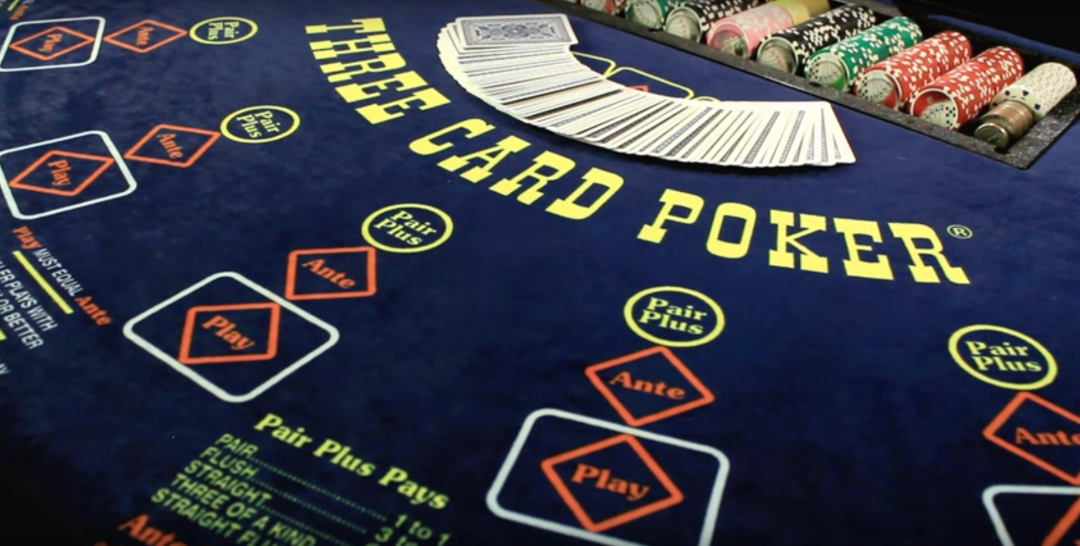
Who Invented Three-Card Poker?
May 24, 2026 Daniel Odeyemi
Learn about Derek Webb, the man who invented Three Card Poker, and why it became one of the most successful casino table games in history.

How Narrative-Driven Slots Are Taking Over
Apr 23, 2026 Gabriela Pelayes
Narrative-driven slots transform gameplay into evolving, story-based experiences, requiring strong platforms, continuous updates, and engaging progression systems.