
How Casino Games Get Approved
If you are a gambling game inventor, understanding how casino games move from an idea to a casino floor is one of the most important parts of the process. Every proprietary game, whether it becomes the next Three Card Poker or never leaves the trial stage, must pass through math analysis, testing laboratories, gaming commissions, and real-world casino trials.
Casinos are obligated to provide the best entertainment services to players, which involves offering a variety of games. All you need to do as soon as you walk in is to sit down, place your bets, and have fun. But have you ever thought about how games actually reach casino floors?
New casino games, particularly proprietary ones, go through testing, regulatory approvals, and casino trials before they are made open to players. This process may seem linear, but it is, in reality, complex.
In this article, we will provide a complete breakdown of how casino games get approved, from conception to scaling.
What Happens Before a Casino Game Is Released?
There are two categories of casino games: public-domain games, e.g., baccarat, blackjack, and roulette. Then there are the proprietary games. These are games invented by an individual or a company. A good example is Three Card Poker by Derek Webb.
Public-domain games are fun to play, but there are few of them. Casinos, therefore, depend on proprietary games to expand their offerings. However, a game cannot make it to the casino's floor unless it meets specific requirements.
Creating the Original Game Concept
A new casino game must be original in concept. It can be inspired by existing games or be a variant, but must be unique in its objective or gameplay.
Balancing the House Edge
For casino game development to succeed, the interests of both players and casinos must be met. Players are interested in payout offers and ease of gameplay, while casinos are interested in the house edge. The house edge must be high enough to ensure the casino makes a profit but low enough to sustain player interest.
Simplicity Matters
A casino game with complex gameplay mechanics can be difficult to scale. A new game must have simple, easy-to-follow rules that dealers and players can understand. “Simple, not stupid.”
The Math Behind Casino Games
Whether it's a game variant or a new proprietary table game, a game inventor cannot get their game licensed, regulatory approved, or purchased by a casino without providing comprehensive mathematical details.
Why Every Game Needs Mathematical Analysis
Adding a new table game to a casino's floor is a business decision. An accurate mathematical analysis informs the house on:
- Earnings per hour, per table
- Size of bankroll needed as a reserve if the game runs against the house
- Strength of the house edge. Is it strong enough for the casino to be profitable, but not so high that players quit after one gaming session?
Without the math, a casino won't accept having a game in its facility. If the new game is a slot machine, a Probability and Accounting Report (PAR) sheet will be required. If the game is a table game, a math sheet, sometimes called a game math summary, will be demanded.
House Edge and Expected Value
The house edge is the percentage of every dollar wagered on a game that the house expects to keep over the long run. Expected Value (EV), on the other hand, is, on average, the amount you can expect to lose or win per wager if you were to place the same bet millions of times.
To get the value of both parameters, the inventor has to list all possible outcomes the game can produce. If it's a card game, every possible combination of cards that can be dealt must be highlighted. The hands will then be categorized into losing or winning.
Knowing the outcome of every hand, probability is calculated by dividing the number of ways the outcome occurs by the total number of possible outcomes. Next, a payout is assigned to each winning hand.
For example, using the Wizard of Odds Three Card Poker Pair Plus side bet with the standard 1-4-6-30-40 paytable:
| Hand | Probability | Payout | EV Contribution |
|---|---|---|---|
| Straight Flush | 0.22% | 40:1 | 0.22% × 40 = +0.0868 |
| Three of a Kind | 0.24% | 30:1 | 0.24% × 30 = +0.0706 |
| Straight | 3.26% | 6:1 | 3.26% × 6 = +0.1955 |
| Flush | 4.96% | 4:1 | 4.96% × 4 = +0.1983 |
| Pair | 16.94% | 1:1 | 16.94% × 1 = +0.1694 |
| Loss (less than a pair) | 74.39% | −1 | 74.39% × −1 = −0.7439 |
Adding up all six EV contributions gives a total Expected Value of approximately −0.0233, or −2.33%. This means the player loses about 2.33 cents for every dollar wagered on the Pair Plus bet over the long run, giving the casino a house edge of approximately 2.32%, which matches the Wizard of Odds published figure for the standard Pair Plus paytable
If the calculated house edge is deemed too high or too low for the jurisdiction in which the game is being introduced, the inventor adjusts the payout schedule until the math is balanced.
Volatility and Player Retention
Volatility, also called variance, reveals how often the game pays and the size of the payout.
Volatility can either be high or low. In most table games, you can have both depending on the pay table structure. Main bets often have lower volatility compared to side bets.
Player retention is another factor casinos consider before accepting a new game. Inventors utilize psychological tools such as near misses, bonus rounds, or side bets to keep players playing longer.
Once the math sheet for a new game is established, the inventor has to run simulations to confirm that the math remains consistent with minimal deviation.
After a house edge is determined, the inventor will tweak the rules of the game, or the payouts, to raise or lower the house edge to it’s desired sweet spot.
Can You Patent a Casino Game?
Historically, yes, a proprietary casino game (an original game with a specified inventor) could be patented. Since 2014, however, US patent protection for casino game rules has been effectively closed off, as explained below.
Proprietary Casino Games Explained, History of Patenting
The idea of patenting casino games didn't emerge until the late 20th century. Casino floors had always provided standard games such as blackjack and baccarat, for which no one owned the rights. They were simply part of the culture, available to everyone, but they belonged to no one, until Derek Webb came into the picture.
In 1994, Webb invented Three Card Poker. He designed a simple, fast-paced poker variant in which players competed against the dealer rather than against each other. He patented the game in 1997 and went knocking on the doors of various casinos in Las Vegas, Reno and Atlantic City. Most were not interested. His break came in early 1996 at Grand Casino Gulfport in Mississippi, where Vice President Barry Morris took a chance on the game, partly through a personal connection: Webb knew Lyle Berman, who owned the Grand, from playing poker.
However, Webb faced legal battles after his invention was recognized, leading him to sell the game to Shuffle Master, now known as Light & Wonder. Three Card Poker, however, is to date the most successful proprietary table game ever invented. Webb established a blueprint that every other proprietary table game inventor has since tried to follow.
Why No More Patents
In the US, patenting a casino game has been effectively prohibited since 2014. The change came with the US Supreme Court case Alice Corp. v. CLS Bank. (573 U.S. 208, 2014). The Supreme Court used a two-step test, now known as the Mayo/Alice framework, to determine whether an invention is patent-eligible, ruling that "abstract ideas" such as fundamental economic practices cannot be patented merely by implementing them on a generic computer. Although the ruling was originally about a computerised scheme for intermediated financial settlement, lower courts soon applied the same framework to casino games.
In 2016, Ray and Amanda Smith tried to patent a new variation of Blackjack they had invented. The U.S. Patent and Trademark Office (USPTO) rejected it, and it went to the Federal Circuit Court of Appeals. There, the court applied the Alice two-step test to card games and ruled: “A wagering game is, effectively, a method of exchanging and resolving financial obligations based on probabilities created during the distribution of the cards... A set of rules for a game is an abstract idea.”
Nevertheless, some inventors still attempted to patent their games. In 2018, Marco Guldenaar Holding tried to patent a new dice game that uses a dice with physical markings on the faces. By doing this, they were able to present it as a real game rather than just an abstract idea. However, the Federal Circuit shut it down.
The Circuit Judge Mayer wrote: “While games may enhance our leisure hours, they contribute nothing to the existing body of technological and scientific knowledge. They should therefore be deemed categorically ineligible for a patent.”
These rulings ended attempts to patent a casino game in the US.
Famous Casino Game Patent Battles
The most famous casino game patent battles include:
Derek Webb Vs Mikohn Gaming
Shortly after his invention gained popularity, Derek Webb was sued by Mikohn Gaming in 1999. They are the publicly known owners of Caribbean Stud Poker, although the game's origin remains unclear. However, the company sued Webb for patent infringement. Lawsuits are often expensive, and Webb’s invention had yet to make any serious money for him to fight back for long. He therefore took a bold step, selling the US rights to the game to Light and Wonder, formerly known as Shuffle Masters. The case ended.
For many years afterwards, Webb continued investigating the lawsuit. In 2007, he concluded it had been fraudulent, a "sham litigation" designed to cripple Three Card Poker's expansion. He sued Mikohn in a federal antitrust trial in Mississippi and won. The jury awarded Webb $13 million in lost profits, tripled to $39 million under federal antitrust laws. Rather than continue to appeal, Mikohn, which had renamed itself Progressive Gaming International Corporation (PGIC) in 2005, settled in November 2007, paying Webb $20 million plus $4.7 million in attorney fees. PGIC is no longer operating.
Derek Webb vs Shuffle Master
With enough money to spend, Derek Webb went further in his investigation and sued Shuffle Master in 2008. He alleged that the company bought the game from him, knowing fully well that Mikohn’s patent claims were false. Again, he won the lawsuit and received over $2 million.
Gaming Commission Approval Process
A proprietary game, even if patented (or, post-2014, simply protected by trade secret and trademark), cannot be allowed on the casino floor unless approved by relevant gaming commissions. And before it's presented to the appropriate body, a certification report must be obtained.
Game Testing
Every new casino game must be submitted to a testing laboratory such as GLI (Gaming Laboratories International), BMM Testlabs, or eCOGRA for extensive technical audits. Some gambling commissions, Missouri, for example, demand that the test be conducted in a specific independent testing laboratory.
Depending on the game, the labs perform:
- RNG (Random Number Generator) testing: This is done for slots to ensure the game outcomes are truly random and unpredictable
- Return-to-Player (RTP) verification: This is to confirm the genuineness of the stated percentage payout to players (e.g., 95%).
- Math model review: This is to check that probability, odds, volatility, and paytables align with the published rules.
- Security checks: These are done to ensure the game's integrity cannot be compromised.
- Bonus feature testing: free spins, multipliers, and side bets in the game will be verified for authenticity.
Regulatory Review
Gaming commissions are regulatory bodies that oversee gambling businesses. They vary from one country to another, and in the United States, they vary from one state to another. This is the most technical stage in the casino game approval process.
Popular Gaming commissions include:
| Jurisdiction | Regulator |
|---|---|
| UK | UK Gambling Commission (UKGC) |
| Malta | Malta Gaming Authority (MGA) |
| New Jersey, USA | NJ Division of Gaming Enforcement |
| Nevada, USA | Nevada Gaming Control Board |
| Curaçao | Curaçao eGaming |
| Missouri | Missouri Gaming Commission |
Each casino gaming commission has its own standards. So a game approved in Nevada may still need separate approval in Missouri.
What Gaming Regulators Actually Review
Before approving a new table game, gambling regulators review the following:
- The game’s table layout.
- Complete mathematical analysis of the table game
- Playing rules and dealing procedures
- Paytables
- Brochures with relevant information on rules of play & paytables that would be made available to players
- Patent report or statement of ownership
- Responsible gambling features (UKGC)
Commonly, the Gaming Commission will charge a review fee, for example, Colorado's Division of Gaming charges $2,250 for a new table game application. However, getting approved is not the finish line. It's the start of continuous compliance obligations.
In summary, the process of getting a casino game approved begins with an Original Invention, followed by Lab Testing, Review by Gaming Commissions, and then Casino Trials.
Why Field Trials Matter
Simulation tests ensure the details of a game are correct, but do not translate to real-time play. Games must be tested in real casinos to see if they're worth being on the floor.
The new game must be offered to a casino for free as a trial lasting between 30 and 90 days. Revenue and player interest are monitored during the period. A lot of paperwork is also done, verifying the drop and the hold percentage, among other indicators. It becomes easier to attract other casinos to a new game when you, as the inventor, have convincing field-trial paperwork.
Why Many Games Fail During Trials
Many proprietary games fail during the trial phase for two reasons:
- Low revenue
- Low player engagement and retention.
Casinos have to pay the individual or company that owns the rights to a game on an agreed basis. Therefore, there must be a balance between entertainment and profitability, else the house will be at a loss.
Dealer Training Is Critical
A common problem casinos face when introducing new games is a lack of dealers experienced with that game. In the case of Three Card Poker, Derek Webb personally trained 30 dealers at the Grand Casino Gulfport, a detail he confirmed in his GGB Magazine interview: "In Mississippi for our trial at the Grand Gulfport, we had two games and 30 dealers."
Why Dealers Need Specialized Training
Dealers must be trained on a new proprietary table game to ensure the rules are followed and no payout errors occur. For example, Three Card Poker offers independent side bets. Webb discovered that dealers had challenges with paying the players. He had to train them on how to pay appropriately.
Common Problems During New Game Launches
- Mastering new rules of the game
- Calculating payouts based on a new paytable
How Dealers Influence Game Success
If there are no dealers to oversee the process of dealing a new table game, no one gets to play. A trained dealer can get players interested in a game by simplifying unclear rules.
Why Casinos Reject Most Games
There are five major reasons why casinos reject most new games:
- Game rules are too complicated for dealers to understand.
- Too low or high house edge, and with no features to make up for it.
- Poor revenue performance upon trial.
- Slow gameplay affects players' interest, leading to fewer hands-per-hour.
- Players find rules and paytables confusing.
Famous Casino Games That Succeeded
Below is a list of proprietary table games that became popular following their success on casino floors:
- Three Card Poker by Derek Webb (1994).
- Let It Ride by John Breeding in Shuffle Master (1993).
- Ultimate Texas Hold'em by Roger Snow of Shuffle Master (patent filed 2005; later distributed by Galaxy Gaming as Heads Up Hold 'Em and by Evolution as Extreme Texas Hold 'Em).
- Blackjack Switch by Geoff Hall (conceived 1999, debuted at G2E 2000, first installed Harvey's Casino Iowa in 2001, patented 2009, known for its Super Match side bet).
- 21+3 blackjack side bet by Derek Webb (US patent filed 1999, issued 2000).
How Long Does Casino Game Approval Take?
It takes between six months and a year for a casino game to be approved. But scaling can take longer. Here is the breakdown:
Regulatory Delays
Depending on the jurisdiction, regulatory review of a new casino game can take 2 weeks to 6 months. Regulations in the UK and US states like New Jersey are strict, which takes time. But for commissions like Malta Gaming Authority (MGA), it is fast, about 2 to 4 weeks.
Casino Testing Periods
An Independent Testing Laboratory can take 3 to 8 weeks to certify a new game. And if the game has an incomplete or poorly structured math review, the test period can be extended. In Nevada, a Field Trial is required, taking anywhere from 1 to 3 months. The game is placed on the casino floor and an extensive amount of paperwork tracks its status during that time. The eye-in-the-sky is required to watch the game every second it is open to the public.
Scaling Across Multiple Casinos:
Scaling a new game across multiple casinos can take more than a year. Dealers have to be trained from one casino to another, which consumes time.
Cost of Getting a Game Approved
It typically costs between $50,000 to $100,000 to get a new game on the casino floor. Here is a breakdown of typical costs to get a new casino game approved (as of 2026):
- Lab testing and certification: costs $15,000 to $50,000
- Legal fees for patent and documentation: Between $20,000 to $100,000
- Gaming commission filing fees: $1,000 to $10,000, depending on jurisdiction
- Compliance monitoring: $5,000 to $20,000 annually, depending on jurisdiction
- Conventions, which allow inventors to pitch and demo games for casino managers and decision makers: $5,000 to $10,000 per convention
- Every game goes through revisions. Just as a book’s first draft isn’t the version that is published, a casino game that makes it onto the casino floor is never it’s first version. It costs money to redo felt layouts, rack cards, demo games, websites, etc.
Final Thoughts
The casino gaming approval process goes from conception to independent testing, regulatory review, and trials. It is a complex, time-consuming process that requires significant financial resources. Hence, a casino won't accept a new game if it doesn't see a balance between entertainment and profitability. Also, due to recent continuous compliance monitoring, only a few games survive over the long term.
FAQs
How are casino games approved?
Casino games are approved upon successful lab testing, regulatory review by gaming commissions, and field trials.
Who approves casino games?
Gambling commissions, which vary from one jurisdiction to another, approve casino games.
Can anyone invent a casino game?
Yes, anyone can invent a casino game, but the inventor will typically need to set up an LLC to manage the business and legal side
How long does casino game approval take?
Game approval can take up to 6 months, depending on your jurisdiction.
What is a proprietary casino game?
A proprietary casino game is a game invented by an individual or a company. A good example is Three Card Poker by Derek Webb.
Why do most casino games fail?
Many proprietary games fail during the trial phase if the house can't generate significant revenue or if player engagement and retention are low.
Do casinos test games before releasing them?
Yes, games are sent to a laboratory such as GLI (Gaming Laboratories International), BMM Testlabs, or eCOGRA for testing.
What is a gambling game inventor?
A gambling game inventor creates new casino games, side bets, or variations intended for use in casinos.
Do gambling game inventors need patents?
Not necessarily. Since the Alice court decisions, patenting game rules in the US has become difficult. Many inventors instead rely on trademarks, licensing agreements, and business structures.
How much does it cost to invent a casino game?
Costs can range from $50,000 to over $100,000 depending on testing, legal expenses, conventions, and regulatory requirements.
Enjoyed this article?
Join our newsletter to get the latest casino industry articles delivered straight to your inbox.
Related Article Archives: Table Game Inventors, All Articles
Related Terms & Definitions: RNG (Random Number Generator), Expected Value, Eye-In-The-Sky, Straight Flush, Let It Ride, Commission, Free Spins, House Edge, Percentage, Blackjack, Baccarat, Bankroll, Full Dictionary
Related Posts

Casino Hands-per-Hour: How to Calculate Game and Dealer Speed
Sep 20, 2026 Daniel Odeyemi and Heather Ferris
Learn how to calculate hands-per-hour in casino games, why game speed matters, and how blackjack, craps, roulette, and carnival games compare.
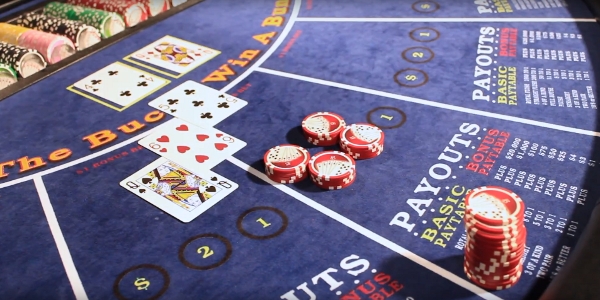
Who Invented Let-It-Ride Poker?
Aug 2, 2026 Daniel Odeyemi
Learn about Mr John Breeding, a former truck driver and founder of Shuffle Master, who created Let-It-Ride Poker as a marketing tool for his shuffling machine.

Five Poker Gambling Formats with Unusual Mechanics
Jul 22, 2026 Daniel Bech
Compare cards, boards, hand construction, pot splits and rotation across five poker gambling formats
How Mobile Blackjack Is Being Redesigned Around Speed and Player Control
Jul 10, 2026 David Fox
Mobile blackjack is evolving through larger controls, faster navigation and thumb-friendly design as developers adapt the game for smartphones
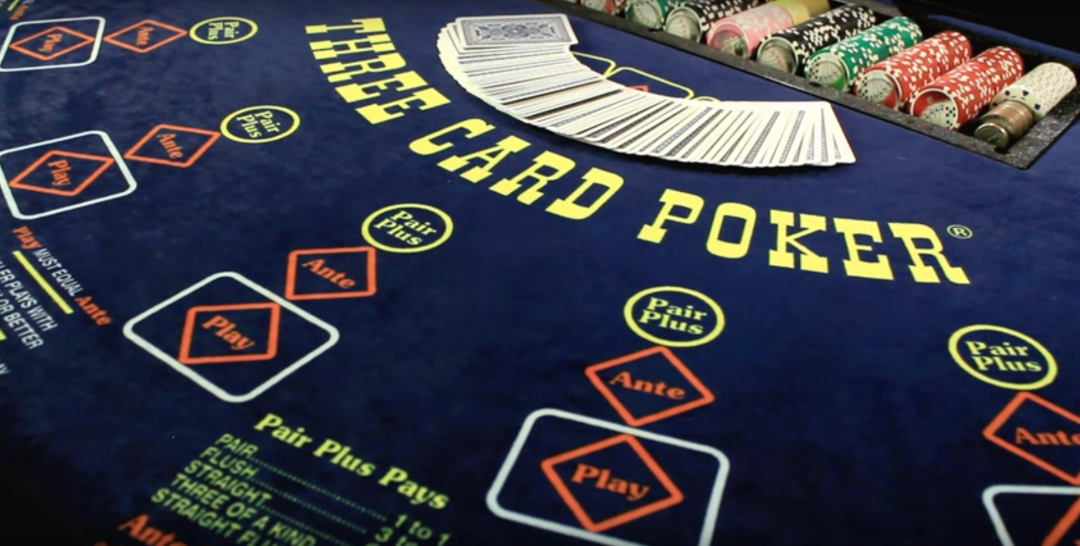
Who Invented Three-Card Poker?
May 24, 2026 Daniel Odeyemi
Learn about Derek Webb, the man who invented Three Card Poker, and why it became one of the most successful casino table games in history.
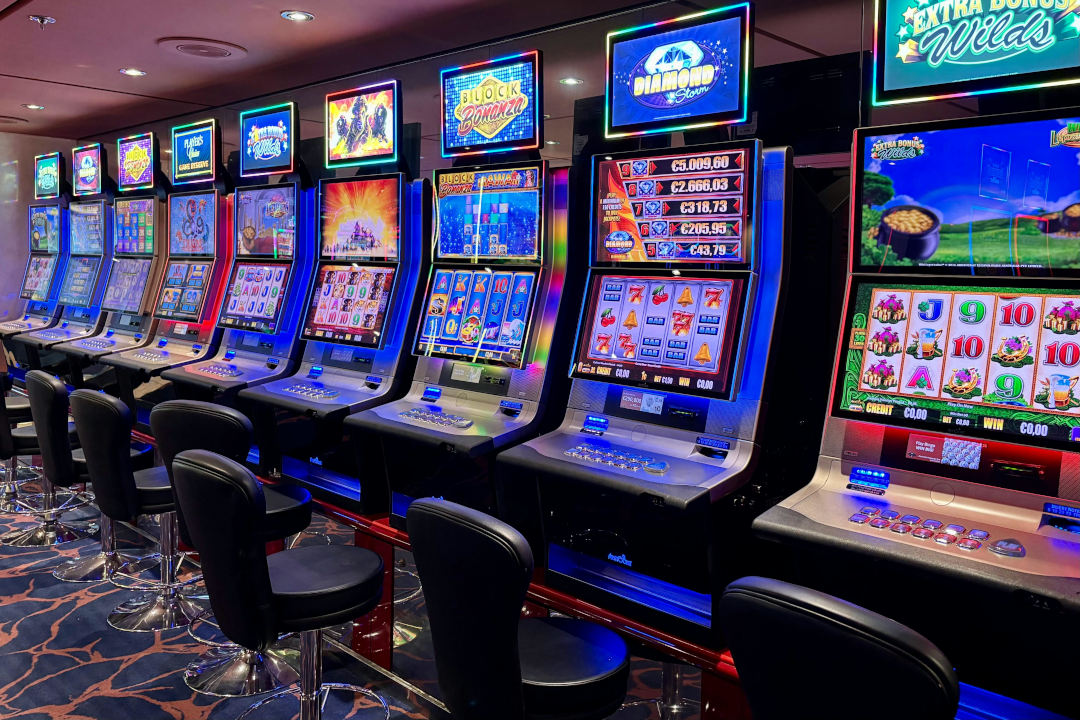
How Narrative-Driven Slots Are Taking Over
Apr 23, 2026 Gabriela Pelayes
Narrative-driven slots transform gameplay into evolving, story-based experiences, requiring strong platforms, continuous updates, and engaging progression systems.
Table of Contents
- # Back to Top
- What Happens Before a Casino Game Is Released?
- The Math Behind Casino Games
- Can You Patent a Casino Game?
- Famous Casino Game Patent Battles
- Gaming Commission Approval Process
- Why Field Trials Matter
- Why Many Games Fail During Trials
- Dealer Training Is Critical
- Why Casinos Reject Most Games
- Famous Casino Games That Succeeded
- How Long Does Casino Game Approval Take?
- Cost of Getting a Game Approved
- Final Thoughts
- FAQs