
How to Go from Amateur to Pro
You’ve watched hours of TikTok and YouTube videos of professional card sharks. You see them rake in hundreds of thousands—if not millions—of dollars from just playing one casino table game. And you think to yourself, how can I do that? How can I go from playing cards with my friends to being a professional casino player?
The road to becoming a professional player is not easy, as it requires both risk and skill. However, with the information below and a lot of practice and study, anyone can go from amateur to pro.
Set a Budget
Before you start playing, set a budget and stick to it. Budgeting at the casino is deciding the amount of money you’re willing to lose. It is essential to protect yourself from the temptation of chasing losses, which can later lead to financial distress. At the end of the day, gambling should always be viewed as entertainment, not a source of income. Good bankroll management ensures you can enjoy the thrills and entertainment value of gambling without compromising your financial stability.
Understanding Luck
Luck is a fundamental component of gambling and accepting the unpredictability of these games is crucial for a healthy gambling mindset. Winning and losing are both parts of casino games. Acknowledging and accepting both possibilities can help you maintain a balanced approach to gambling.
Responsible Gambling
Professional gamblers set limits on both wins and losses because responsible gambling is knowing your limits and when to stop. Remember, the primary goal of gambling is entertainment, not making money. If you would like more information and education about problem gambling, including its signs and symptoms, call 1-800-GAMBLER.
Advantage Play
Casinos often offer various bonuses and promotions to attract and retain players. These offers can include welcome bonuses, free spins, and loyalty rewards and can give you a leg up by providing extra value and extended playtime. However, there are often wagering requirements and other restrictions, so it’s crucial to read the terms and conditions carefully before accepting.
Advantage gambling, or advantage play, refers to legal methods used to game an advantage while gambling. Advantage gambling usually refers to house-banked casino games, but can also refer to games played against other players, such as poker. An advantage player, or AP, practices advantage gambling by legally exploiting innate characteristics of a particular game to give the player an advantage relative to the house or other players. This is different cheating, which utilizes illegal methods to gain advantage. Be advised: while advantage play is not illegal, it may result in players being banned by certain casinos, so play at your own risk.
House Edge
The house edge is the money the casino is expected to make from the player’s wager, typically expressed as a percentage. For example, on a double zero roulette game, the house edge is 5.26%. If a player bets $100 per spin, the casino is expected to gain a $5.26 profit. If the dealer has 60 spins per hour, the casino could make $315.60 from one player, so you can see how quickly profits add up.
Players want to find games with as close to a 0% house edge as possible. In blackjack, the average house edge is 0.5%, depending on how many decks are used and the rules involved. However, it is possible to bring the edge down to Even or 0% if Edward Thorpe’s basic strategy is used, which tells players what actions to take during specific situations.
Not all games are created equal regarding a player’s chance of winning in the casino. As mentioned earlier, some games offer a better house edge than others, and familiarizing yourself with house edges and the rules of the games will help you pick better games and increase your likelihood of winning.
Roulette
When selecting a roulette table to play, look for how many zeroes it offers. A triple zero (000) table offers the worst house edge for players at 7.69%, while the far more common double zero (00) table offers a 5.26% edge. The best roulette table for players is a single zero (0) table, with a house edge of 2.7%.
Single zero games that offer only the La Partage Principle have an even lower house edge at 1.35%. The La Partage Principle states that if zero hits, then half of all even money bets will be given back to the players. However, try to avoid tables that also have the En Prison rule, as half of all even money bets must stay and play on the table for the next spin or two. This increases the casino’s house edge, which varies based on the specifics of the rule.
Craps
With a 0% house edge, craps offers one of the best bets in a casino, which is why casinos limit how much a player can spend on a wager. Normal odds to see on craps is 3x4x5x, which means if the point is a 4 or 10, then the player can take odds that are 3 times their flat bet on the pass line. If the point is a 5 or 9, then the player can take 4 times odds, and if the point is a 6 or 8, then the player can take 5 times odds. The more odds the players can take, the better. Some casinos offer 10x odds, 20x odds, and even 100x odds.
If the player likes betting on the field, check the 12 payout because a triple, or 3:1, has the lower house edge at 2.78%. If a 12 pays double, or 2:1, the house edge is 5.56%.
The Don’t Pass Line has a better house edge at 1.36% than the Pass Line at 1.41%.
Blackjack
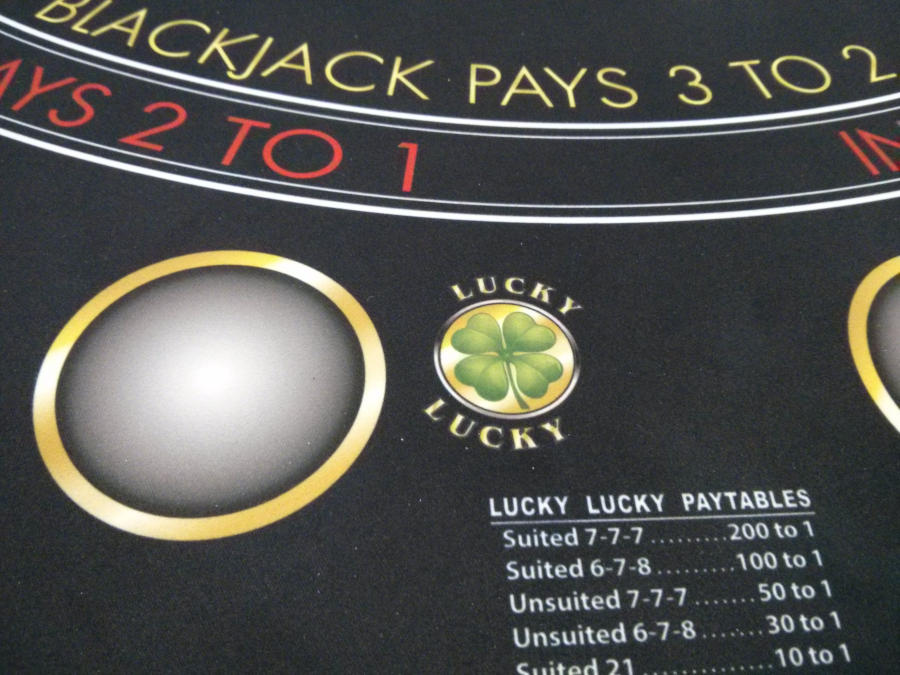
Blackjack house edge varies widely based on the rules involved, how many decks are used, how much a blackjack pays, and more. Each game comes with its set of rules which determine what the house edge will be. Studying these rules can significantly improve your chances of success.
For example, a game that pays 3:2 on their blackjack has a lower house edge and is better for the player than a table that pays 6:5. Same with certain rules; it’s better for the player if the dealer stays on a soft 17 than hitting it.
Blackjack can be played with any number of decks, but the fewer decks used, the better the house edge for the player and the easier it is to count cards. Unfortunately, finding a blackjack game at a casino with just a single deck of cards is challenging, as they are usually only in high-limit areas.
The highest house edge a player can encounter on blackjack is around 15%, which occurs when they make all the wrong moves. By mimicking the dealer and following house rules, the edge drops down to 5.5%.
On average, casual players play at a 1.4% house edge, and you can further lower your edge by following the basic strategy created by Ed Thorpe in his book Beat the Dealer. The basic strategy card, often found in casino gift shops or online, can be used at the table and help tilt the odds in your favor. Understanding blackjack basic strategy—when to hit, stand, double down, or split—can significantly reduce the house edge.
Card Counting
Counting cards during blackjack greatly increases your chances for winning because a count system provides three critical pieces of information: when to bet more, when to deviate from basic strategy, and when to take insurance. Counting cards takes many hours of practice, but the outcome can be worth it.
To learn to card count, you must first memorize Ed Thorpe’s basic strategy because to break the rules, one must know the rules inside and out. Creating homemade or using online flashcards, as well as writing the same charts over and over again, are classic techniques for memorizing basic strategy. Simulating hands of blackjack may be more helpful if writing answers down doesn’t work for you. Whichever way you choose, the blackjack strategy should be practiced until it can be recalled instantly.
Next, you want to pick a count system that is easy and painless for you to learn, such as the Hi-Lo Count. Advanced, confusing, or complicated strategies will slow things down and ultimately not be worth it. On average, the projected monetary gain of a sophisticated counting system will not be seen in a lifetime of use. Simple is better.
The Hi-Lo card counting system mentioned above assigns three values to specific sets of cards: 1, 0, and -1. Cards 2, 3, 4, 5, and 6 have a value of +1, while cards 7, 8, and 9 have a value of zero, and cards 10, Jack, Queen, King, and Ace have a value of -1. The player starts counting at zero and adding or subtracting the card values as the cards are seen. For example, if the count is high, the deck with have a lot of 10’s remaining because most low-value cards (2, 3, 4, etc.) have been dealt. If the count is low, the remaining deck will contain more numbers than 10-value cards (10, Jack, Queen, etc.). You want to bet more when the count is high because there are more high-value cards available to be dealt, and decrease bets when the count is low.
Regardless of which counting strategy you employ, you want to be able to identify card values right away. Using your preferred count system, run through a single deck of cards and correctly identify the value given to each card. For example, if you’re using the Hi-Lo system, seeing a Jack means -1. This is a good warm-up exercise before counting cards.
Now, go through your single deck again, but this time, keep a Running Count. Start with zero and total the card values one by one. At the end, if you hit even or zero, you’ve succeeded. If you can do this nine out of ten decks, you’re ready to move on to counting two cards at a time. A good card counter can count down a single deck in 20 seconds with one error or less.
Finally, practice your card counting skills at home in a mock game with friends. Drink while counting, talk to others while you play and count cards. Practicing at home will help limit distractions at the casino.
Professional card counters convert the running count into the True Count, which is the actual count or value of the deck when the player is making a decision. You’ll only need to convert your running count into a true count on multi-deck games since single-deck games will always give you the true count. To calculate a true count, divide the running count by the remaining decks. To know how many decks remain, look at the discard tray on the table. If it is 60% full, you can infer how many decks remain in play.
Counters must know when to deviate from basic strategy to achieve advantage over the house. These deviations, or indices, must be memorized, researched, and used based on the true count. Bet spreads and bankroll card counting deviations are critical to a card counter’s success. Bet spreads are when the player raises or lowers their bet based on the count. A small spread is 2 to 4 units, while a large spread is 8 to 16. Bet spreads are mainly used on multi-deck games and are not typically used on single-deck games.
A large bankroll is still needed to weather any losing streaks. If the player spreads between $100 and $300, then a bankroll of $20,000 is needed. If they spread between $5 and $10, $2,000 is needed.
This comes back to the first key component of becoming a professional player: setting a budget. Pros come out ahead more often because they are disciplined with both practice and their wallet. As you scale your play from amateur to professional, remember gambling is supposed to be fun and entertaining. Chase the thrill of the game, not the fear of the loss.
Enjoyed this article?
Join our newsletter to get the latest casino industry articles delivered straight to your inbox.
Related Article Archives: Players, All Articles
Related Terms & Definitions: Wagering Requirements, Basic Strategy, Running Count, Double Down, Single Deck, Count Down, Even Money, Free Spins, House Edge, Percentage, True Count, Blackjack, Full Dictionary
Related Posts
Why Do Casinos Love Side Bets?
Sep 22, 2026 Daniel Odeyemi and Heather Ferris
Learn why casinos push side bets and why players are drawn to high-risk, high-payout wagers in games like blackjack, craps, and roulette.

Are Casino Games Rigged?
Sep 20, 2026 Heather Ferris
From rigged games and mob-run casinos to modern regulation, discover why today’s biggest casino advantage isn’t cheating, it’s math.

9 Common Pet Peeves of Casino Dealers
Sep 13, 2026 Heather Ferris
Discover the nine casino habits that drive dealers crazy and learn how to avoid becoming their biggest pet peeve.

Inside Casino Surveillance: What the Cameras Are Actually Watching
Aug 24, 2026 Ilia Gelenidze
Casino surveillance sees more than you think, but what the cameras are actually watching might surprise you.

What Actually Happens When a Dealer Makes a Mistake at a Casino Table?
Aug 24, 2026 Ilia Gelenidze
When a casino dealer makes a mistake, what happens next can determine whether a simple error becomes a major dispute.

How Random Number Generators Keep Online Casino Games Fair
Aug 11, 2026 Gabriela Pelayes
Discover the hidden technology behind online casino games and how RNGs keep every spin, deal, and outcome unpredictable.