
Could You Pass a Poker Dealer Audition If You’ve Only Ever Played Online?
An experienced online poker player may know exactly when the action is complete, which hand wins, and how a three-way all-in should be settled. Put that player in the dealer’s chair, however, and the gaps in their knowledge would become visible almost immediately.
Knowing poker is an advantage. Dealing it professionally is a separate discipline.
What Online Players Bring to the Table
Regular online players already understand the rhythm of a hand: blinds, hole cards, betting rounds, community cards, showdown, and pot distribution. They are also likely to recognize common tournament concepts such as antes, escalating blinds, rebuys, late registration, and table balancing.
Volume creates another advantage. A single online table may deal roughly 60 to 100 hands per hour, compared with approximately 25 to 35 at a typical live table. Multi-tabling can expose an online regular to several hundred hands in one hour.
That experience builds familiarity with unusual situations, from tied pots and counterfeit two-pair hands to simultaneous eliminations. As you might have realized, there is a lot to get your head around, to provide a helping hand and to further build that familiarity many players chose platforms that allow users to practice skills with free poker online with variations like Hold’em, Omaha, Seven-Card Stud, and hi-lo variants. It is useful for learning game flow and encountering uncommon hands without risking money.
What it does not teach is how to physically run the table.
The Software Has Been Doing the Work
Online platforms automatically collect blinds, calculate bets, create side pots, identify winning hands, split chips, and move the dealer button. Players see the finished calculation without performing it.
A live dealer must complete every step accurately, often while several people are talking. The dealer must track the action, announce raises, protect the muck, control the pot, prevent players from acting out of turn, and keep exposed cards away from folded hands.
Even chip handling requires practice. Dealers need a controlled pitch, a clean shuffle, accurate cutting procedures, and the ability to cut down stacks quickly. Standard chip stacks are usually counted in groups of five, with four such groups creating a 20-chip stack.
Pot Management Gets Complicated Fast
Consider four players starting a hand with $40, $75, $130, and $200. If everyone moves all-in, the dealer cannot simply place the chips in one pile.
The first $40 from each player creates a $160 main pot. The next $35 from the three deeper stacks creates a $105 side pot. The next $55 from the final two players creates a second side pot worth $110. The remaining $70 belongs to the largest stack and must be returned.
Each pot may have a different winner. The shortest stack can win only the main pot, even if that player holds the best hand overall. A dealer audition may test whether the candidate can build these pots, identify eligible players, and award them in the correct order.
Online experience helps the candidate understand why side pots exist. It does not provide the physical repetition needed to construct them efficiently.
Spoken Words Change the Action
Live poker gives verbal declarations significant weight. If a player clearly says “call,” “raise,” or “fold,” that declaration may bind the player even if the chips subsequently pushed forward suggest something different.
Dealers must hear these statements, repeat important action, and distinguish a legal raise from an incomplete one. They also need to understand the one-chip rule, string bets, oversized-chip procedures, minimum raises, and all-in wagers that do not reopen betting.
Online poker removes nearly all ambiguity. Buttons define the available actions, while illegal bet sizes are rejected automatically.
Errors Require Procedure, Not Improvisation
A dealer candidate must know what to do when something goes wrong. Two cards exposed during the initial deal may produce a misdeal, while one exposed card may become the first burn card, depending on the game and house rules.
Other problems include boxed cards, premature board cards, incorrect button positions, missed blinds, fouled decks, and cards dealt to empty seats. The correct response is not to invent a fair solution. The dealer should stop the action, preserve the table state, and call the floor when required.
Speed Is Measured Alongside Control
Fast dealing is useful only when it remains accurate. A live table completing 30 hands per hour averages two minutes per hand, including shuffling, betting, chip movement, and payouts.
Auditioners watch for unnecessary movements, weak game announcements, exposed cards, incorrect change, and hesitation. They may also test multiple formats. A major tournament series can require knowledge extending beyond no-limit Hold’em to Omaha, stud, draw games, split-pot formats, and pot-limit calculations.
Professionalism is assessed at the same time. Dealers must remain neutral, avoid commenting on strategy, treat every player consistently, and handle disputes without becoming argumentative. Good posture, clear speech, personal presentation, and awareness of visual and verbal cues all matter.
From Player Knowledge to Dealer Readiness
An online regular could enter training with a valuable head start. They may understand hand rankings, betting sequences, tournament pressure, and rare scenarios better than many complete beginners.
They would still be unlikely to pass a demanding audition without physical preparation. Free poker can sharpen recognition and reinforce game flow, while a course such as Vegas Aces’ WSOP dealer training can introduce professional procedures. Neither substitutes for hours spent pitching cards, cutting chips, building side pots, correcting mistakes, and controlling a live table.
Online play teaches what should happen. Dealer training teaches how to make it happen.
Disclosure: This article contains sponsored content.
Enjoyed this article?
Join our newsletter to get the latest casino industry articles delivered straight to your inbox.
Related Free Learning Hubs: Poker, All Hubs
Related Terms & Definitions: Community Cards, Dealer Button, Initial Deal, Burn Card, Pot-Limit, Audition, Showdown, Side Pot, Minimum, Misdeal, Shuffle, Action, Full Dictionary
Related Posts
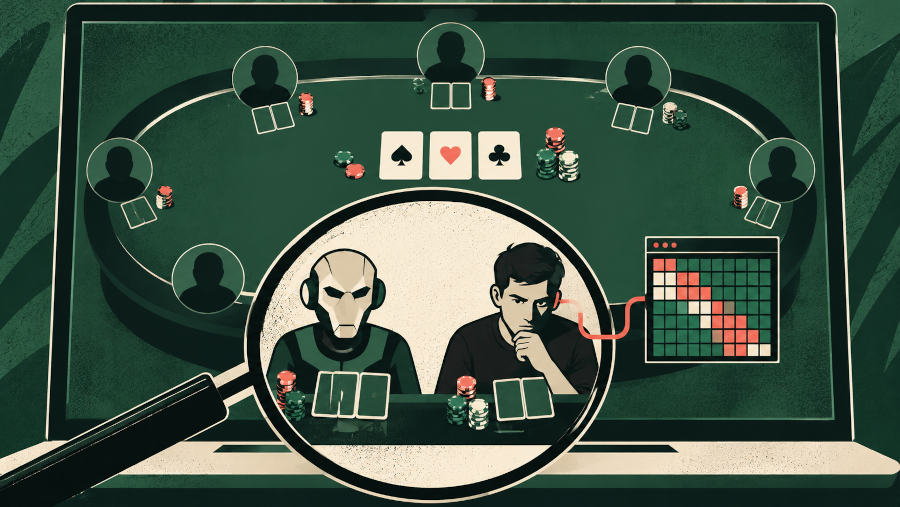
How Online Poker Sites Catch Bots and Real-Time Assistance Cheats
Oct 21, 2026 Rick Jensen
Discover how online poker sites expose bots, catch cheaters, and uncover the secrets behind suspiciously perfect plays!

Poker Cheat Sheet for New Players: Essential Hands, Rules, Odds, and Strategies
Sep 25, 2026 Leiya Solis
A practical poker cheat sheet covering Texas Hold'em hand rankings, starting hands, table positions, outs, pot odds, betting actions and essential beginner strategy.

Why The Speed Of A Poker Game Transforms The Dynamic
Sep 8, 2026 Alice Oziran
Discover how poker’s pace can reshape strategy, pressure, player psychology, and the entire dynamic of the game.
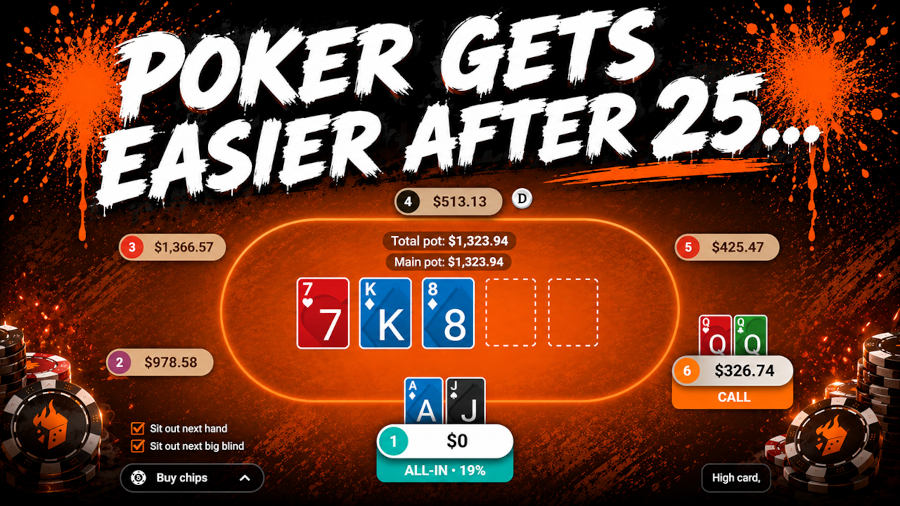
Poker Advice I Wish I Knew at 25
May 27, 2026 Edward Paoletti
This article shares practical poker lessons on discipline, patience, table selection, and avoiding emotional decisions to improve long-term profits.

New Strategies Changing How Poker Is Played
Feb 27, 2026 Gabriela Pelayes
Online growth and analytics tools are reshaping poker strategies, speeding play and transforming decision-making worldwide.

What Makes Poker a Skill Game
Feb 17, 2026 Daniel Odeyemi
Discover what makes poker a skill game. Learn how probability, psychology, strategy, and bankroll management outweigh luck over the long run.