
Series: How to Deal Blackjack • Part 4 of 10
Blackjack Dealer Procedures: Delivering Cards, Pitching, and Tucking the Hole Card
Professional Handheld Blackjack Procedures
Single-deck and double-deck blackjack games require different dealing techniques than shoe games.
Instead of sliding cards from a shoe, dealers must pitch cards accurately while maintaining complete control of the deck and protecting the hole card from both players and surveillance concerns.
This guide teaches the professional techniques used in dealer schools and live casinos, along with practical advice from Heather Ferris based on her experience dealing blackjack professionally.
In This Guide
Whether you're preparing for dealer school, practicing for a casino audition, or learning professional handheld blackjack procedures, this guide covers the skills every dealer needs.
- Why Handheld Procedures Matter
- Delivering Cards from a Handheld Deck
- Proper Deck Grip and Hand Position
- Pitching Cards
- Tucking the Hole Card
- Checking for Blackjack
- Ten Up Card
- Ace Up Card
- Heather's Professional Dealer Tips
- Common Beginner Pitching Mistakes
- Frequently Asked Questions
Delivering the Cards from a Handheld Deck
The procedures for the handheld deck are different then from the shoe. The first thing you need to learn is how to properly hold the deck. For a right handed dealer hold the deck in your left hand and visa versa for left handed people.
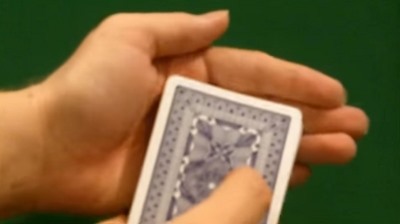
Put your forefinger across the top edge of the deck.
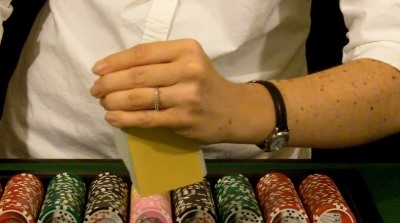
Use the 3 remaining fingers to hold the deck and make sure they are tightly together so no one can see the deck underneath. The purpose is to cover the front and edges of the deck. Try not to grip too tightly.
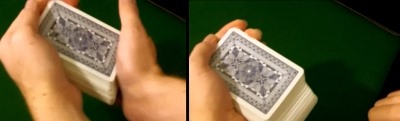
Use your palm to push the bottom of the deck up so that the deck fits snuggly in your hand and the deck will be angled.
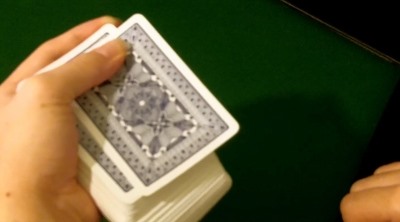
Place your thumb on the top right corner of the deck and then push out so the card is ready for delivery.

When holding the deck tilt it slightly up so that the players can’t see the top.
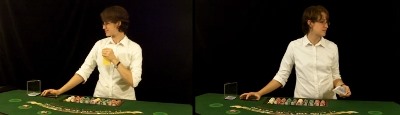
Make sure that the deck is not too high or too low, and try not to keep it close to your body.
Pitching
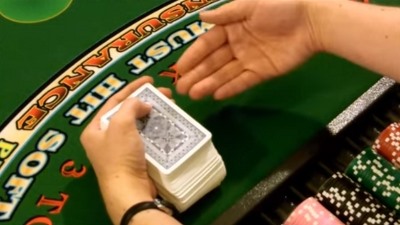
When you deal a handheld game you will be asked to pitch the cards. To start the procedure hold the deck in your dominate hand and look at the palm of your other hand.
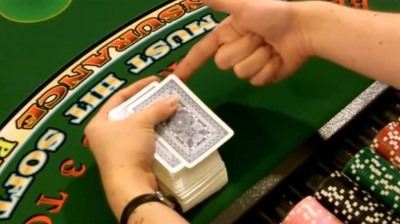
Put the top corner edge of the card parallel with the top part of your forefinger.
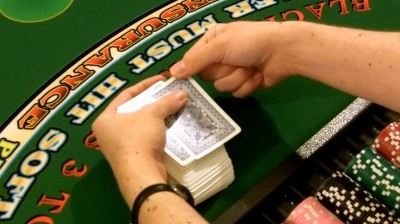
With your thumb, grip the right corner of the card and hold it in place.

Using your middle finger, flick the card while letting go with your thumb.
This should send the card flying. Your wrist should be firm and straight. Do not flick your wrist to deliver the cards. Your fingers should do all the work. When holding the deck and delivering the cards; hold it at the level of your stomach and slightly away from your body. Do not dip the deck when you are delivering the hit card. Do not hold the deck chest high and close to you body. You want to protect that deck at all times. When practicing aim, practice going from left to right since this will best emulate being on a live game. Also, use an object as your target, because at the table you will be pitching to the bets not the people.
Tucking the Hole Card
Some casinos will want you to tuck your hole card while others will want you to do the simple maneuver. Every house is different so make sure you know your house rules. The procedure for tucking your hole card starts when you get to your hand. Remember to tuck the hole card underneath the top card as fast and low to the table as possible.
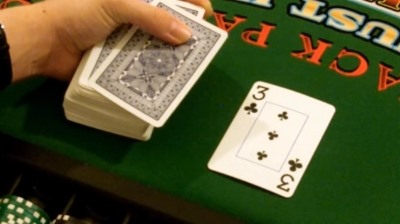
Take the top card from the deck and using your thumb push it out so it is ready for delivery. Put the deck low to the table and close to your card but try not to cover the top card because the cameras always need to see them.
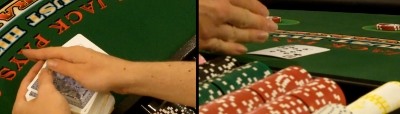
Put the top right side edge of the card in between the forefinger and the middle finger so that the curve from the tops of the fingers hides the card.
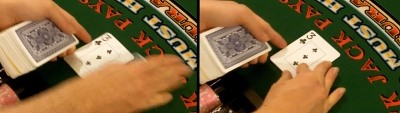
Use your left hand to hold the up card in place and press down slightly on the left edge so that the right side is lifted and the hole card can be tucked efficiently. In a fast movement take the card from the top of the deck and slide it under the up card.
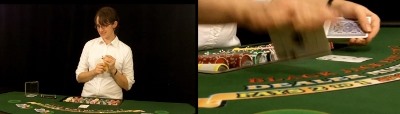
Be careful because if your deck is too far away from the table or if your tuck is too wide then you will flash your card and show the players. This is bad dealing and you could get fired.
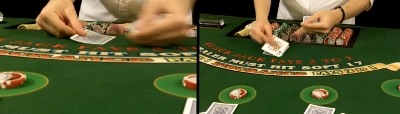
The simple procedure for tucking the cards starts when you lay a card face down in front of you. Make sure the deck is low and the maneuver is done quick enough that no one can see the card. Then you’ll deliver the players their second card. When you get to your hand you will flip over one card so it is face up. Straighten the cards so you can’t see the hole card underneath.
Dealer Receives a Ten or Ace Up Card
The dealer receives a 10 or ace up card - When you have a 10 or an ace up card then you’ll need to check and make sure you do not have a blackjack. There are two different ways of doing this depending on what casino you’re at. If your casino doesn’t have a mirror on the table, then you will probably be checking the cards by hand.
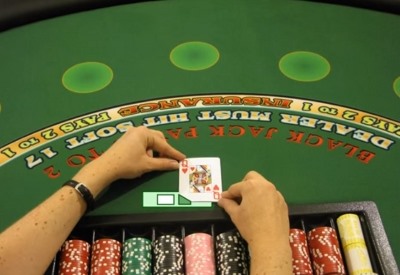
If the casino does have a mirror on their table then you would follow this procedure. If you have a 10 up card, then quickly put the lower left hand corner into the slot area and look at the mirror. If the area is white you do not have a blackjack, if the area is filled, you do have a blackjack.
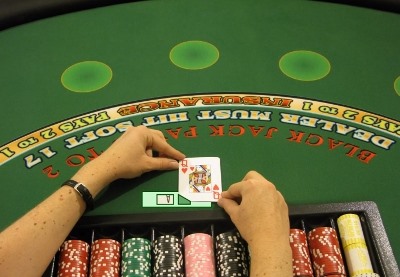
If you have an Ace up card, then you are going to turn the cards sideways and announce insurance while running your hand under the insurance line. Once all decisions have been made then take the cards and put them in the contraption with the lower left hand corner going into the slot.
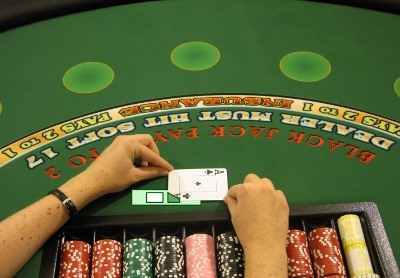
If the mirror shows a white space, then you do not have blackjack, if the space is filled then you do have a blackjack.
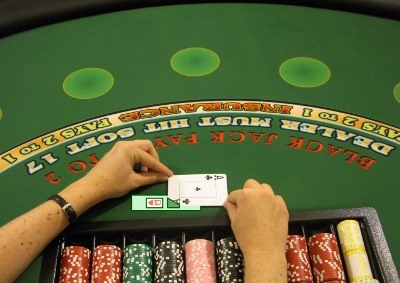
Because every casino is different, it is a good idea to go to the casino you want to apply at and watch them to see how they check their ten and ace up card. That way when you are auditioning you won’t stumble if you get a ten or ace up card.
Common Beginner Pitching Mistakes
Pitching cards takes practice, and every dealer starts somewhere.
Common mistakes include:
- Flicking with the wrist instead of the fingers
- Holding the deck too high
- Flashing the hole card
- Gripping the deck too tightly
- Poor aim
- Pitching to the player instead of the betting spot
- Rushing the delivery
- Exposing the top card
- Inconsistent hand position
- Losing deck control
Developing smooth, repeatable mechanics is far more important than dealing quickly.
Heather's Dealer Tips
Focus on Accuracy, Not Distance
New dealers often think pitching cards farther is more impressive. It isn't. Supervisors are looking for accuracy, consistency, and clean mechanics.
A card that lands exactly where it should every time is far more valuable than flashy speed or distance.
Learning to Pitch Cards Accurately
Everyone's hands are different. Hand size, finger length, and palm thickness can all affect how you pitch cards.
If the method you're learning isn't working well for you, that's okay. Try adjusting your hand placement and technique until you find a method that allows you to pitch the cards accurately and consistently.
The goal is to develop a controlled pitch that works with your hands while still following proper casino procedure.
Why Speed Isn't the Priority
When pitching cards, you want each card to land in front of the player, between their bet and the rail.
If you're focused primarily on speed, it's easier to become sloppy. Cards can land in the wrong position or become mixed up on the layout, making the game harder for players, supervisors, and surveillance to follow.
Accuracy and a clean, readable game matter more than speed. As your technique and muscle memory improve, speed will come naturally.
What Supervisors Watch During Dealer Auditions
During a dealer audition, supervisors want to see that you can pitch cards accurately, consistently, and low to the table.
It might be fun to pitch a card high into the air and watch it twirl down in front of the player like a ballerina, but that's not good for table security or game protection.
The higher you pitch a card, the easier it may be for its value to become visible. Keep your pitches low, controlled, and accurate.
Protecting the Hole Card
Many blackjack tables use a device that allows the dealer to check for blackjack while helping protect the hole card.
If you are required to manually check the hole card, use your hands to shield the card from both sides. Check it quickly and avoid lifting the card higher than necessary.
Protecting the value of the hole card is an important part of game security. Follow the casino's specific procedure for checking the hole card and never expose more of the card than necessary.
🎲 Heather's Dealer Tip
New dealers often think pitching farther is more impressive. It isn't. Supervisors are looking for accuracy, consistency, and clean mechanics. A perfectly placed card every time is far more valuable than flashy speed.
— Heather Ferris, Vegas Aces
How Dealers Deliver Cards in Handheld Blackjack
Professional blackjack dealers follow a consistent sequence when dealing cards from a handheld deck. Exact procedures vary by casino, but the basic process includes:
- Hold the deck securely.
- Push the top card into position.
- Pitch the card to the betting spot.
- Protect the deck throughout delivery.
- Maintain proper hand position.
- Tuck the hole card when required.
- Check for blackjack according to casino procedures.
- Continue the hand while maintaining game security.
Handheld Blackjack Dealing FAQ
How do blackjack dealers pitch cards?
Dealers push the top card from the handheld deck into position and pitch it toward the appropriate player position. The card should land accurately in the designated area while the dealer maintains control of the remaining deck.
Where should a pitched blackjack card land?
The card should land in front of the player, between the player's bet and the rail. Accurate placement helps keep the game clean, organized, and easy for players, supervisors, and surveillance to follow.
Should blackjack dealers pitch cards quickly?
Speed is less important than accuracy, consistency, and proper procedure. New dealers should focus on developing clean mechanics and accurate card placement first. Speed will improve naturally with practice.
How high should a dealer pitch blackjack cards?
Cards should be pitched low to the table. Pitching cards too high can make their values easier to see and create unnecessary game-security concerns.
Why does accurate card placement matter?
Consistent card placement keeps the game readable and organized. It also makes it easier for the dealer, floor supervisor, and surveillance to follow the action at the table.
How do blackjack dealers protect the hole card?
Dealers should follow the casino's specific procedure for protecting and checking the hole card. If a manual check is required, the dealer should shield the card, check it quickly, and avoid lifting it higher than necessary.
What do supervisors look for when watching a dealer pitch cards?
Supervisors may look for accurate card placement, consistent mechanics, proper hand position, card control, game readability, and good game-protection habits.
What should new blackjack dealers practice when learning to pitch cards?
New dealers should practice accuracy and consistency before speed. Work on controlling the deck, keeping pitches low, placing cards correctly, and repeating the same clean motion until it becomes muscle memory.
Enjoyed this lesson?
Join our newsletter to get the latest casino industry courses delivered straight to your inbox.
Series
How to Deal Blackjack
Part 4 of 10
Related Courses
How to Deal Blackjack
Jul 8, 2026 Heather Ferris
Learn how to deal blackjack with professional dealer training on casino procedures, payouts, table layout, game security, common mistakes, and dealer auditions.
How to Play Blackjack
Aug 8, 2020 Heather Ferris
Learn how to play blackjack step-by-step with this simple beginner guide. Understand rules, card values, and gameplay in minutes, plus tips to avoid common mistakes.

How to Deal Casino Party: Blackjack
Learn how to deal blackjack for casino parties, including dealer procedures, game protection, readability, muscle memory, and essential practice skills.

Partnerships that keep the cards on the felt
Jan 6, 2026 Heather Ferris
Here is an overview of the sponsored products and advertising options available through Vegas-Aces.

How to Deal Caribbean Stud Poker
Aug 16, 2026 Alessandro Cinà and Heather Ferris
A dealer’s guide to running Caribbean Stud Poker: the table layout, hand rankings, the Ante and raise, dealer qualification, payouts, and a step-by-step deal.

Crap Stick Calls
Mar 25, 2026 Daniel Odeyemi and Heather Ferris
We interviewed a veteran dealer with 30+ years of experience to bring you the most authentic craps stick calls. Learn the rhymes and calls used in casinos today.
Table of Contents
- # Back to Top
- Professional Handheld Blackjack Procedures
- In This Guide
- Delivering the Cards from a Handheld Deck
- Pitching
- Tucking the Hole Card
- Dealer Receives a Ten or Ace Up Card
- Common Beginner Pitching Mistakes
- Heather's Dealer Tips
- How Dealers Deliver Cards in Handheld Blackjack
- Handheld Blackjack Dealing FAQ
Series Navigation
Part 4 of 10
- Part 2: How to Shuffle Blackjack Cards (Dealer Techniques and Procedures in 2026)
- Part 3: How Casino Dealers Cut, Wash, and Burn Cards in Blackjack
Part 4: Blackjack Dealer Procedures: Delivering Cards, Pitching, and Tucking the Hole Card
Current article
- Part 5: Blackjack Dealer Procedures: Handling Cheques & Playing the Game
- Part 6: Blackjack Dealer Procedures: Taking Bets, Paying Winners & Managing the Table