Stacked Racks and Hidden Rules: Realities of Life as a Pro Casino Dealer
To the average punter, the casino floor is a cinematic blur of clinking champagne glasses and the effortless flick of a card. But if you’ve spent decades behind the green felt like I have, you know that the "glamour" is a thin veneer over a world of rigid protocols and high-stakes security.
Becoming a "gold standard" dealer—the kind of pro produced by the College of Southern Nevada (CSN)—takes much more than a flashy shuffle. It requires a mastery of psychology, math, and the invisible rules of game protection. Most people are curious about what’s happening under the gaze of the "Eye-in-the-Sky," and the reality is far more interesting than the movies suggest.
The Surprise Security Standard: Why Your Hairstyle Matters
In the high-pressure pits of the Las Vegas Strip, game protection starts with how you look in the mirror. While every job has a dress code, the casino’s unwritten rules on personal grooming are rooted strictly in anti-theft measures. Specifically, hairstyles like braids or buns are often strictly forbidden for dealers in these high-security environments.
The reasoning is purely technical: any style that creates "bulk" or a pocket against the head is a potential hiding spot for stolen "cheques" (the industry term for chips). As Heather Ferris from Vegas Aces, a veteran industry moderator and veteran of the Strip, noted:
"I worked on the Strip in Las Vegas. Dealers can hide cheques in their buns or braids and we were strictly forbidden to wear these hair styles because of game security and table protection."
In this business, a "clean" appearance isn't just about professional aesthetics; it’s about ensuring the house—and the Eye-in-the-Sky—knows your hands and your person are "clean" at all times.
Democracy in the Count Room: The Secret Life of Toke Committees
One of the most "inside-baseball" aspects of the job is how we actually get paid. In many shops, your tips (or "tokes") don't go straight into your pocket; they go into a democratic pool managed by a Toke Committee. This group of five to eight dealers is elected by their peers to oversee the collection, sorting, and distribution of every cent earned on the floor.
The work is a brutal mix of manual labor and high-level administration. Junior committee members spend hours "mucking"—the rapid-fire sorting and racking of cheques by denomination. While they are busy mucking thousands of cheques, the senior committee members are buried in the paperwork for roughly 300 dealers in a 24-hour cycle. They have to account for vacation time, sick leave, and tax allocations with pinpoint accuracy.
Perhaps most surprising to outsiders is that these committees work "off the clock." They aren’t on the casino’s payroll; instead, they are paid a set fee—typically $25 to $35 or a specific allocation of toke hours—directly from the tip pool they are counting. It’s an economy run by dealers, for dealers.
The Audition Paradox: Why "Likability" Trumps Technical Perfection
When you walk into a live audition, the psychological pressure is immense. Your hands might get "the shakes," and with a shift manager staring a hole through you, it’s easy to "short the pot" or overthink a simple payout. Most rookies think a math error is an automatic fail. In reality, a manager would much rather hire a dealer who makes a mistake but keeps the customers happy than a "technical wizard" who treats the punters like a nuisance.
Based on 20+ years of watching people sink or swim, here is the "no-fail" success checklist for the audition:
- Customer Service > Technical Skill: Smile and maintain eye contact. The house can train you to be a faster dealer, but they can't train you to be a likable human being.
- The "Clean" Aesthetic: Appearances are a security feature. Be well-groomed, neatly dressed, and remember: on the Strip, keep the hair simple to avoid those security red flags.
- Ownership of Error: If you overpay a bet, don't try to hide it. Stop the game, notify the floor supervisor immediately, and own the mess-up. They want to see how you handle the "heat," not if you're a robot.
Dealers see the game from the one side players never do; for the view from the other side of the felt, resources tracking Casino bonuses in Canada map out what patrons are chasing.
The Mental Grind: Beyond Simple Arithmetic
The technical requirements of the pit are a mental marathon. Professional training, like the "gold standard" curriculum at CSN, emphasizes that dealing is about pattern recognition and high-speed mental gymnastics. While GAM 121 (Craps Dealing) focuses on take-and-pay sequencing and quick multiplication, a course like GAM 222 (European Roulette) is where the real "mental grind" happens.
In European Roulette, you aren't just spinning a ball; you're mastering advanced conversions, progressive limits, and the nightmare of "overlapping maximums." You have to compute "complete piece payouts" and station payouts instantly while maintaining game speed. It is physically demanding—standing until your back screams—and mentally draining. Because these skills are perishable, CSN even offers a "Lifetime Practice Membership," allowing pros to return to the gaming lab to keep their hands and minds sharp.
The Ethical "First Responder": Dealers as Guardians of the Floor
A pro dealer is often the first line of defense in responsible gaming. According to the National Council on Problem Gambling (NCPG), we are in a "unique position" to act as first responders. We are the ones who hear the distressed comments and see the signs of trouble first.
Part of the job is to "dispel erroneous beliefs" about gaming technology. When a punter starts swearing a machine is "hot" or "cold," or that they can control the outcome through "luck," it’s our job to maintain neutrality while guiding them toward reality. We are trained to identify distress, handle emotional patrons calmly, and take any threat of suicide with absolute seriousness. As the NCPG Affiliate’s Guide highlights:
"The gaming industry is in a unique position to positively impact upon a segment of the patron population who may be in need of assistance for a gambling problem... The approach is not to prohibit gambling, but to put into place programs that can help to minimize the negative impact."
The Final Hand
While the average salary of $22.93 per hour (plus tokes) is a solid draw, the true "pro" knows that this career is a sophisticated blend of psychology, math, and high-level security. Whether you're mucking cheques in the count room or calculating an overlapping maximum on a European Roulette wheel, you are the "gold standard" of the casino's operations. You aren't just a card-shuffler; you are a manager of a democratic economy and an ethical guardian of the floor.
In a world of high-tech surveillance and automated games, are you surprised to find that the most critical security feature in a casino is still the person standing behind the table?
Disclosure: This article contains sponsored content.
Enjoyed this article?
Join our newsletter to get the latest casino industry articles delivered straight to your inbox.
Related Free Learning Hubs: Casino Career, All Hubs
Related Terms & Definitions: Eye-In-The-Sky, Toke Committee, Collection, Audition, Position, Straight, Maximum, Mucking, Shuffle, Sorting, Casino, Dealer, Full Dictionary
Related Posts
Why Dual-Rate Positions Are the Most Underrated Step in a Casino Career
Aug 27, 2026 Ilia Gelenidze
Discover why becoming a dual-rate could be the career move that opens the door to casino management.
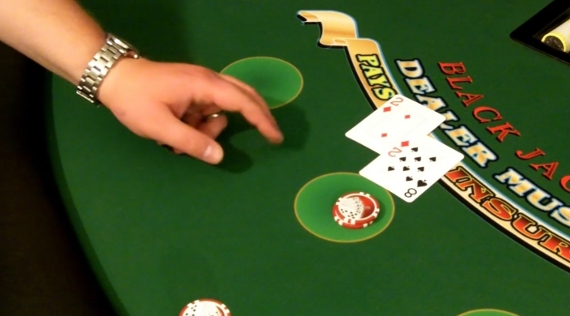
Casino Dealer Hand Signals Explained: A Complete Training Guide
Aug 24, 2026 Daniel Odeyemi
Learn the most common casino dealer hand signals used in blackjack and other table games. Discover why dealers use them and how they help maintain game security and accuracy.
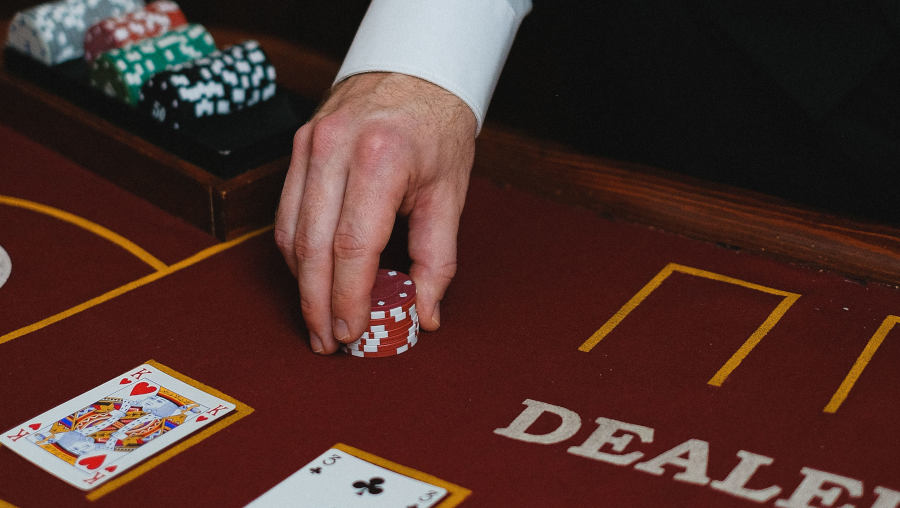
How Casino Dealers Maintain Accuracy During Fast-Paced Games
Aug 11, 2026 Gabriela Pelayes
Discover the behind-the-scenes techniques casino dealers use to stay fast, precise, and mistake-free under pressure.

How Much Do Casino Dealers Make in 2026?
Jul 5, 2026 Daniel Odeyemi
Learn how much casino dealers really make in 2026, including base pay, tokes, and daily earnings. See the real income numbers and how they vary by casino.

The Casino Dealer Math Test: Can You Pass?
Jun 7, 2026 Heather Ferris
Learn about the casino dealer math test used by various gambling establishments as a screening tool to select potential dealers. Sample quizzes included.
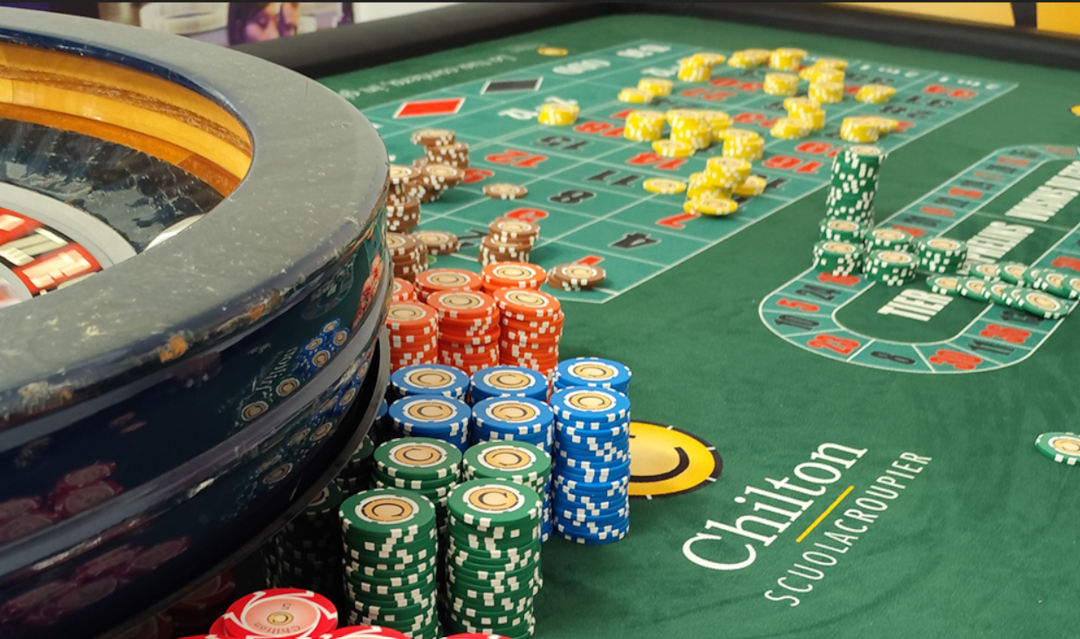
Become a Croupier at the Chilton Croupier School
Apr 22, 2026 Alessandro Cinà
Chilton Croupier School is a specialized training organization focused on preparing staff for casino table games, with an emphasis on the skills and professionalism required of croupiers.
Table of Contents
- # Back to Top
- The Surprise Security Standard: Why Your Hairstyle Matters
- Democracy in the Count Room: The Secret Life of Toke Committees
- The Audition Paradox: Why "Likability" Trumps Technical Perfection
- The Mental Grind: Beyond Simple Arithmetic
- The Ethical "First Responder": Dealers as Guardians of the Floor
- The Final Hand