
Dealer Hits Soft 17 vs. Stands, What It Means in Blackjack
A soft 17 is a blackjack hand totaling 17 with an Ace counted as 11, such as Ace-6. If the table says “dealer hits soft 17” (H17), the dealer must take another card. If it says “dealer stands on soft 17” (S17), the dealer must stop. This is a table rule, not a decision the dealer makes.
Standing on soft 17 is better for players, all other rules being equal. The difference also changes some basic strategy decisions. Below, we explain how to identify your table’s rule, how it affects the house edge, and which plays change between H17 and S17.
This article explains what a soft 17 is, how a dealer's hit-or-stand decision affects your strategy, and which action favors you, drawing on data from gambling math authority Wizard of Odds and the published dealer outcome data of professional player Mike Aponte.
Dealer Hits Soft 17 vs Stands
If a blackjack dealer hits soft 17 (H17), they must take another card. If the dealer must stand on soft 17 (S17), no additional cards are dealt. The hand value remains 17.
Most casinos today require their dealer to hit on soft 17 (H17). According to industry data published by Stanford Wong's Current Blackjack News (cited on ReadyBetGo), 40% of Las Vegas Strip casinos offer H17-only games, only 17% are S17-only, and 43% offer a mix. The H17 rule slightly increases the house edge by about 0.2%, making the game less favorable for players.
What Is a Soft 17?
A soft 17 is any blackjack hand that totals 17 and contains an ace counted as 11. The most common example is Ace-6 (11 + 6 = 17), but it can also be Ace-2-4, Ace-3-3, Ace-Ace-5, or any other combination where one ace is counted as 11 and the remaining cards total 6.
The presence of an ace counted as 11 makes the hand "soft," which simply means it is flexible. An ace card has a value of 11 or 1. You are free to pick the option that benefits your gameplay in a specific scenario.
For example, if you have a soft 17 (Ace-6) and decide to hit, the dealer gives you an 8. If you value your ace as 11, you would have 25, which means you bust. However, because you can count your ace as 1, you can downsize the value of your hand to 15 (1+6+8=15). This is why a soft hand cannot bust on a single hit — the ace simply flips to 1.
For further understanding of the 21 card game, see our blackjack beginner guide.
What Does “Dealer Hits Soft 17” Mean?
When a blackjack dealer hits a soft 17, it simply means the dealer is required by the house rules to take another card. This move is aimed at improving the dealer's hand to get closer to 21. According to Mike Aponte's published 6-deck dealer outcome data, hitting soft 17 raises the dealer's overall bust rate from approximately 29.6% to 30% (a 0.4 percentage-point increase). However, the dealer's chance of improving to 18, 19, 20, or 21 also increases by about 0.8%, that is twice the bust increase, which is why the rule favors the house.
What Does “Dealer Stands on Soft 17” Mean?
When a blackjack dealer stands on a soft 17, it simply means the dealer is mandated by the house to hold the current hand, i.e., no extra card must be drawn. This rule is player-friendly: it leaves the dealer with a 17, a beatable hand for any player who can reach 18, 19, 20, or 21. According to Wizard of Odds, this reduces the house edge by approximately 0.2%.
How Dealer’s Stand or Hit Decision Affects Final Hand Total
Per Mike Aponte's published 6-deck dealer outcome data, here is the approximate distribution of dealer final outcomes on average across all up cards:
| Dealer’s Final Total | If Dealer Stands on Soft (S17) | If Dealer Hits Soft 17 (H17) |
|---|---|---|
| 17 | ~15.25% | Lower than S17 |
| 18 | 14.62% | 14.82% |
| 19 | 14.04% | 14.24% |
| 20 | 18.85% | 19.06% |
| 21 | 7.65% | 7.86% |
| Bust (>21) | ~29.60% | ~30.00% |
Notice that on H17, the dealer's chance of finishing at 18, 19, 20, or 21 all increase slightly, AND their bust rate also rises by about 0.4 percentage points. The increase in strong-hand outcomes is roughly twice the increase in busts, which is why the rule favors the casino overall.
Hitting on 17 vs Standing on 17
The difference between Hitting on soft 17 (H17) vs. Standing on 17 (S17) lies in the rules and
impact on gameplay outcomes.
Look, it's easy for casinos to tell dealers to stand or hit on soft 17 as they please, given the fact that they are well-trained to understand the mathematics of table games. However, they don't do this because blackjack is beatable. Players have basic blackjack strategy charts at their disposal, which, if used, reduce the house edge to a low 0.5%.
By making it a rule that dealers hit on a soft 17, casinos increase their house edge by 0.2%. As a result, the dealers have a good chance of improving their hands. But if a dealer stands on soft 17, the house advantage decreases by 0.2%. The dealer is stuck with the soft hand, giving players the edge, which is heightened if you understand card counting.
However, the effect of these decisions on the house edge isn't noticed over a few hands but accumulates over many sessions.
Key Differences
| Feature | Dealer Stands on Soft 17 (S17) | Dealer Hits on Soft 17 (H17) |
|---|---|---|
| The Rule | The dealer must hold on to the soft 17 | The dealer must take an extra card |
| House Edge | Lower (~0.2% reduction) | Higher (~0.2% increase) |
| Dealer Bust Rate | ~29.6% (overall average) | ~30% (overall average) |
| Advantage | Favors the player | Favors the casino |
Which Is Better for Players?
Dealers' standing on soft 17 (S17) is better for players. Why? The house edge is reduced, and there is little to no room for the dealer to improve given hands.
How It Affects Blackjack Strategy
As mentioned, when the dealer hits on a soft 17, it gives the house an advantage, affecting your blackjack strategy. As a result, you have to be slightly more aggressive with how you play your hand. You should double down more or surrender (if allowed). Per Wizard of Odds, here are the standard strategy adjustments for H17 games when the dealer shows an Ace:
| Your Hand | Dealer’s Up Card | Dealer Rule | Your Strategy |
|---|---|---|---|
| Hard 11 | Ace | Hit 17 | Double Down |
| Soft 17 (A+6) | Ace | Hit 17 | Double Down |
| Soft 18 (A+7) | Ace | Hit 17 | Double Down |
| Hard 15 | Ace | Hit 17 | Surrender |
| Hard 17 | Ace | Hit 17 | Surrender |
In casinos where dealers must stand on soft 17, the basic strategy remains essentially the same, with no significant changes for these scenarios.
How to Spot This Rule at a Table
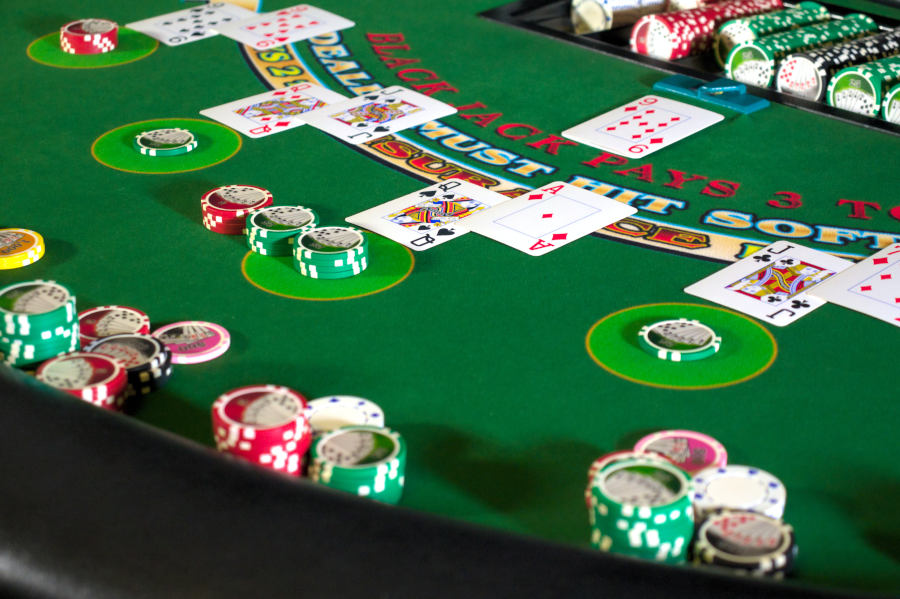
Casinos, for fairness and transparency, often display the dealer's soft 17 rule on the table signage. Look for printed text on the felt that says "Dealer must stand on all 17s" (S17) or "Dealer hits soft 17" (H17). If you can't see it clearly, just ask the dealer before gameplay begins.
Common Mistakes Players Make
Here are five common player mistakes regarding hitting or standing on soft 17:
- Not checking the table rules before sitting down.
- Not doubling down Hard 11 vs Ace if the dealer must hit on soft 17.
- Standing on Hard 17 vs Ace if the dealer must hit on soft 17.
- Ignoring basic blackjack strategy if the dealer stands on soft 17.
- Not surrendering Hard 15 vs Ace when the dealer must hit on a soft 17.
Conclusion
More often than not, the casino you play at will mandate that dealers hit on a soft 17. They must take an extra card to form a better hand that could beat yours. In this situation, you must be able to adjust your strategy as highlighted above. Always ask for the table rules before playing.
FAQs
What is a soft 17 in blackjack?
A soft 17 is any hand totaling 17 that contains an ace counted as 11. The most common example is Ace-6 (11 + 6 = 17), but it can also be Ace-2-4, Ace 3-3, or any other combination.
Is a dealer hitting soft 17 bad for players?
Yes. According to Wizard of Odds, the H17 rule increases the house edge by approximately 0.2% compared to S17, making the game slightly less favorable.
Does this rule matter for beginners?
Yes, because it gradually affects your chances of winning, which becomes noticeable over time. The per hand difference may be small, but over hundreds of hands the impact compounds.
How can I tell if a casino uses H17 or S17?
Look at the table felt for printed text like "Dealer must stand on all 17s" (S17) or "Dealer hits soft 17" (H17). If you can't see it, ask the dealer before placing your first bet.
What is the difference between soft 17 and hard 17?
A soft 17 contains an ace counted as 11 (e.g., Ace-6) and is flexible, the ace can drop to 1 if needed. A hard 17 contains no ace, or an ace already counted as 1, and is locked at 17 (e.g., 10-7 or 9-8). Players should always stand on hard 17, but should be more aggressive with soft 17.
Enjoyed this article?
Join our newsletter to get the latest casino industry articles delivered straight to your inbox.
Related Free Learning Hubs: Blackjack, All Hubs
Related Terms & Definitions: Basic Strategy, Double Down, House Edge, Percentage, Blackjack, Soft Hand, Up Card, Action, Casino, Dealer, Option, Player, Full Dictionary
Related Posts
The Strange World of Hand Strategy Decisions in Blackjack
Oct 23, 2026 Bill Zender
Discover 10 surprising blackjack decisions where seemingly smart moves lose money and outrageous plays can actually beat the odds!
Blackjack Strategy Chart: Basic Strategy for Every Hand
Use our free blackjack strategy chart to learn when to hit, stand, split, or double down. Printable charts for single, double, and shoe games.
The New Player at Third Base Didn’t Ruin Your Blackjack Hand
Sep 22, 2026 Monika Dragojlovikj
Third-base players can change who receives the next card, but they cannot predict it. This is why the blackjack myth survives at live tables.
Blackjack Payout Calculator & 3:2 Payout Chart
Download the official 3:2 Guide instantly. Use this printable PDF and our FREE strategy course to master basic strategy and guarantee you maximize your odds.

12 Things You Should Never Do at a Blackjack Table
Aug 30, 2026 Heather Ferris
Discover the 12 blackjack mistakes that can expose a rookie, annoy the table, and even get you kicked out.
How to Use a Blackjack Payout Calculator
Learn how to use a blackjack payout calculator with simple step-by-step examples. Calculate 3:2, 6:5, insurance, and blackjack payouts accurately every time.
Table of Contents
- # Back to Top
- Dealer Hits Soft 17 vs Stands
- What Is a Soft 17?
- What Does “Dealer Hits Soft 17” Mean?
- What Does “Dealer Stands on Soft 17” Mean?
- How Dealer’s Stand or Hit Decision Affects Final Hand Total
- Hitting on 17 vs Standing on 17
- Which Is Better for Players?
- How It Affects Blackjack Strategy
- How to Spot This Rule at a Table
- Common Mistakes Players Make
- Conclusion
- FAQs