
7 Blackjack Strategy Mistakes That Cost Players Money
Blackjack is a game that needs no extensive introduction. The goal is simple. Get a hand total of 21 or close enough to beat the dealer’s hand without going over. But achieving this objective requires luck and skill, with the latter being of utmost importance. Your choice of playing strategy directly affects your overall success. A misplay of a hand can cost you money. Hence, it is crucial to know the blackjack mistakes you shouldn’t make.
For easy reference, this article highlights and discusses 7 blackjack strategy mistakes that cost players money.
1. Playing on a 6 to 5 Blackjack Game
A 6 to 5 blackjack table might look like the same game, but it is so much worse for the player. Blackjack is supposed to be the player’s best shot on the casino floor because it has such a low house edge, yet this single rule change increases the house edge significantly. Instead of being paid properly for the most important hand in the game, you’re getting shorted every time you hit blackjack. Over time, that missing money adds up and turns a strong game into one of the worst.
Let’s make it painfully clear with numbers. On a $100 bet, a proper 3 to 2 blackjack pays you $150, but a 6 to 5 table only pays $120. That’s $30 gone every single time you hit blackjack, just for sitting at the wrong table. That difference alone dramatically increases the house edge and drains your bankroll. If you care about not wasting money, remember this one simple rule: never play 6 to 5 blackjack.
2. Settling for an Even Money Payout on Insurance
During Insurance, taking even money when you have a blackjack (an ace plus a 10 card) is a common mistake players make at the table. Mathematically, in the long run, you lose more money doing this. Normally, dealers won't have a 10-value card to form a natural blackjack hand. But if you play your hand, without taking even money, you will win most of the time and get an appropriate payout.
However, there is an exception. If you are card-counting and your true count exceeds +3, the dealer's chance of having a 10 card is higher. In this case, taking even money can be a smart move.
3. Ignoring the Basic Blackjack Strategy Guide
A common question often asked in gambling is, "Does basic strategy work?” Yes, it works. Following this strategy guide lowers the house edge even more. Blackjack is a casino table game that rewards strategic play. Playing without adhering to or using the basic blackjack strategy guide is a recipe for disaster. The strategy, often available as a chart, highlights the optimal way to play specific hands, setting you up for a win.
There are multiple ways your hand can go against the dealer’s up card. Having a strategy chart can help you make quick decisions when you are unsure what to do. Players, especially newbies, who skip learning basic blackjack strategy often make costly mistakes when deciding whether to hit, stand, or double down.
You can find a free, printable blackjack strategy chart here:
Vegas Aces
Splitting 10s and 5s
Splitting 10s because you are up against a dealer 5 or 6 up card to maximize your hand isn’t a good move. You have a total of 20, which is a solid hand that can beat the dealer. If you split your 10s, you can lose both hands. Splitting 10s and 5s is often called the "cardinal error" of blackjack. Don't make this mistake.
Not hitting 12 against a dealer 2 or 3 to avoid busting
When you have a 12 against the dealer’s 2 or 3 up card, the basic strategy suggests that you hit. However, due to the fear of getting a 10-value card, (or taking the dealer’s bust card) some players stand. The chances of you busting with a 12 are low. It only increases if you have 13 or 14. When you have a 12, and the dealer has 2 or 3, don’t stand! Hit instead to increase your odds of winning.
Standing on Soft 18 vs. Dealer 9, 10, or Ace
Soft 18 (Ace plus 7) is a solid hand. It feels safe. You are right. But against a strong dealer upcard like 9, 10, or Ace, standing on Soft 18 is an error. Standing would cause you to lose more compared to when you hit in the long run. Therefore, it is best to hit soft 18 against a 9, 10, or Ace.
4. Using a System that is a “Sure-Fire Win Every Time”
If someone promises you a “sure-fire system” that wins every time at blackjack, they’re selling a scam with a price tag. Social media is full of confident voices claiming they’ve cracked the code, and for just $19.99, you can join the winners’ circle! It’s bull. Blackjack has been studied, dissected, and analyzed for decades by mathematicians, casinos, and advantage players alike. If a guaranteed system actually existed, casinos wouldn’t have that game on their casino floor… they’d shut it down immediately. The moment someone claims “never lose again,” the red flags should start popping up.
At its core, blackjack is a math-driven game with a built-in house edge designed to grind out profit over time. No betting system, progression, or “pattern hack” can erase that reality. The best legitimate strategies, like basic strategy, don’t guarantee wins, they simply lower the house edge, which reduces losses and stretches your playtime. That’s it. The casino still has the long-term advantage, and it always will. Understanding this before you even walk into a casino saves you from chasing illusions and burning money on false hope. In blackjack, there’s no magic key to unlock endless wins, only smarter decisions that help you last a little longer before the house collects its due.
5. Wagering Without Caution
If you are a new player, do not wager randomly. Manage your bankroll and know when to stop. Before you leave your house, figure out your budget for your entertainment for that month. How much can you afford to lose? How often do you want to go gamble? For example, if you have an extra $500 per month that you can afford to lose, and you want to spend that on entertainment, now you have a starting point. How many times do you want to go to the casino per week? Once per week? If there are 4 weeks in a month, you are going to the casino 4 times. That means your bankroll is $125 every time you go to a casino. This can go fast, so look for a $5 minimum table, where you can try to make your bankroll last as long as possible. Figure out when your stopping point is. How do you handle wins and losses? What games do you want to play. It’s smart to have a plan before you step foot in a casino.
6. Chasing Losses
A common strategy mistake made by newbies at the blackjack table is wagering till they lose it all and then betting large sums of money trying to win it all back. Don't chase losing streaks, and don't be overjoyed by your winning streaks, which can cause you to bet more. Chasing losses is one of the fastest ways to turn a bad session into a financial freefall. It's the start of a downward spiral, where you will always be in the hole and you have to gamble more and more to win it back. Many new blackjack players fall into the trap of increasing their bets after losing, trying to win everything back in one dramatic swing, or riding a hot streak until it inevitably cools. Both mindsets lead to the same place: bigger bets, bigger risks, and bigger losses. The math never changes, the house edge is always there, and the casinos will always win. This is how casinos can afford to build their fancy palaces. Once you start chasing, you’re no longer playing the game, instead you’re digging a deeper hole with every hand. The smartest move is to recognize that gambling is a form of entertainment, not a way to pay bills. Play for fun, not to make money.
7. Using Running Count instead of the True Count When Card Counting
Counting cards lowers the house edge even more. And contrary to popular belief, it is not illegal. Does card counting change EV (Expected Value)? Yes, it does. It is an effective strategy to flip your EV, which is the long-term mathematical average of an outcome you should expect on a specific bet. EV can either be positive or negative. A bet with a +EV favors you, but a bet with a -EV means you are likely to lose on your wager.
However, while aiming to change a -EV to +EV by card counting, a common error players make is using the "Running Count" instead of the "True Count." Running Count is only effective for a single deck. Most times, blackjack is played using multiple card decks. Therefore, to avoid over-betting, you have to divide the Running Count value by the number of decks remaining to get the True Count. Its value matters for your bet placement and strategy.
Learn how here:
Vegas Aces
Why Blackjack Strategy Fails
1. Poor execution
It is not enough to know basic blackjack strategy. It is important to follow it consistently. Following the blackjack strategy guide here and there, based on gut feeling, isn’t helping you. This is how you lose money. The strategy is based on mathematical proof, which doesn’t take feelings or intuition into account.
2. Unfavorable rules
Black table rules vary from one casino to another. For example, in some establishments, dealers have to hit on soft 17, and in other cases, they have to stand. Table rules can negatively affect your strategy, leading to losses. Make sure you are using the blackjack strategy guide that corresponds with the rules of the table you are sitting on. A strategy card for a double deck game isn’t going to help you if you’re sitting on a blackjack table with an 8-deck shoe.
Conclusion
Blackjack is more fun when you avoid making strategy mistakes. We have listed the seven common errors we have noticed players make when playing the 21-card game. Keep them in mind and remember to download your blackjack strategy chart here:
Enjoyed this article?
Join our newsletter to get the latest casino industry articles delivered straight to your inbox.
Related Free Learning Hubs: Blackjack, All Hubs
Related Terms & Definitions: Basic Strategy, Expected Value, Running Count, Double Down, Single Deck, Even Money, House Edge, True Count, Blackjack, Insurance, Bankroll, Minimum, Full Dictionary
Related Posts
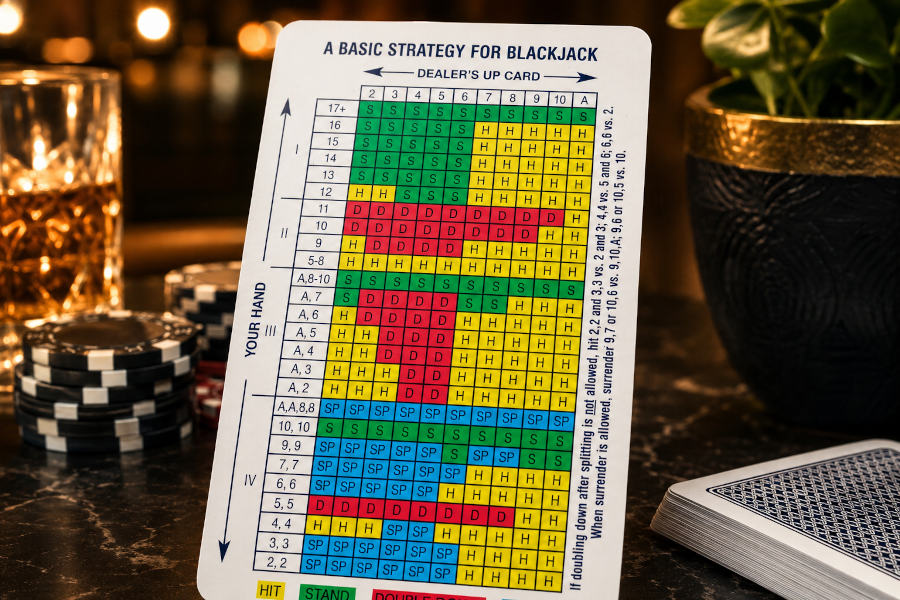
Blackjack Strategy Chart: Basic Strategy for Every Hand
Use our free blackjack strategy chart to learn when to hit, stand, split, or double down. Printable charts for single, double, and shoe games.
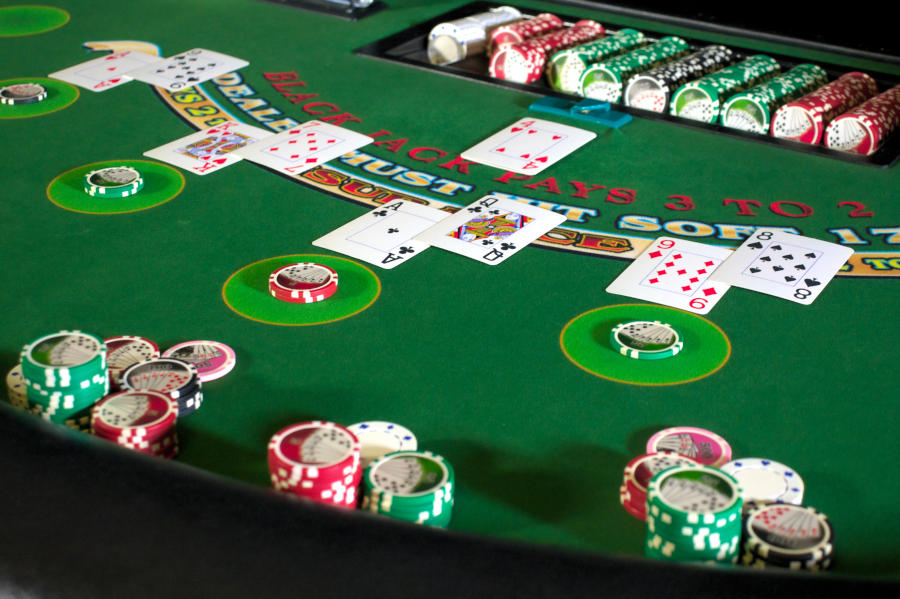
The New Player at Third Base Didn’t Ruin Your Blackjack Hand
Sep 22, 2026 Monika Dragojlovikj
Third-base players can change who receives the next card, but they cannot predict it. This is why the blackjack myth survives at live tables.
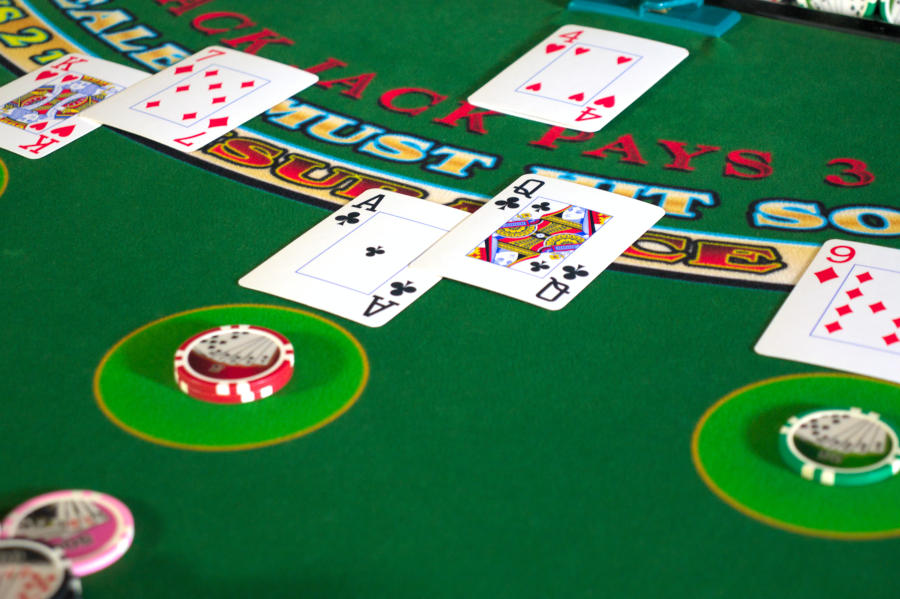
Blackjack Payout Calculator & 3:2 Payout Chart
Download the official 3:2 Guide instantly. Use this printable PDF and our FREE strategy course to master basic strategy and guarantee you maximize your odds.

12 Things You Should Never Do at a Blackjack Table
Aug 30, 2026 Heather Ferris
Discover the 12 blackjack mistakes that can expose a rookie, annoy the table, and even get you kicked out.
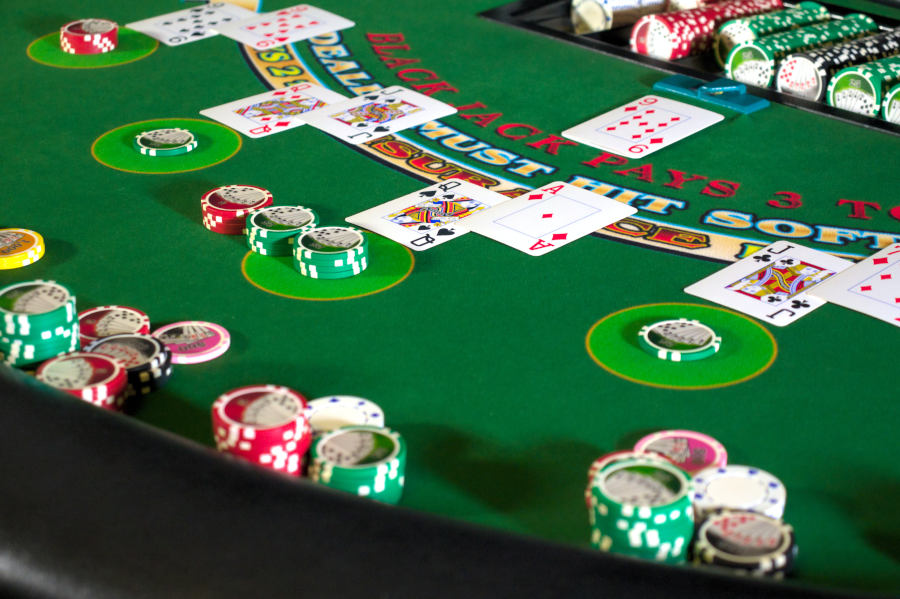
How to Use a Blackjack Payout Calculator
Learn how to use a blackjack payout calculator with simple step-by-step examples. Calculate 3:2, 6:5, insurance, and blackjack payouts accurately every time.
6:5 Blackjack Explained: Is It Worth Playing?
Aug 2, 2026 Daniel Odeyemi
Learn what 6:5 blackjack means, how it compares to 3:2 payouts, and why many experienced players avoid 6:5 blackjack tables.
Table of Contents
- # Back to Top
- 1. Playing on a 6 to 5 Blackjack Game
- 2. Settling for an Even Money Payout on Insurance
- 3. Ignoring the Basic Blackjack Strategy Guide
- 4. Using a System that is a “Sure-Fire Win Every Time”
- 5. Wagering Without Caution
- 6. Chasing Losses
- 7. Using Running Count instead of the True Count When Card Counting
- Why Blackjack Strategy Fails
- 1. Poor execution
- 2. Unfavorable rules
- Conclusion