
Series: How to Play Mini-Baccarat • Part 1 of 2
How to Play Mini Baccarat: Basics & the Third Card Rule
Introduction
Baccarat is played throughout many different countries around the world, and because of that there are several different versions. “Punto Banco” is the version of baccarat that is played in America, Canada, Australia, United Kingdom and Macau. “Punto” means “Player” and “Banco” means “Banker”.
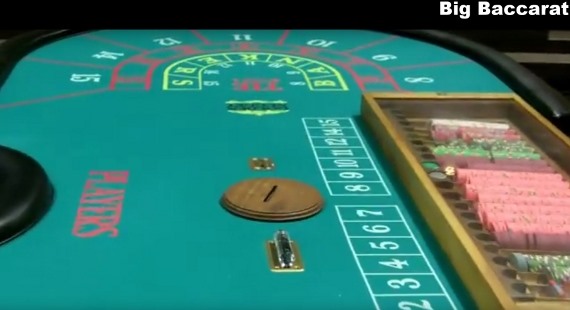
There are 3 types of baccarat: mini-baccarat, midi-baccarat and big baccarat. Every table game in the casino has a built-in advantage that gives the casino their profit. The casino edge is usually measured in percentages.
The house advantage for baccarat is:
Banker – 1.17%
Player – 1.36%
Tie – 14.12% at a 8:1 payoff
Baccarat Table Layout
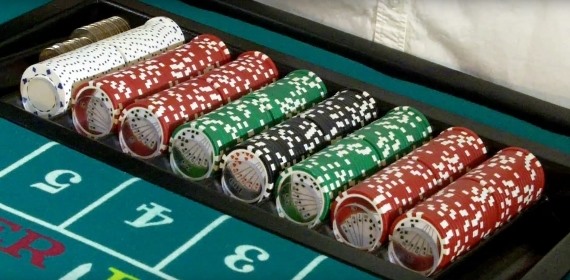
The bank is the rack of cheques in front of the dealer.
The long rectangle located next to the bank is called the commission box. You will see many boxes with numbers in them. Each number represents the spot where the player is sitting. Every time the player owes commission the dealer will mark it in this box until the time when the player pays it.
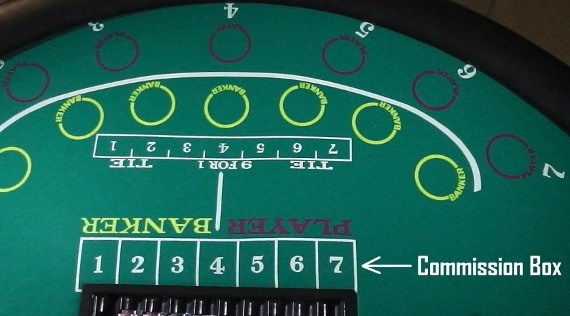
The shoe is located on the left side of the table. Usually the shoe will be 8 decks or higher.
When the player makes a bet, they'll have three choices on where they can place their money. Banker, Player or Tie.
Most baccarat tables have their betting circles marked to correspond with the commission and the tie boxes. Now, because this game is extremely popular with people from China you will notice that their culture has inspired some changes in the layout. In China, 4 is considered an unlucky number because it sounds similar to the word death, so many baccarat layouts are missing the #4 spot. This means that the numbered betting spots will go up to the number 8. And 8 is a very lucky number in the Chinese culture because it sounds similar to the words “prosper” or “wealth”.
The Basics
The object of the game is to bet on the hand that you think will receive the highest total value.
The dealer will deal 2 sets of 2 cards each. One set will go to the Player and the other set will go to the Banker. Each set of cards will be added up and the side with the highest total will win the hand.
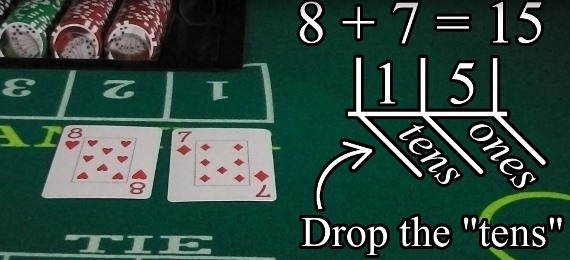
When you’re adding up the cards, the total must always be in single digits. For example, if your two cards are an 8 and a 7, then normally this would equal 15. But since single digits are the only valid total, it is customary to drop the “tens” place value. Drop the 1 and that the actual total is now 5. Because of this rule, all 10 value cards equal 0 and all Aces equal 1. This rule is applied to all place values. For example, if you draw two 10’s and a 5 then the total is 25; drop the tens place value so your valid total is now 5.
3rd Card Rule
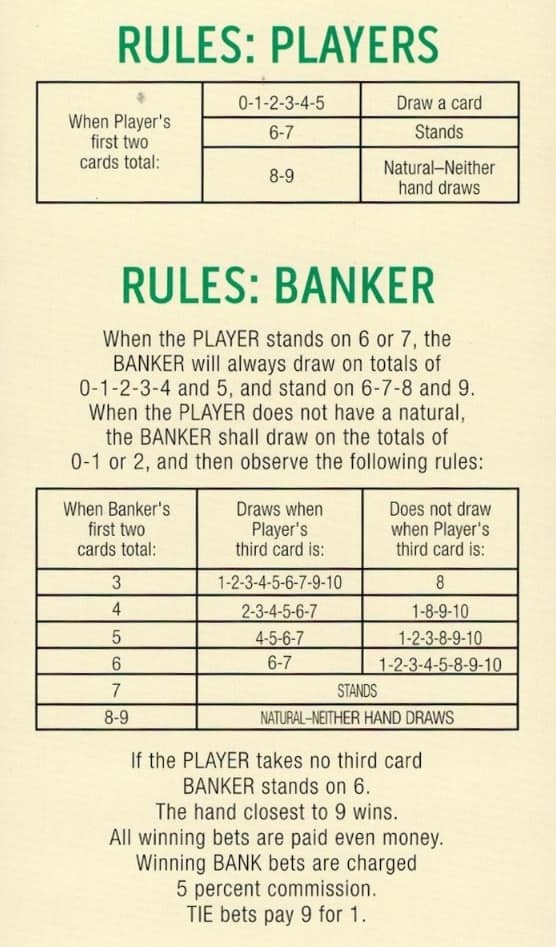
How do you know when it’s the right time to draw a 3rd card? Dealers must memorize a chart that is given to them by the casino. Most casinos follow the same basic guide.
If the Player’s 1st two cards equal 0 – 5, then the Player must draw a 3rd card.
If the Player’s 1st two cards equal 6 – 7, then the Player must Stand.
If the Player’s 1st two cards equal 8 – 9, then the Player has a “Natural” hand and no more cards are drawn. A “Natural” hand can only occur on the first two cards.
If the Banker’s 1st two cards equal 0 – 2, then the Banker must draw a 3rd card.
If the Banker’s 1st two cards equal a 3, then the Banker will always draw a card except if the Player’s 3rd card is an 8.
If the Banker’s 1st two cards equal a 4, then the Banker will only draw a 3rd card if the Player’s 3rd card is a 2 – 7.
If the Banker’s 1st two cards equal a 5, then the Banker will only draw a 3rd card if the Player’s 3rd card is a 4 – 7.
If the Banker’s 1st two cards equal a 6, then the Banker will only draw a 3rd card if the Player’s 3rd card is a 6 – 7.
If the Banker’s 1st two cards equal a 7, then the Banker must Stand.
If the Banker’s 1st two cards equal a 8 – 9, then the Banker has a “Natural” hand and no more cards are drawn. A “Natural” hand can only occur on the first two cards.
When the Player stands on 6 – 7, then the Banker will always draw a 3rd card if their 1st two cards equal a 0 – 5 and the Banker will always Stand on a 6 – 9.
If the Player takes no 3rd card, then the Banker will always Stand on a 6.
Enjoyed this lesson?
Join our newsletter to get the latest casino industry courses delivered straight to your inbox.
Series
How to Play Mini-Baccarat
Part 1 of 2
Next
Mini Baccarat Ties, Commission, and the Dragon Bet
Related Free Learning Hubs: Mini Baccarat, All Hubs
Related Terms & Definitions: Punto Banco, Commission, Baccarat, Natural, Banker, Casino, Dealer, Layout, Player, Banco, House, Punto, Full Dictionary
Related Courses
How to Deal Mini-Baccarat
Aug 8, 2020 Heather Ferris
Learn how to deal mini baccarat step-by-step like a real casino dealer. Includes baccarat rules, card values, the third card rule chart, and dealer payout procedures.

Partnerships that keep the cards on the felt
Jan 6, 2026 Heather Ferris
Here is an overview of the sponsored products and advertising options available through Vegas-Aces.

How to Deal Caribbean Stud Poker
Aug 16, 2026 Alessandro Cinà and Heather Ferris
A dealer’s guide to running Caribbean Stud Poker: the table layout, hand rankings, the Ante and raise, dealer qualification, payouts, and a step-by-step deal.

Crap Stick Calls
Mar 25, 2026 Daniel Odeyemi and Heather Ferris
We interviewed a veteran dealer with 30+ years of experience to bring you the most authentic craps stick calls. Learn the rhymes and calls used in casinos today.

How to Play Ultimate Texas Hold’Em
Jul 9, 2026 Daniel Odeyemi and Heather Ferris
Learn how to play Ultimate Texas Hold’em: its rules, gameplay structure, and the optimal raise strategy for the best outcome.
How to Deal Blackjack
Jul 8, 2026 Heather Ferris
Learn how to deal blackjack with professional dealer training on casino procedures, payouts, table layout, game security, common mistakes, and dealer auditions.
Table of Contents
Series Navigation
Part 1 of 2
Part 1: How to Play Mini Baccarat: Basics & the Third Card Rule
Current article
- Part 2: Mini Baccarat Ties, Commission, and the Dragon Bet