
Series: How to Deal Pai Gow Poker • Part 4 of 7
Pai Gow Poker Take-and-Pay, Commission & Player-Banker Rules
This guide covers the key dealer procedures that happen after hands are set: the Pai Gow Poker take-and-pay procedure, how commission is collected, and how player-banking works when a guest takes the banker position.
Pai Gow Poker Take-and-Pay Procedure
When the dealer completes the take-and-pay procedure, they typically pay wagers in this order:
- Main Pai Gow Poker wager
- Fortune Bonus (if offered)
- Envy Bonus (if applicable)
- Dragon Hand (if offered)
Winning wagers are paid even money minus a 5% commission.
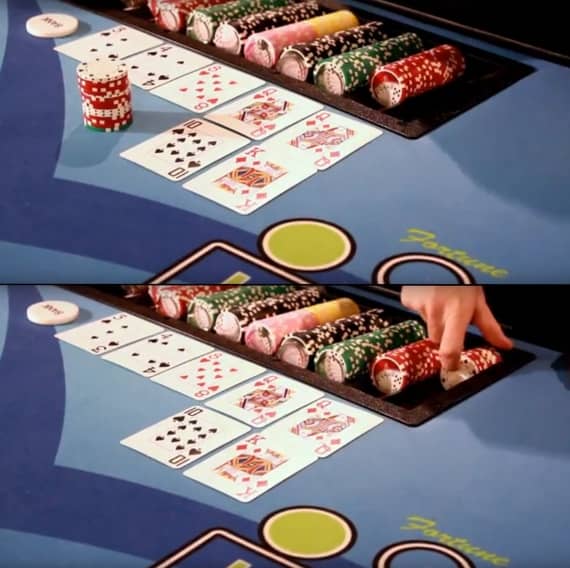
The procedure for handling losing wagers varies by casino. Some houses require locking the bet in the rack immediately, while others require placing losing wagers in a designated table area until the round is complete. These procedures support security and dispute resolution.
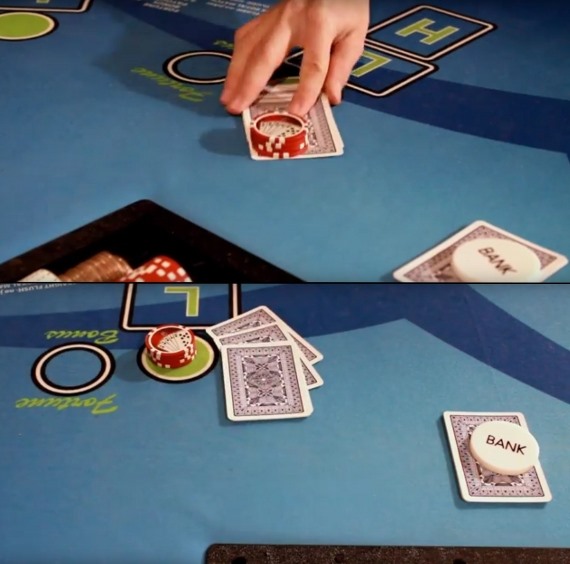
Players may fold by pushing cards under the wager toward the dealer or tossing the cards toward the dealer. The dealer collects the wager first, then verifies there are seven cards before placing them into the discard rack.
Different casinos use different take-and-pay workflows. Two common systems are:
Pay-as-you-go
- Dealer moves right to left and resolves each hand immediately, including commission, before discarding cards.
Resolve-then-pay
- Dealer moves right to left to determine outcomes first.
- Losers are taken and discarded.
- Pushes are indicated to the cameras and discarded.
- Winners remain up until all hands are resolved, then the dealer pays winners right to left.
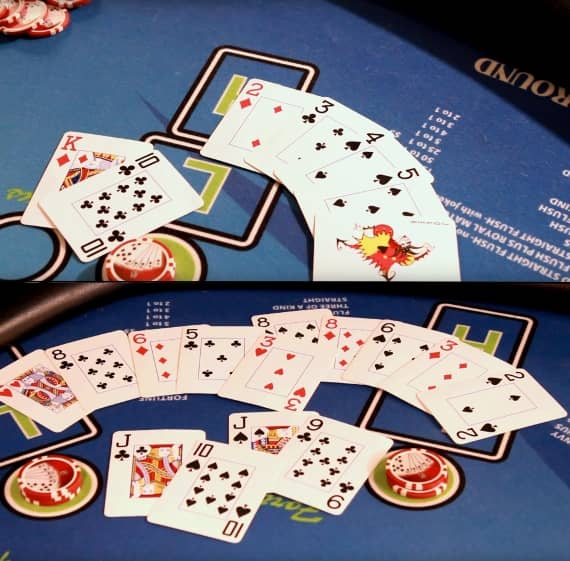
When spreading hands for the cameras, keep cards visible without mixing hands between neighboring betting spots.
Pai Gow Poker Commission (5%)
Winning bets are charged a 5% commission, collected immediately by the dealer.
A simple way to calculate commission:
- Take 10% of the bet and divide by 2.
You can also memorize a commission chart and add commission as you go: Commission chart
Commission is rounded to the nearest quarter, which is known as breakage. For example, both $1 and $5 wins may be charged the same $0.25 commission depending on house policy.
Players with winning bets are responsible for their own commissions. Most often, the dealer removes commission from the payoff. If the player pays commission separately, winning payoffs should be sized into the wager and proven before commission is collected.
Player-Banker in Pai Gow Poker (Playing as Banker)
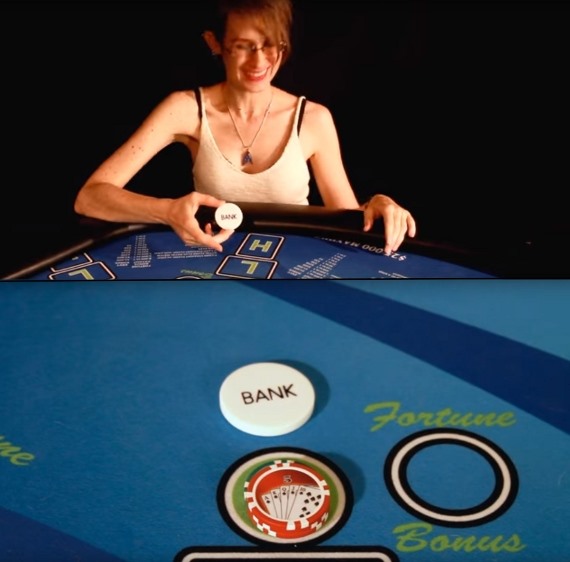
“Banker” is a rotating position that can be held by the dealer or a player.
When a player becomes the banker, they are known as the Player-Banker, and the house acts as a player. The dealer still handles all cards and cheques.
Players may want to bank because the rules favor the banker side, which can reduce or eliminate the effective house edge when banking is done correctly.
Banker Button and Rotation
The dealer begins as banker. After the dealer banks a hand, the banker position rotates from the dealer’s right to left.
A banker button indicates who is banking. Placement rules vary by casino. Some houses place the button inside the betting circle.
Each player may bank one hand per rotation or decline. If no player banks, the dealer remains the banker.
Player-Banker Qualification Rules
House rules vary, but common requirements include:
- The player must have wagered the previous hand.
- The player’s banking wager is usually based on their previous wager.
- The player must have sufficient funds to cover all action at the table. If there is any doubt, call the floor.
Dealing When the Player Is Banking
After bets are placed, the dealer places the house wager last at the center of the table. If a table uses an RNG, it determines the first hand. If dice are used, the Player-Banker may shake and expose the dice.
When the player banks, the Player-Banker sets their hand after other players have set. The dealer sets the house hand last.
Unlike players, the dealer and Player-Banker generally cannot foul a hand. If a banking hand is set incorrectly, it will be reset according to house way, and the Player-Banker remains financially responsible for outcomes.
Bankroll and Payouts During Player-Banking
The dealer compares the Player-Banker’s hand first, then completes take-and-pay procedures across the table. If the bankroll runs short, the Player-Banker must provide additional funds to pay winners. At the end of the round, the remaining bankroll is returned to the Player-Banker, minus commission on winnings.
Co-Banking and Dealer Sit-Out Options
Some casinos allow co-banking, where the house bankrolls a percentage of the player’s bank. Other ca
Enjoyed this lesson?
Join our newsletter to get the latest casino industry courses delivered straight to your inbox.
Series
How to Deal Pai Gow Poker
Part 4 of 7
Related Free Learning Hubs: Pai Gow Poker, All Hubs
Related Terms & Definitions: Center of the Table, Betting Circle, Discard Rack, Commission, Even Money, House Edge, Percentage, House Way, Bankroll, Breakage, Position, Action, Full Dictionary
Related Courses
How to Play Pai Gow Poker
Aug 8, 2020 Heather Ferris
Learn how to play Pai Gow Poker step-by-step. This beginner guide covers rules, table layout, the Joker, and how to set your hand correctly.
How to Deal Pai Gow Poker
Aug 8, 2020 Heather Ferris
Learn how to deal Pai Gow Poker step by step. Covers game history, table layout, joker card rules, house edge, betting flow, and how to set the player’s hand.

Partnerships that keep the cards on the felt
Jan 6, 2026 Heather Ferris
Here is an overview of the sponsored products and advertising options available through Vegas-Aces.

How to Deal Caribbean Stud Poker
Aug 16, 2026 Alessandro Cinà and Heather Ferris
A dealer’s guide to running Caribbean Stud Poker: the table layout, hand rankings, the Ante and raise, dealer qualification, payouts, and a step-by-step deal.

Crap Stick Calls
Mar 25, 2026 Daniel Odeyemi and Heather Ferris
We interviewed a veteran dealer with 30+ years of experience to bring you the most authentic craps stick calls. Learn the rhymes and calls used in casinos today.

How to Play Ultimate Texas Hold’Em
Jul 9, 2026 Daniel Odeyemi and Heather Ferris
Learn how to play Ultimate Texas Hold’em: its rules, gameplay structure, and the optimal raise strategy for the best outcome.
Table of Contents
- # Back to Top
- Pai Gow Poker Take-and-Pay Procedure
- Pai Gow Poker Commission (5%)
- Player-Banker in Pai Gow Poker (Playing as Banker)
Series Navigation
Part 4 of 7
- Part 2: Pai Gow Poker Fouls, Folding, House Way & Determining a Winner
- Part 3: Pai Gow Poker Hand Rankings
Part 4: Pai Gow Poker Take-and-Pay, Commission & Player-Banker Rules
Current article
- Part 5: Pai Gow Poker Dragon Hand, Fortune Bonus & Envy Bonus
- Part 6: Pai Gow Poker House Way Rules