
Series: The Wynn Tips Controversy • Part 1 of 3
The Wynn Lawsuit
Summary of What Happened
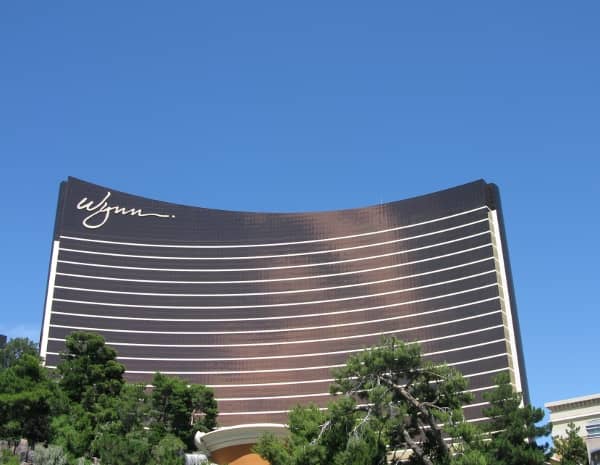
Starting in 2006, one year after the Wynn hotel & casino opened, Steve Wynn had a meeting with dealers and management about a salary discrepancy.
At the time the dealers were making $80,000 per year and their bosses, the floormen, only made $60,000 per year. Everyone was in agreement that the floormen needed a raise. Wynn moved the floormen from salary to hourly, plus a $19 raise per hour, plus a percentage of the dealer’s tokes. This was where the controversy started. There was a policy in the employee handbook (and it is a standard policy everywhere) that says "No policy concerning tips can be changed without a vote from the dealers." Steve Wynn had the language removed and there was never a vote. Steve Wynn dismantled the Toke Committee and instead of the dealers handling their own money, now the casino had the dealer’s tips under lock and key. The dealers could no longer count their own money, they couldn’t watch their tips being counted in person (now the soft count does it) and the dealers have no say in any of the process. Other employees take care of it all and the dealers can’t tell if anyone is stealing their tokes. The dealers couldn’t believe that Wynn forced them to use their tip money to pay their bosses. In 2008 the tip pooling policy was expanded to the Encore.
Supervisors never wanted this change. Wynn decided this without any say from employees. The floormen went from making $60,000 per year to making $90,000 per year and the dealers went from $80,000 per year to $55,000 per year. With this new policy Wynn is saving money by using the dealer’s tips to pay the salary of his employees; which is a direct benefit to Wynn. (Sun) Source
A large number of dealers complained to the Labor Commissioner but he said it wasn’t his jurisdiction. So a couple dealers sued Wynn and took it all the way to the Nevada Supreme Court. The judge told them "This isn’t our jurisdiction. You need to speak to the Labor Commissioner." (Sun) Source
So the dealers went back to the Labor Commissioner for a second time and, in 2010, he decided, "Wynn has broken no laws due to the fact that the company didn't retain the tips and instead redistributed them to employees. Nor did the company gain any direct financial benefit, so they can continue with the policy." (Sun) Source
So the dealers took the case back to court to appeal the ruling. (VegasInc) Source
During 2010, two groups tried to put an initiative petition on the election ballot, the first group was PEST (Prevent Employers from Seizing Tips) and the second group was We the People Nevada. Unfortunately, Secretary of State Ross Miller ruled that the petition was defective and would not be put on the ballot; and the U.S. Ninth Circuit Court of Appeals upheld his decision. (Sun) Source
In November 2011, the district court judge ruled that the controversial tip policy did not comply with Nevada law. The judge also ruled that Nevada's labor commissioner, Michael Tanchek, erred when he found that the tip-pooling policy didn't violate state law. The judge determined that the $5 million per year that was being redirected from the dealers to management was in fact a direct benefit to Wynn, who does not have to pay the salary increase. Wynn's lawyer appealed the ruling and the case will now go before the Nevada Supreme Court. (Sun) Source
Wynn also expanded this policy so it affects non-dealers, such as bartenders and cocktail waitresses. Starting in 2006 union workers from Wynn's Tryst and XS nightclubs sued Wynn over violation of their labor agreement between Wynn and the Culinary Union. Wynn forced the union-covered nightclub employees to share their tips with management. The lawsuit was seeking to stop this policy by requesting an account of all money taken from the employees and seeking that those "misappropriated gratuities" are returned. (Sun) Source , Source 2 )
This tip-sharing point system changes at management's discretion, according to how much is collected and how many employees work per night. Because management divides the tips at the end of the night, workers say they don't know who gets what or how much ends up in the managers' envelopes. (Sun) Source
When the union contract was originally signed, the language gave the waitresses and bartenders limited rights. They were allowed to form a toke committee which was run by their peers and they were allowed to vote on certain issues. However, when the toke committee voted against allowing managers to share their tips Wynn rejected the vote. When the committee demanded that their tips be kept in a public location monitered by surveillance, that vote was also rejected by management. The tokes are being kept in a private office where anyone can have access to the thousands of dollars worth of tips stored there. (Sun) Source
In July 2011, a federal judge dismissed a lawsuit filed by a group of nightclub workers protesting the controversial policy. Wynn's attorneys argued that these disputes should be settled in an arbitration procedure as required by the workers' labor contract and the judge agreed. (Sun) Source
In November of 2011, the dealers lawsuit was taken to a District Court Judge, who determined that the Labor Commissioner erred in his desicion. Wynn's tip-pooling policy does violate state law. Wynn is expected to appeal this decision. (Sun) Source
In 2013, a 2nd lawsuit while filed against Wynn and this only affects dealers who started working after May 2011. It does not replace the 1st lawsuit, which is currently on appeal. Source
In 2016, the Ninth Circuit Court of Appeals ruled against Wynn, saying that businesses cannot collect employees tips. This was a big win for the dealers. The 9th Circuit said the rule was "reasonable" and consistent with Congress's goal of ensuring tips stay with employees who receive them. (Sun) Source
After the hearing, Wynn filed a petition asking for either a rehearing by the Appeals Court panel or a rehearing by the full court. The request was denied. The Federal Appeals Court will not reconsider its decision. Kamer said he is “fairly confident” his client will appeal to the U.S. Supreme Court. (LVRJ) Source
What's Normal?
Dealers get paid minimum wage plus tokes and floormen are paid salary.
Minimum wage in Las Vegas shot up from $5.85/hour to $7.25 (if the company offers insurance) or $8.25 (if the company doesn’t offered insurance). Source
Because floormen get paid salary a lot of floormen are forced to work overtime plus 6 to 7 days per week. The average amount a floorman makes is $150 per day. Normally floormen haven't been able to accept tips because it compromises game security; since floormen are the ones that have the ability to rule in favor or against a player when a dispute arises. If the floormen are allowed to accept tips then they would not be an unbaised third party.
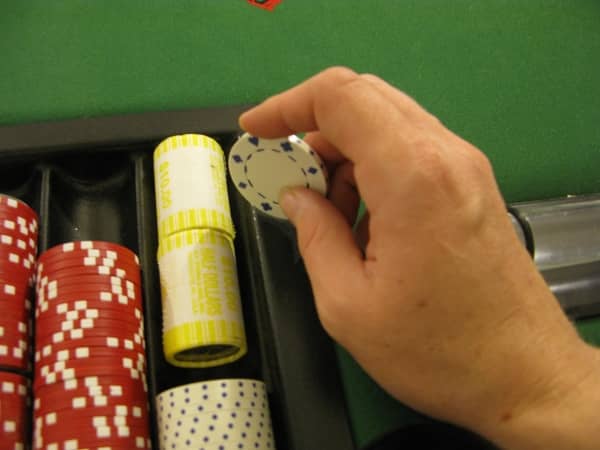
When a player is on a table what they normally see when they give their dealer a tip is the dealer will tap the tip on the table and then put it into the toke box next to them. (The reason why the dealer taps the tip on the table is because the sound will alert the floorman that a tip is being put into the toke box. This is to deter the dealer from stealing chips.) At random times during the day or when the toke box is full a dealer will come by and pick up the toke box, take it to a lockbox and dump all of the chips into it. Every 24 hours a committee of dealers (called the Toke Committee) will pick up the lockbox and take it to a designated room. This room will usually have a camera in it and there is an opening where dealers can walk by and watch the toke committee work. The toke committee will muck all of the same color chips and stick them into a rack.
When all of the chips have been mucked and the racks filled each dealer will separately count the money and then they compare their numbers with everyone else to make sure they came up with the correct amount. Then they start filling out paperwork while a couple of dealers will take the racks and stack them into a locked container (a bag or a rolling box, each casino is different). One dealer will take the paperwork to the cashier and the other two dealers will take the lockbox to the cage. Once at the cage the money is double checked by the cashier and then the paperwork is also double checked. This process normally takes about an hour to complete. Then the cage cashier will take the dealers tokes and deposit the money into a bank account so at the end of two weeks the dealers will get their tips in their check with taxes taken out.
What's a Toke Committee?

The toke committee is a democratically elected group of dealers that come in on their own time (they are never on the clock when they are working as a toke committee member) to pick up, count and escort the tips to the cage. Depending on the casino, a toke committee can have between 5-8 dealers on it. The most important part of the toke committee is the paperwork. The dealers have to calculate the total amount of tips, divide it by the number of dealers working, figure out vacation time, hour differences, and they fix any mistakes that were made. I am always amazed that these dealers are able to keep everything straight. Again, each casino is different, but the average number of dealers that work in a 24 hour period is around 300.
History
Historically, casino dealers have lived off their tips, or "tokes", as in "tokens of gratitude." Years ago, the dealers carried around their own toke boxes with their tips from that night. Each dealer kept their own tips. That benefited dealers working peak hours and fostered competition for tips. It also put pressure on players to tip dealers, who cultivated gamblers in much the same way bartenders do with their customers.
"At a casino where it was 'pit-for-pit,' the dealers definitely muscled players to tip, and, if they didn't, they were made to feel unwelcome at the table and in the casino," says Jim Kilby, professor of gaming at the University of Nevada, Las Vegas, and a former dealer.
In the late 1980s, Mr. Wynn -- then the head of Mirage Resorts Inc. -- pioneered a big change that soon became the Vegas norm. He tweaked the system to combine the tips from the blackjack, roulette, craps and baccarat dealers into one pot. The new arrangement was "by far the most equitable thing to do," says Mr. Kilby.
As a result, the modern toke is no longer cash in the envelope at the end of a shift, but taxable income that appears on a paycheck every two weeks. At most casinos, the dealers collect the money themselves under the auspices of a "toke committee". At Wynn Las Vegas, the committee members collected the day's tips from the casino floor at 4 a.m., then counted the money and presented the results to the casino cashier for verification, according to Mr. Pascal and the "Wynn Las Vegas Table Game Operations Dealer Department Handbook." The money was then paid as part of each dealer's paycheck, supplementing their nominal $6.15 per hour wages. (Post-Gazette.com) Source
As soon as the tips are dropped in that toke box, they no longer belong to the casino. Dealer's know this and a couple of them have taken the risk and stolen large amounts of money. When they are caught the casinos can't press charges because it's no longer their money and it's very difficult to get 300 dealer's to agree to press charges. (Sun) Source
Are Dealers Unionized in Las Vegas?
Dealers in Las Vegas have tried to unionize before but largely failed. When Steve Wynn changed the dealers tipping policy in 2006 that brought back the drive to unionize.
No local union was willing to go against Steve Wynn until the Transport Workers Union of America (TWU) stood up and supported the dealers. It has taken years for the dealers in Las Vegas to get together, sign their union cards and then have a vote for a union. The casinos have been using strong union busting tactics to stop the union from growing and its worked because all but two casinos voted no for a union. In 2010 Caesar’s Palace and Wynn voted for a union. (Sun)
Law Involved
NRS 608.160 Taking or making deduction on account of tips or gratuities unlawful; employees may divide tips or gratuities among themselves. 1. It is unlawful for any person to: (a) Take all or part of any tips or gratuities bestowed upon the employees of that person. (b) Apply as a credit toward the payment of the statutory minimum hourly wage established by any law of this State any tips or gratuities bestowed upon the employees of that person. 2. Nothing contained in this section shall be construed to prevent such employees from entering into an agreement to divide such tips or gratuities among themselves. Source
Right-to-Work Law
At-Will Employee
Nevada is an at-will employment state. Under this system, your employer may fire you for any reason and at any time with a few exceptions. The exceptions include terminating your employment because of your race, age, sex, national origin, pregnancy, or disability. You may also be exempt from employment-at-will if you signed an employment contract with your employer or you are covered by a collective bargaining agreement. ( ehow.com ) ( Wikipedia )
End of the Dealer's Pooling Policy
In November 12 2018, Wynn is ending his controversial pooling policy. Finally. Wynn stated "...the Casino Service Team Lead position is being replaced with the new position of Table Games Casino Supervisor. Casino Supervisors will not participate in the tip pool. As a result, dealers will be the only members of the tip pool, resulting in a net increase in pay."
Settlement
In April 2021, the fight finally ended with a $5.6 million settlement to an estimated 1,000 current and former table game dealers. Resulting in $4,170 to each dealer affected by Wynn's predatory practices. This is a drop in the bucket compared to the lost tokes dealers suffered. Kanie Kastroll, a dealer at Wynn Las Vegas, said she personally lost out on about $150,000 as of 2021.
The settlement paid attorney fees of $1.4 million, $10,000 in litigation costs, settlement administrator fees and $10,000 each to plaintiffs of the original lawsuits against Wynn filed by Joseph Cesarz and Quy Ngoc Tang, with a reported $4,170 going to the estimated 1,000 current and former dealers.
Lesson Learned?
Nope. Not at all. Sadly, Wynn failed to learn from his past mistakes. Instead, he targeted another group of employees. July 26, 2023, Sheila Little, a slot machine attendant at the Wynn casino, filed a class action lawsuit stating that Wynn forced her to participate in a mandatory tip pool where she was required to share her tips with her supervisors. Sound familiar? Slot machine attendants are required to unlawfully share between 5 to 15 percent of the pooled tips with slot leads, aka supervisors and managers. Little seeks reimbursement of the unlawfully withheld tips. In 2023, the case was removed to federal court and is now pending in the U.S. District Court for the District of Nevada under the name Little v. Wynn Las Vegas, LLC.
Enjoyed this article?
Join our newsletter to get the latest casino industry articles delivered straight to your inbox.
Series
The Wynn Tips Controversy
Part 1 of 3
Next
The Wynn Lawsuit: Court Papers
Related Article Archives: Tokes, All Articles
Related Terms & Definitions: Toke Committee, Percentage, Blackjack, Insurance, Baccarat, Position, Straight, Toke Box, Minimum, Rolling, Action, Casino, Full Dictionary
Related Posts

How Much Do Casino Dealers Make? Salary & Tips Explained
Oct 3, 2026 Heather Ferris
Discover how much casino dealers really make, from base pay and tips to the surprising factors that shape their earnings.

How Much Do Casino Dealers Make in 2026?
Jul 5, 2026 Daniel Odeyemi
Learn how much casino dealers really make in 2026, including base pay, tokes, and daily earnings. See the real income numbers and how they vary by casino.

The Role of a Toke Committee in Casinos: How Dealers Get Paid
May 22, 2024 Heather Ferris
A toke committee is a group of dealers who are democratically elected to collect, sort, and count the tips, as well as complete all the associated paperwork necessary to get dealers paid.

Casino Insider Secrets: How Casinos Cap Dealer Tips
Mar 24, 2024 Heather Ferris
Tokes are incredibly important to casino dealers as we’re paid minimum wage plus tips.

Dealer's Tips or Tokes
Jan 9, 2019 Heather Ferris
Find out how much money the casino dealer's in Las Vegas make in tips. An average toke amount is given for low, medium and high tier casinos.

What are the Best Casinos to Work for in Las Vegas?
Dec 24, 2018 Heather Ferris
Which casinos in Vegas are considered the best ones to work for and why? How much money do they make in tips? How long should you expect to be a casino dealer before expecting to be able to work at one of the casinos? Find out all of that in this article.
Table of Contents
- # Back to Top
- Summary of What Happened
- What's Normal?
- What's a Toke Committee?
- History
- Are Dealers Unionized in Las Vegas?
- Law Involved
- Right-to-Work Law
- At-Will Employee
- End of the Dealer's Pooling Policy
- Settlement
- Lesson Learned?
Series Navigation
Part 1 of 3
Part 1: The Wynn Lawsuit
Current article
- Part 2: The Wynn Lawsuit: Court Papers
- Part 3: The Wynn Lawsuit: Timeline